Who prepares, signs and keeps a SWMS?
Who must write a SWMS, whether workers have to sign it, what the principal contractor checks, and how long to keep it under Australian WHS law.
هذا المقال متوفر بالإنجليزية حاليًا.
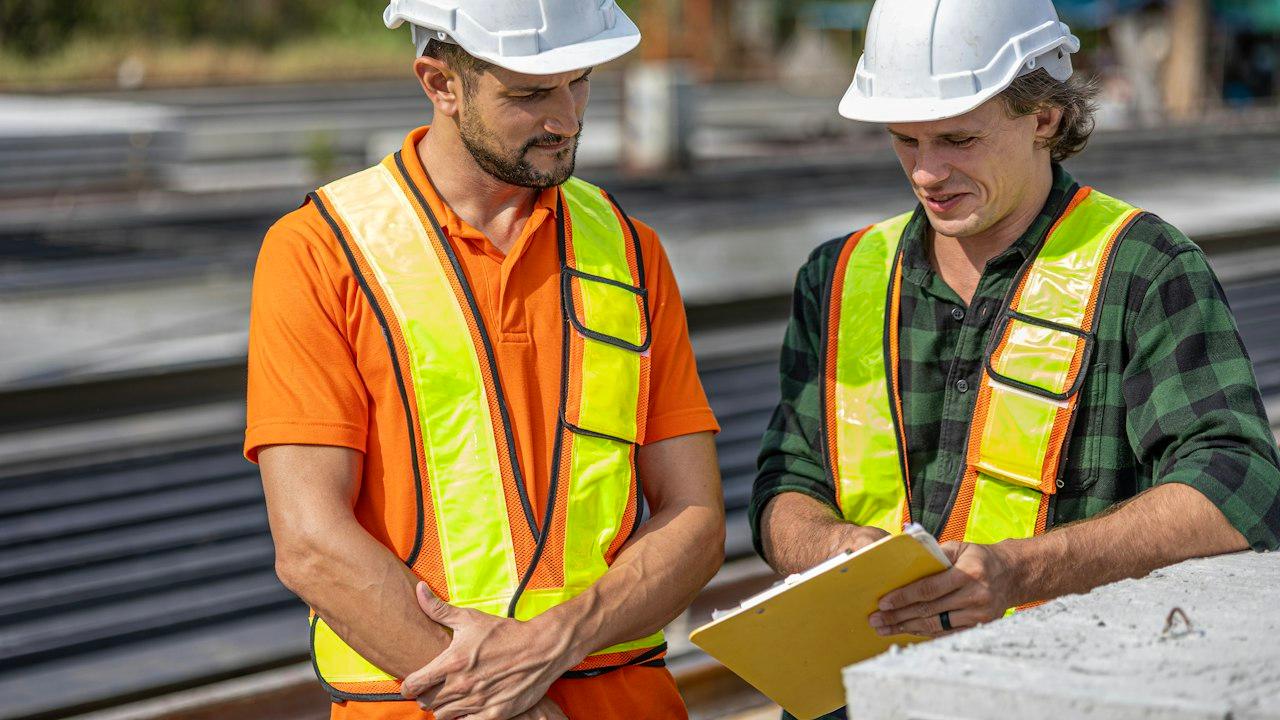
The business carrying out high-risk construction work must prepare a Safe Work Method Statement (SWMS), or make sure one is prepared, before the work starts, and must keep it until the work is finished. The principal contractor must take all reasonable steps to get a copy before the work starts, and workers must follow it. The law doesn't require workers to sign it, but most sites ask them to.
This guide sets out who does what under the model Work Health and Safety Regulations published by Safe Work Australia. Every state and territory except Victoria has adopted laws based on them. If you're not sure the work needs a SWMS at all, start with our high-risk construction work checker.
Who is responsible for writing a SWMS?
The person conducting a business or undertaking (PCBU) that carries out the high-risk construction work. Under regulation 299, that business must prepare a SWMS for the work, or ensure one has been prepared, before the work starts. In practice that's usually the employer or subcontractor doing the work: the electrical contractor for live work near energised lines, the scaffolder for work at height, and so on.
The SWMS must:
- name the high-risk construction work involved;
- state the hazards and risks that come with it;
- describe the control measures, and how they'll be put in place, monitored and reviewed;
- be written so the people using it can find and understand it.
The business must consult its workers when preparing it. The people who do the work know how the task is actually done, and the duty to consult under the WHS Act applies to the SWMS as much as to any other safety decision.
Someone else can write it, such as a safety consultant, the principal contractor or a template provider. The duty still sits with the business doing the work, so check that it matches your tasks, your plant and your site before you use it.
Does the principal contractor have to check SWMS?
Yes. On a construction project, which is construction work costing $250,000 or more (regulation 292), regulation 312 requires the principal contractor to take all reasonable steps to obtain a SWMS before any high-risk construction work on the project starts. Its WHS management plan must also set out how SWMS are collected, assessed, monitored and reviewed on the site (regulation 309), and the business doing the work must give it a copy before the work starts (regulation 301).
The subcontractor doing the work must give the principal contractor a copy before the work starts. Most principal contractors review each SWMS before a trade starts on site, and send it back if it's generic or doesn't match the job.
Do subcontractors need their own SWMS?
Every business carrying out high-risk construction work needs a SWMS that covers its work. A subcontractor, including a sole trader, is a PCBU in their own right. They can write their own, or use one prepared by someone else, such as the principal contractor, if it accurately covers their tasks.
Where several businesses share a site or a task, they must consult, cooperate and coordinate with each other. One SWMS can cover more than one high-risk construction work activity, as long as it deals with each of them properly.
Does a SWMS need to be signed?
No. The model WHS Regulations don't require workers to sign a SWMS. What the law does require is that the work is carried out in accordance with the SWMS (regulation 300), and that workers understand the hazards and controls, which comes from consultation, information, training and supervision.
Signing on is still standard practice, and many principal contractors require it. A signature on the SWMS gives the business a record that each worker has read it, understood it and agreed to follow it. When the SWMS is revised, the crew should read the new version and sign again. We cover the worker's side in been sent a SWMS to sign?
A signature doesn't prove understanding. If a worker has limited English or literacy, take the time to talk them through it.
Following, reviewing and revising it
Under regulation 300, the business must put arrangements in place to make sure the work is done the way the SWMS describes. If it isn't, the work must stop immediately, or as soon as it's safe to stop, and only resume once it can be done in line with the SWMS.
Regulation 302 requires the business to review the SWMS, and revise it if needed, whenever the control measures are revised under regulation 38. Those controls must be reviewed when they don't control the risk (for example after an incident), before a change at the workplace such as a new work method or new plant, when a new hazard or risk is found, when consultation with workers shows a review is needed, or when a health and safety representative asks for one.
How long do you keep a SWMS?
Under regulation 303, the business must keep a copy of the SWMS until the high-risk construction work is finished. If a notifiable incident happens during the work, the SWMS must be kept for at least 2 years after the incident. For as long as it must be kept, it must be readily accessible to the workers doing the work and available for inspection by a WHS inspector.
Many businesses keep SWMS for longer, alongside their other safety records, in case questions come up later.
Who does what
| Role | What they must do |
|---|---|
| PCBU or employer doing the work | Prepare the SWMS or ensure one is prepared before the work starts, consult workers, make sure the work follows it, review and revise it, and keep it. |
| Principal contractor | Take all reasonable steps to obtain each SWMS before high-risk work starts on the project, and make sure the work is done in accordance with it. |
| Subcontractor | Has the same duties as any PCBU for its own high-risk work, and gives the principal contractor a copy before starting. |
| Supervisor | In practice, briefs the crew, checks the work follows the SWMS, stops work when it doesn't, and flags when it needs revising. |
| Workers | Take part in consultation, follow the SWMS and reasonable instructions, and raise anything that doesn't match the job. |
Victoria
Victoria has its own law: the Occupational Health and Safety Act 2004 and the Occupational Health and Safety Regulations 2017. The duties are similar. Employers and self-employed people must prepare a SWMS before high-risk construction work starts, make sure the work follows it, review it, and keep it. Principal contractors have duties to obtain and monitor SWMS on construction projects. The terms differ from the WHS laws, such as "employer" rather than "PCBU", so check WorkSafe Victoria's guidance for the details.
Making it easier
SafetyDocs keeps every part of this in one place. You prepare the SWMS from an expert-written template in the SWMS template library, with the job, client and site filled in. The principal contractor comments on it in the same document before work starts. Workers sign from a text, link or QR code on their own phones, with no app or account. When a control changes, you edit the SWMS once and everyone who signed is asked to sign the new version, with each signature tied to the version they saw. And every version and sign-on stays on the job's record, with subbies keeping their own documents from one builder to the next.
Common questions
Who is responsible for writing a SWMS? The business carrying out the high-risk construction work. It can have someone else write it, but it must make sure the SWMS covers its work and was prepared in consultation with its workers.
Does a SWMS need to be signed by workers? No, the model WHS Regulations don't require signatures. Signing on is common practice, and often a principal contractor requirement, to show each worker has read and understood it.
How long do you have to keep a SWMS? Until the high-risk construction work is finished. If a notifiable incident happens during the work, keep it for at least 2 years after the incident.
Does the principal contractor have to check SWMS? Yes. The principal contractor must take all reasonable steps to obtain a SWMS before high-risk construction work starts on the project, and make sure the work follows it.
Do subcontractors need their own SWMS? They need a SWMS that covers their high-risk work. It can be their own, or one prepared by someone else that accurately describes their tasks.
Where should the SWMS be kept on site? Somewhere the workers doing the job can get to it easily. It must also be available for a WHS inspector to look at.
This article is general information, not legal advice. Check the WHS or OHS laws in your state or territory, or ask your regulator, for your situation.
مكتبة النماذج
طبّق ذلك عمليًا مع نموذج SWMS جاهز.
تصفّح نماذج SWMS المكتوبة للحِرف في أستراليا. عاين أيًّا منها مجانًا، ثم عدّل واحدًا ليناسب مهمتك في دقائق.
أدلة ذات صلة
قانون WHS
AI-generated SWMS: who's liable and what goes wrong
Using AI to write a SWMS doesn't move your WHS duties. Who's liable, who keeps an AI-generated SWMS up to date, and the pitfalls to check for.

قانون WHS
PCBU: who it covers and what it must do under WHS law
What a PCBU is under Australian WHS law, its primary duty of care, the other duties it must meet, and how leaders can manage risk at work.
قانون WHS
Who is responsible for workplace safety and health?
Who holds WHS duties in Australia: the PCBU, officers, workers, health and safety representatives and committees, and what each one must do.