Emergency response plan: how to implement one at work
How to implement an emergency response plan: assess your risks, assign roles, write the procedures, train your people and test the plan with drills.
이 글은 현재 영어로만 제공됩니다.
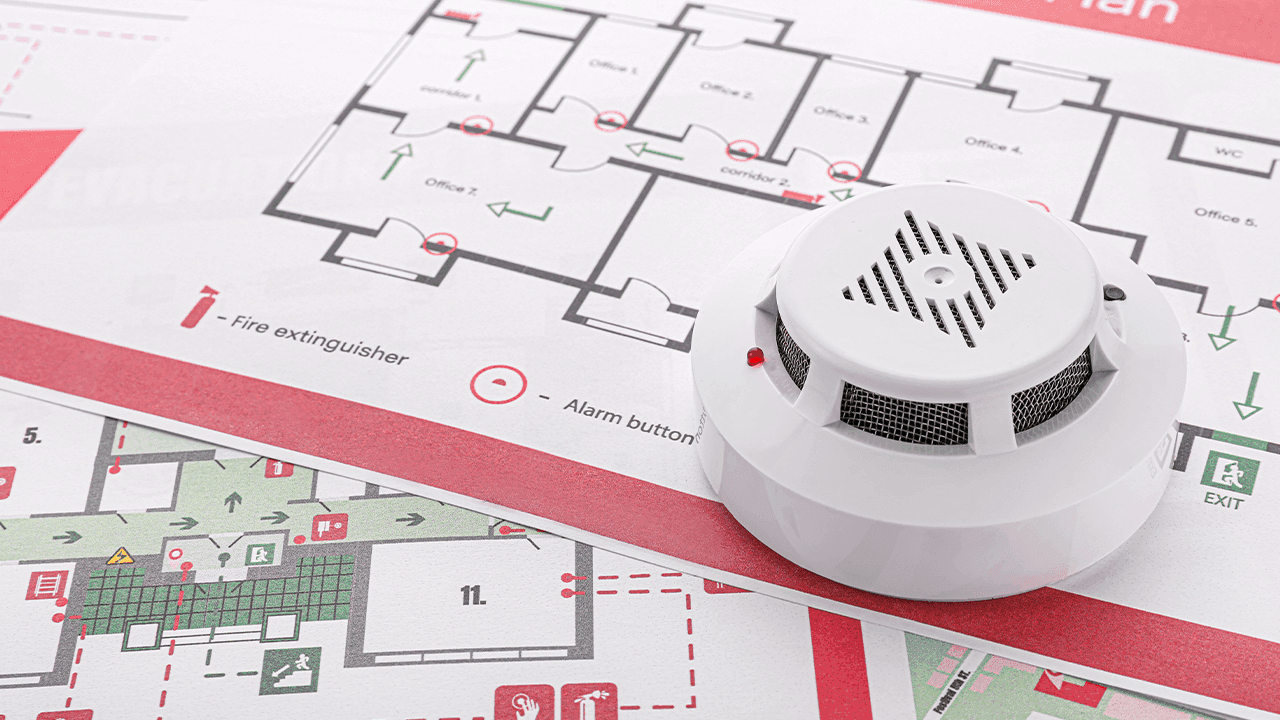
An emergency response plan (ERP) sets out what people do, who does what, and how everyone is told when something goes wrong, such as a fire, a medical emergency, a chemical spill or severe weather. To implement one, assess the risks at your site, name the roles, write the procedures, mark the site, train your people, test the plan with drills, and review it after every drill, incident or change.
A plan on a shelf doesn't help anyone. The plan is only useful when the people on site know where to go, who to listen to, and what to do in the first two minutes.
What an emergency response plan covers
An ERP is a site-specific plan. It describes what your workplace needs to do in the events that could realistically happen there. Most plans cover:
- Alarms and warnings. How people are alerted, and who can raise the alarm.
- Evacuation. Routes, exits, the assembly point and how people are counted.
- Shelter or lockdown. What to do when leaving is more dangerous than staying put, such as a severe storm or a threat.
- Medical and first aid. Who responds, where first aid kits and defibrillators are, and when to call emergency services.
- Hazard-specific responses. Fire, chemical spills, gas leaks, electrical incidents, falls or trench collapse, depending on your work.
- Shutdown and isolation. How to make plant, power and gas safe before people leave.
- Contacts. Emergency services, site managers, the people who can shut things down and any neighbouring businesses that need to know.
Your plan should cover workers, visitors and contractors. A contractor who has never been on site may be the person least likely to know where to go.
Who must have one
The person conducting the business or undertaking (PCBU) is responsible for workplace emergency planning under section 19 of the WHS Act, which requires you to ensure health and safety so far as is reasonably practicable. The WHS Regulations also set out emergency plan requirements for workplaces. How much detail you need depends on your risks, and the more hazardous the work, the more detail the plan needs. Check the current requirements with your WHS regulator. If you also need to keep the business running after an emergency, see how to build a business continuity plan.
You can hand tasks to supervisors, but you can't hand off the duty itself. Under section 14 of the WHS Act, a duty can't be transferred to someone else.
Consult your workers when you prepare the plan and when you change it. The duty to consult in section 47 of the WHS Act applies here. Workers and health and safety representatives know where people get stuck, which routes flood, and which alarms can't be heard in a loud plant room.
How to implement an emergency response plan
1. Assess the risks
Walk the site with a list of what could go wrong. Start with your hazard register and ask:
- What could start a fire, and what would it spread to?
- Where are the chemicals, gas and high-voltage equipment?
- Who works alone, works at height or works in a confined space?
- Who needs help to get out, such as someone who uses a wheelchair or has a hearing impairment?
- What happens outside the site that could affect us, such as a flood or a bushfire?
Rank the events by how likely they are and how badly they could hurt people. Plan for the ones at the top first.
2. Name the roles
An emergency needs people with clear jobs. Keep the list short, and name a deputy for every role, because the person in the role may be off site.
| Role | Job during an emergency |
|---|---|
| Emergency coordinator | Makes the decisions, calls the emergency services and decides when it's safe to return |
| Area wardens | Check each area is clear, guide people out and report anyone missing |
| Accountability person | Holds the current list of who is on site, including visitors and contractors, and checks it at the assembly point |
| First aid officer | Gives first aid, keeps the first aid kit and calls for medical help |
| Assistants for people who need help | Are named in advance and know the agreed way to help each person out |
| Communications person | Speaks to staff and visitors, updates the emergency coordinator and keeps a log |
3. Write the procedures
Write one short procedure for each event on your list. Each should answer five questions: how do people know, what do they do first, where do they go, who does what, and when does it end? Keep each procedure to one page. A worker in a noisy plant room needs something they can read in ten seconds.
Our general emergency response procedure and fire procedure are a starting point for these short procedures, which you can then adapt to your site.
4. Mark the site
A plan is hard to follow in an unfamiliar building. Post a site plan at each entrance and at key points in the site. It should show:
- Exits and escape routes, with the nearest exit marked
- The assembly point
- Fire extinguishers, hose reels, first aid kits, defibrillators and spill kits
- Isolation points for power, gas and water
- Emergency phone numbers
Check the signage each month. A sign that points to a door that has been locked or moved is worse than no sign.
5. Train and inform everyone
Give every new worker an induction that covers the alarm, the exits and the assembly point. Run a short refresher for existing staff at least once a year, and brief visitors and contractors when they arrive. Record who has been trained. The emergency worker training register gives you a simple place to keep those records.
6. Test the plan with drills
A plan that hasn't been tested is a guess. Run a drill at least once a year, and after any major change to the site, the layout or the people working in it. Time the evacuation, count the people at the assembly point and record what went wrong. Common problems include:
- The alarm can't be heard in one part of the site
- The assembly point is blocked by a delivery
- Nobody knows who has the attendance list
- A visitor isn't counted because nobody signed them in
For the fire-specific steps, including routes and wardens, read our fire evacuation plan guide. Record each drill on an emergency drill report, then fix what didn't work and test again.
7. Review after every drill and incident
Review the plan when something changes: the layout, the chemicals stored, the plant used, the people on site or the way people work. Review it after every real emergency too, even a small one. The question to ask is simple: would a new worker on their first day know what to do?
Common mistakes
The plan lives in a folder. Keep copies at the front desk, in the crib room and on your phone or site tablet, so people can find it in an emergency.
Roles go to one person. If the emergency coordinator is off site, nobody is in charge. Name deputies and check the list each month.
Drills are announced and easy. A drill planned for 9 a.m. on a Monday is not a real test. Run some with no warning and at different times of the shift.
The plan is written for head office. A plan that covers the main building but not the yard, the depot or the vehicle fleet leaves workers unprotected.
People who need help are forgotten. Plan for each person who may need assistance to get out, and agree on the help they need. Don't assume someone will think of it on the day.
How SafetyDocs helps
SafetyDocs gives you expert-written emergency response plans and procedures, along with drill reports and training registers, so you don't start from a blank page. Job, client and site details fill themselves in. Documents can be sent in your crew's languages, with the English original kept as the record, and workers sign free on any phone from a text, link or QR code, with no app or account. A site tablet in kiosk mode serves workers who don't have a phone with them. When a document changes, everyone who signed is asked to sign the new version.
Common questions
How often should we test our emergency plan? At least once a year, and after any major change to the site or the people who work there. Many sites run smaller drills more often, such as a quarterly fire drill.
Do small businesses need one? Yes, if you have workers. A small site can keep its plan to a few pages, a single assembly point and a simple call list. It still needs to cover the events that could realistically happen there.
Can I give the job to my site supervisor? You can give the tasks to a supervisor, but the duty stays with the business. Make sure the person has the time, the training and the authority to do the job.
Do I have to tell the regulator about an emergency? Only if it's a notifiable incident. Read our guide to notifiable incidents in Australia for what must be reported and when.
This is general information, not legal advice. Check the current law with your WHS regulator.
템플릿 라이브러리
이제 바로 쓸 수 있는 SWMS로 직접 적용해 보세요.
호주 업종에 맞게 작성된 SWMS 템플릿을 둘러보세요. 어떤 템플릿이든 무료로 미리 보고, 몇 분 만에 내 작업에 맞게 고칠 수 있습니다.
이 작업을 위한 템플릿
- 정책Emergency Response Procedure - General
- 정책Emergency Response Procedure - Fire
- 양식, 등록부 또는 체크리스트Emergency Worker Training Register
- 양식, 등록부 또는 체크리스트Emergency Drill Report
관련 안내서

안전 관리
Business continuity plan for workplace safety: how to build one
How to build a business continuity plan that keeps workers safe in an emergency: risks, critical functions, response, communication, recovery and drills.

안전 관리
Fire evacuation plan: how to write and run one
How to write a fire evacuation plan that gets people out safely, covering the fire risk assessment, roles, alarms, assembly, drills and reviews.
안전 관리
How we build SafetyDocs, and how we look after you
How we design SafetyDocs: simple, seamless tools for the whole crew, built with the people who use them. Tell us what you'd like next.