Crystalline silica dust: how to manage it safely
Respirable crystalline silica causes silicosis and lung cancer. Learn which tasks create the dust, the WHS duties that apply and how to control exposure.
यो लेख अहिलेलाई अंग्रेजीमा छ।
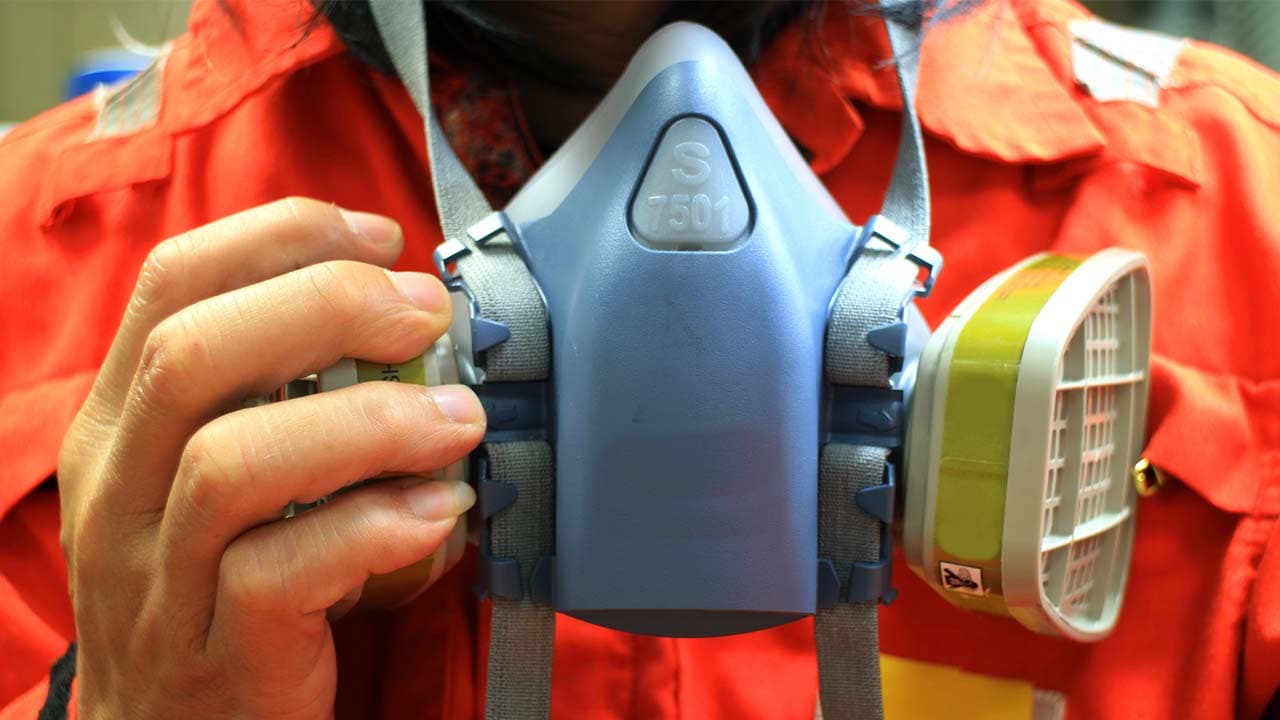
Respirable crystalline silica (RCS) is a fine dust released when materials containing silica are cut, ground, drilled or crushed. If workers breathe it in, it can cause silicosis, lung cancer and other lung and kidney diseases. You manage it by stopping or reducing the dust at the source, measuring exposure where needed, and checking workers' health, under your duties as the business (PCBU).
Engineered stone has made this hazard much more visible. Its silica content is very high, and it was banned from 1 July 2024. Other materials, such as concrete, sandstone, bricks, mortar and tile, still release silica dust on many jobs, so the controls below apply well beyond the stone benchtop industry.
What makes silica dust dangerous?
Silica is a mineral found in sand, stone, concrete, mortar, bricks and many other materials. The dust that matters is the respirable fraction: particles small enough to pass deep into the lungs and stay there. You can't see most of them, which is why a dusty-looking job and a safe-looking job can have very different exposure levels.
Illness from silica usually develops after repeated exposure over years, although high exposure over a short time can cause serious disease quickly. Common conditions include:
- Silicosis. Scarring of the lungs that causes breathlessness and cough. It's incurable and can get worse after exposure stops.
- Lung cancer. Silica is a known cause, and the risk is higher for smokers.
- COPD and chronic bronchitis. Long-term damage to the airways and lungs.
- Kidney disease and autoimmune conditions. Linked to silica exposure in some studies.
Symptoms don't always appear straight away, so exposure can go unnoticed for years. That's why controls and health monitoring matter even when workers feel fine.
Which tasks create silica dust?
Any task that breaks, cuts or grinds a silica-containing material can release RCS. Common examples include:
- cutting, grinding, drilling and chasing concrete, brick, block or stone
- tuckpointing and bricklaying with cutting or grinding
- sandblasting and abrasive blasting
- demolition of concrete or masonry
- stone masonry, tile cutting and tile setting
- cutting and installing engineered stone benchtops
- crushing and screening rock, gravel or sand
- tunnelling and mining
- pottery and glazing work with silica-based materials
Dust gets worse in enclosed spaces, when work is done dry, and when several tasks run together. The people nearest the work, and those who clean up afterwards, usually have the highest exposure.
Which rules apply?
Engineered stone
Engineered stone was banned from 1 July 2024. The ban covers manufacturing, importing, supplying and installing engineered stone products, with limited exceptions. If you work with engineered stone or stone that may contain silica, check the current rules and exceptions with your regulator, and read the Codes of Practice on managing silica from engineered stone.
Other silica work
Work with other silica-containing materials is covered by the general WHS duties and by the Code of Practice on managing the risks of respirable crystalline silica and the model Code on hazardous chemicals. Some states have their own codes or additional rules, so check the one that applies where you work.
Workplace exposure standard
The workplace exposure standard for RCS sets the maximum airborne concentration a worker can be exposed to over a working day. Exposure must be kept below that level, and you need to show you've controlled it. The exposure standard is a limit, not a safe target. Controls should keep exposure as low as reasonably practicable.
Your duties
Under section 19 of the WHS Act, the PCBU must keep workers and others safe from risks to health from the work, so far as is reasonably practicable. For silica, that means:
- identifying where the dust is released
- eliminating or controlling the dust, starting at the source
- monitoring the air where you're unsure about exposure
- providing health monitoring to workers at risk
- providing training, information and suitable respiratory protection
- consulting workers under section 47 about the controls
Where several businesses share a site, such as a builder, a stone installer and an electrician, each must work with the others on the controls. The dust doesn't stop at each business's boundary.
Does high-risk construction work need a SWMS?
Only if the work is high-risk construction work. Under regulation 299 of the WHS Regulations, a SWMS must be prepared before high-risk construction work starts. It must identify the work, the hazards and risks (including silica dust), the controls, and how they will be implemented, monitored and reviewed. If your silica work is part of a demolition, excavation or other high-risk job, the SWMS needs to cover it. You can use a silica dust SWMS as a starting point, then adjust it to the job. Our guide to safety in high-risk construction work explains which jobs qualify.
How do you control silica dust?
Use the hierarchy of controls, starting at the top.
- Eliminate or substitute. Avoid the task if you can. Use prefabricated or pre-cut components, or switch to materials with lower silica content, such as some composite products.
- Isolate. Do dusty work in a separate area, away from other workers. Use enclosures or automated equipment where possible.
- Engineer the dust out. Use water suppression (wet cutting), local exhaust ventilation with a dust extraction unit, and power tools fitted with dust collection attachments. Make sure the extraction system is maintained and tested.
- Use administrative controls. Write safe work procedures, limit the number of people in the area, rotate tasks, and plan work so the dustiest jobs happen when the fewest people are around.
- Use respiratory protection. Provide suitable respirators as the last line of control. They must be fit tested, correctly worn and maintained. A face seal that doesn't fit gives little protection, especially on workers with facial hair. For how to choose and look after respirators, read our guide to PPE and safety equipment.
Wet methods and extraction
Wet cutting is one of the most effective controls for many jobs. Keep the cutting surface wet and the blade or tool water-fed, and check the water supply before you start. Local exhaust ventilation should capture dust at the point it's created. General ventilation can dilute dust in the room, but it doesn't replace source control.
Dry cutting with a tool that has no extraction is not an acceptable control on most jobs.
Housekeeping
Don't sweep dry dust. Use a vacuum with a HEPA filter, or wet wipe surfaces. Keep floors and surfaces clear of settled dust, and don't use compressed air to clean work areas or clothing. Clean up at the end of each shift, not just at the end of the job.
Decontamination
Dust settles on clothes and skin, and it can spread to cars and homes. Stop workers from taking dusty clothes home. Provide a place to wash hands, arms, face and hair before leaving the site. Dampen dusty clothes, place them in a sealed bag labelled with the contamination warning, and send them to a commercial laundry if needed. Use a HEPA vacuum to clean work clothing before it's taken off.
How should you monitor exposure and health?
Air monitoring tells you how much dust workers breathe. Monitor when you're unsure of exposure levels, when the process, materials or controls change, and when you need to check that the controls are working. Use a competent person, such as an occupational hygienist, to choose and carry out the sampling. The results should inform your controls and the respiratory protection you provide.
Health monitoring checks workers for early signs of harm. It's required for workers who are at significant risk, such as those working with materials where exposure standards are likely to be exceeded. It usually includes a review of the worker's work history, a medical examination, a chest x-ray and lung function tests, with follow-up as the doctor recommends. Check with your WHS regulator for the current requirements in your state or territory.
Keep the records. Health monitoring results are confidential, but you need to know who has been monitored, when, and with what result.
What should go in your silica plan?
A written plan should show who is at risk, what you do to control dust, and how you know the controls work. It should cover:
- every task that creates silica dust, and where it happens
- the controls for each task, in order of the hierarchy
- the air monitoring and health monitoring you do, and when
- the respiratory protection you provide, and how it's fit tested
- how you clean and decontaminate
- training and who has completed it
- how workers report dust problems or missed controls
A silica dust management plan gives you a starting structure you can adapt to your jobs.
SafetyDocs has silica dust SWMS, management plans and registers you can adapt to your jobs. The job and site details fill in themselves, and your crew signs on from their phone with a text, link or QR code, with no app or account needed. When a control changes, you update the document once and everyone who signed is asked to sign the new version. This helps you show your records are current. It doesn't make you compliant on its own.
Training workers
Workers should know what silica is, what it does to the lungs, and why the controls matter. They should also know how to use the controls correctly, such as where to stand, how to use water, when to wear a respirator and how to clean up. Training should be specific to the tasks people do, not a general talk.
Encourage workers to report dust problems early, including a tool with no water feed, a damaged extraction hose or a missing respirator. A worker who feels unwell or has breathing problems should tell you straight away and see a doctor.
Common questions
Is all silica work banned? No. The engineered stone ban applies to specific products and activities. Other silica-containing materials can still be worked with, but the controls must reduce exposure as far as reasonably practicable.
Do I need an air test before I start? You need to know your exposure. If you can't be sure exposure is below the exposure standard, monitor the air. Your risk assessment should tell you when this applies.
Can a dust mask protect my crew? A basic dust mask doesn't meet most silica controls. Use a respirator that's suitable for the task, fit tested and worn correctly. Respirators are the last line of control, not the first.
Does this apply to small jobs? Yes. Exposure depends on the task and the dust, not the size of the job. A tradesperson cutting a few pavers or a bench top still needs wet cutting, extraction or suitable respiratory protection.
This is general information, not legal advice. Check the current law with your WHS regulator.
टेम्प्लेट लाइब्रेरी
यसलाई व्यवहारमा उतार्नुहोस्, तयारी SWMS सँग।
अस्ट्रेलियाका ट्रेडका लागि लेखिएका SWMS टेम्प्लेट हेर्नुहोस्। जुनसुकै पनि निःशुल्क प्रिभ्यू गर्नुहोस्, अनि केही मिनेटमै आफ्नो कामअनुसार मिलाउनुहोस्।
यो कामका लागि टेम्प्लेट
टेम्प्लेट लाइब्रेरी हेर्नुहोस्सम्बन्धित गाइड

खतरा
Environmental risks in industrial operations: 10 key areas
The environmental risks most common in industrial operations, from air and water pollution to chemical spills, and how to manage each one on site.
खतरा
3 types of environmental hazards in the workplace: examples
The three types of workplace environmental hazards are chemical, physical and biological. See examples of each, and the controls that reduce the risk.

खतरा
Heat stress management: a plan for hot working conditions
Manage heat stress at work: spot the warning signs, assess heat risks, apply controls, train your crew and review the plan, under Australian WHS laws.