Risk assessment 101: what it is and how to get it right
What a risk assessment is, how it differs from a hazard, how to use a risk matrix, and the five steps to assess and control workplace risks.
यो लेख अहिलेलाई अंग्रेजीमा छ।
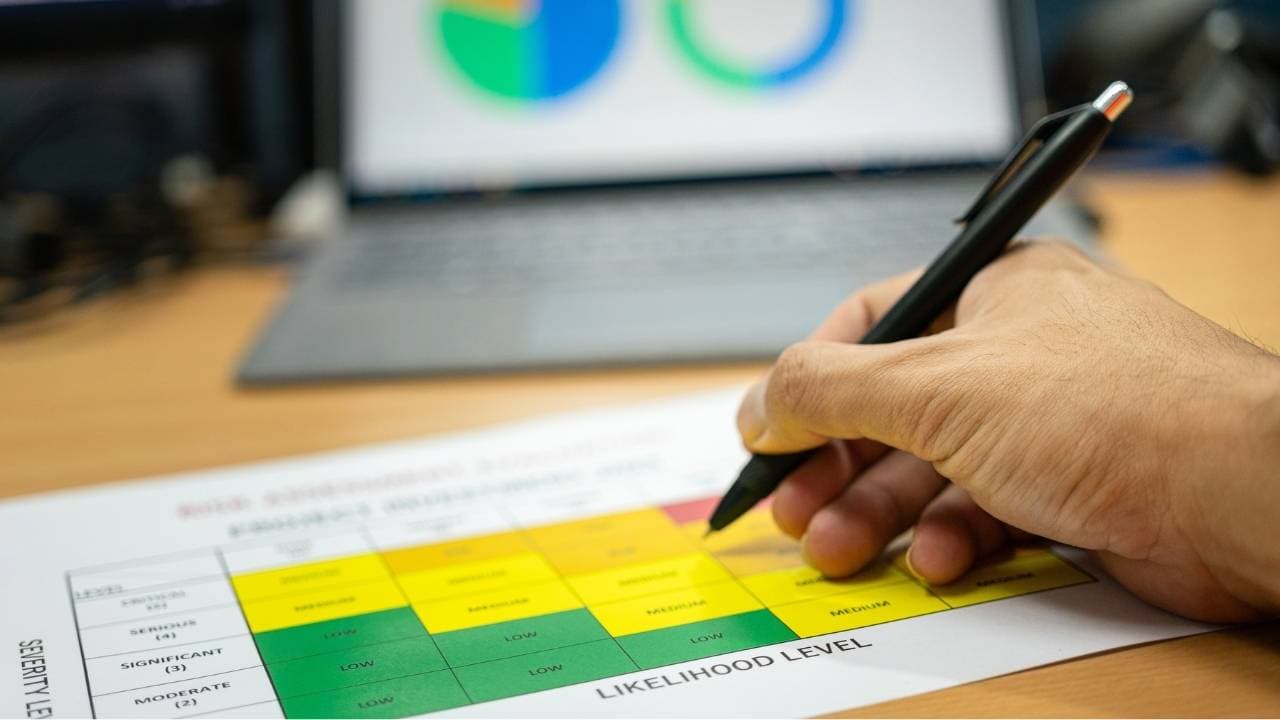
A risk assessment is a structured way to judge how likely a hazard is to hurt someone, how serious that harm could be, and which controls will reduce it. You use the result to decide what to fix first. The model WHS Regulations require you to eliminate risks so far as is reasonably practicable and, if you can't, to minimise them, and a documented assessment is how you show you did.
What is the difference between a hazard and a risk?
People often use these words as if they mean the same thing. They don't.
- A hazard is anything that could cause harm. It's a thing or a situation: a wet floor, an unguarded blade, a heavy box to lift.
- A risk is the chance that the hazard will cause harm, together with how bad that harm could be. A worker slipping on the wet floor and fracturing a wrist is a risk. So is losing a finger to the blade.
You find hazards by walking the site and asking the crew. You assess risks by working out, for each hazard, how likely harm is and how serious it could be.
Hazards usually fall into a few groups:
| Type | Examples on a worksite |
|---|---|
| Safety | Unguarded machinery, falling objects, slips, trips and falls, working at heights, confined spaces, electricity |
| Chemical | Solvents, cleaning products, silica dust, lead, fumes from welding or cutting |
| Physical | Noise, vibration, heat, cold, poor lighting, radiation |
| Biological | Bites and stings, animals, blood and body fluids in health or aged care work |
| Ergonomic | Repetitive tasks, lifting, awkward postures, poorly set up workstations |
| Psychosocial | Work-related stress, bullying, harassment, unreasonable deadlines, job insecurity |
Psychosocial hazards are the ones most often left out. The model Code of Practice on psychosocial hazards, published in 2022, treats them as a WHS risk like any other.
How do you run a risk assessment?
The model Code of Practice, How to manage work health and safety risks, sets out the process as four steps: identify hazards, assess risks, control them, and review the controls. In practice, five steps work well:
- Identify the hazard. Use walkarounds, incident reports, toolbox talk feedback and job hazard analyses. Ask the people doing the task what goes wrong. Our step-by-step hazard assessment guide covers the walkaround in more detail.
- Assess the risk. Estimate how likely harm is, given the controls that already exist, and how bad it could be. Use a matrix to combine the two.
- Control the risk. Where the rating is too high, apply the controls in order: eliminate, substitute, isolate, engineer, change the work, then PPE. The hierarchy of controls post covers this in detail.
- Record it. Write down the hazard, the rating, the controls and who is responsible for each one.
- Review it. Check the controls still work, and reassess when the work, plant or people change.
How to use a risk matrix
A risk matrix puts likelihood on one axis and consequence on the other. Each box gives a rating, so you can compare hazards and rank them. This is a simple version you can adapt:
| Likelihood | Minor injury | Serious injury | Death or permanent disability |
|---|---|---|---|
| Likely (happens often, or already has) | Medium | High | Extreme |
| Possible (could happen during the job) | Low | Medium | High |
| Unlikely (rare, with good controls) | Low | Low | Medium |
Two rules keep ratings honest:
- Be realistic about likelihood. Count how often people are exposed to the hazard, not how often it has caused a serious injury. A forklift that passes a pedestrian every ten minutes is a likely contact, even if nobody has been hit yet.
- Consider the worst credible outcome. For consequence, ask what could reasonably happen, not what usually does.
A low-likelihood event with a fatal outcome can still outrank a common, minor one. Our managing WHS risks post shows how the assessment fits into the rest of the risk process. Set your rule for what is acceptable, and write it into your risk register so supervisors rate things the same way.
A worked example: pedestrians and a forklift
A loading bay has a forklift reversing between pallets while two packers work nearby.
- Hazard: a moving forklift in a space shared with pedestrians.
- Likelihood: likely, because the bay is busy and visibility is poor when the forklift reverses.
- Consequence: serious or fatal if someone is crushed.
- Rating: high or extreme. The control must be strong.
The controls, starting at the top:
- Isolate. Put pedestrians behind a barrier or a painted walkway, out of the forklift's path.
- Engineer. Install a reversing camera or proximity sensor, and one-way traffic routes.
- Change the work. Set a rule that the forklift stops and sounds the horn at blind corners, and that nobody walks behind a reversing vehicle.
- PPE. High-visibility vests for pedestrians. This helps, but it's the last layer, not the main control.
Record the rating before and after the controls, so you can show the risk came down.
What a good assessment needs
Most failed assessments are not wrong in one big way. They fall short in small ones:
- Involve the crew. The people doing the task know the shortcuts and the workarounds. Consultation is also a legal duty under the WHS Act.
- Don't skip the soft risks. Fatigue and workplace stress can be assessed the same way as a guard on a machine. A fatigue risk assessment form gives you a starting point.
- Think about lone work and after-hours access. Security and emergency arrangements are part of the assessment.
- Look at the current task, not the old one. An assessment written for last year's method is out of date.
- Use a form people will fill in. A risk assessment form keeps each assessment consistent, so you can compare them later.
Keep the record in one place. When the controls change, update the assessment and the crew's procedure at the same time.
Common questions
Do I need a formal risk assessment for every task? No. A quick check before a routine, low-risk job may be enough. Write a formal assessment for new work, high-risk tasks and any job where conditions change.
What is the difference between inherent and residual risk? Inherent risk is the level before any controls are applied. Residual risk is what's left once the controls are working. Your aim is to get the residual risk down to an acceptable level, and to confirm it stays there.
Who should take part in a risk assessment? The people who do the work, their supervisor, and any health and safety representative should all take part. Their knowledge makes the assessment accurate, and their involvement is required by the WHS consultation duties.
How often should I reassess? Reassess when the work, plant, substances or people change, after an incident or near miss, and when a control isn't working. Otherwise, review on a set schedule you choose.
This is general information, not legal advice. Check the current law with your WHS regulator.
टेम्प्लेट लाइब्रेरी
यसलाई व्यवहारमा उतार्नुहोस्, तयारी SWMS सँग।
अस्ट्रेलियाका ट्रेडका लागि लेखिएका SWMS टेम्प्लेट हेर्नुहोस्। जुनसुकै पनि निःशुल्क प्रिभ्यू गर्नुहोस्, अनि केही मिनेटमै आफ्नो कामअनुसार मिलाउनुहोस्।
यो कामका लागि टेम्प्लेट
- फारम, रजिस्टर वा चेकलिस्टRisk Assessment Form
- फारम, रजिस्टर वा चेकलिस्टRisk Register
- फारम, रजिस्टर वा चेकलिस्टWorkplace Fatigue Risk Assessment Form
सम्बन्धित गाइड
जोखिम व्यवस्थापन
Hazard vs risk: what's the difference? With examples
A hazard is anything that could cause harm; a risk is the chance it will, and how bad the harm could be. See the difference with workplace examples.
जोखिम व्यवस्थापन
How to conduct a workplace hazard assessment, step by step
Walk the site, consult workers, review your records and reassess every change. A step-by-step hazard assessment in line with Safe Work Australia guidance.
जोखिम व्यवस्थापन
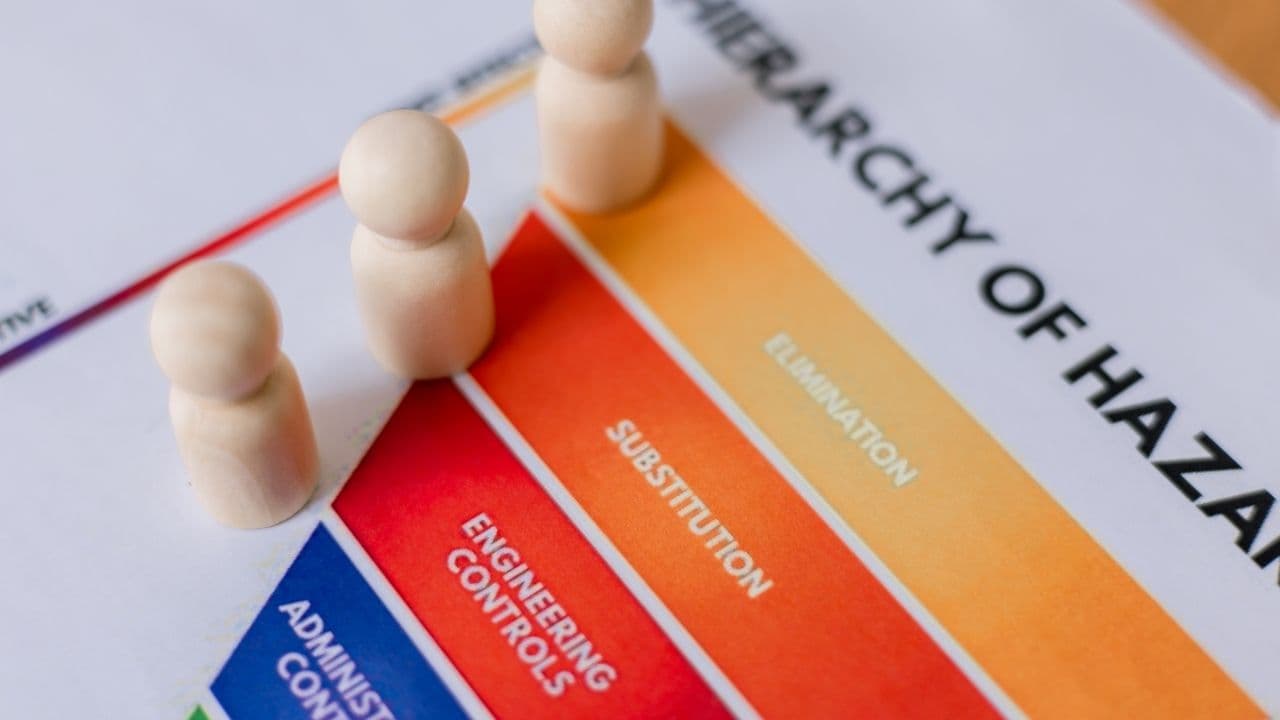
Hierarchy of controls: how to apply it at work
How to apply the hierarchy of controls: the order of elimination, substitution, isolation, engineering, administrative controls and PPE, with worksite examples.