Toolbox talk topics for construction and trades
Over 50 toolbox talk topics for construction and trades, grouped by hazard, with the point to make on site and how to pick this week's topic.
यो लेख अहिलेलाई अंग्रेजीमा छ।
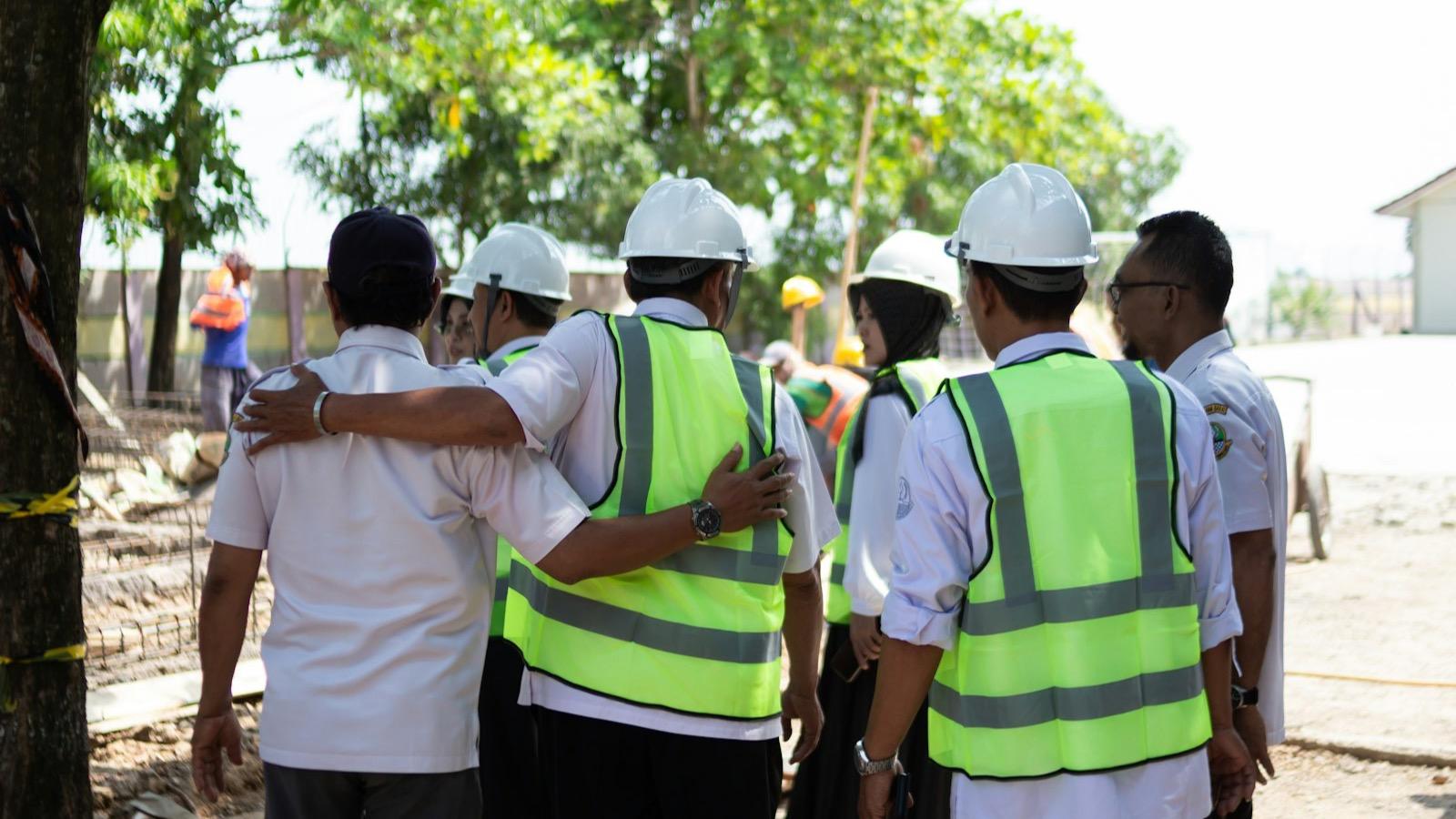
Toolbox talk topics are short safety discussions held with the crew, usually for 5 to 15 minutes at the start of a shift or before a risky task. Good topics are specific to the work on site this week, such as the height you'll be working at, the plant in the yard or the substance in the bag, and they end with something the crew does differently.
Below are more than 50 topics grouped by hazard. Each one gives the point to make on site. Pick the ones that match what's happening this week, and use the last section to choose.
Working at height
- Inspect the harness before you climb. Check the webbing, buckles and stitching, and replace any harness that has been in a fall.
- Where the anchor point is. Confirm it's rated and where your lanyard runs before you move.
- Ladders are for short tasks. Check the rungs, footing and angle, and use a platform when the job takes longer.
- Edge protection first. Stay behind guardrails, and never lean past the edge to reach.
- Scaffold tags. Look for the tag before stepping on, and report any missing boards or rails.
- Falling objects. Tie off tools, keep materials back from the edge, and barricade the area below.
- Roof work in wet or windy weather. Stop when the surface is slippery or gusts make footing unsafe.
Plant and vehicles
- Walk around before you drive. Check for people, pits and overhead lines, and make eye contact with the spotter.
- Exclusion zones. Mark them, and never stand in the swing or reach of an excavator.
- Reversing alarms and spotters. Don't rely on the alarm alone, and don't guess where the operator can see.
- Pre-start checks. Look at the brakes, lights, horn, tyres and hydraulics every day, and tag out anything faulty.
- Load restraint. Check the load is secured before it leaves the site.
- Traffic management. Use the signed traffic plan, and wear high-visibility clothing near moving vehicles.
- Don't ride on plant unless it has a designed seat and restraint.
- Crane and lifting awareness. Know the load path, keep people out from under it, and never work near a load you can't see.
Electrical
- Overhead power lines. Know the safe approach distance for the line and the plant, and get a spotter for any work near them.
- Test before you touch. Confirm circuits are dead, and lock out and tag out before working on them.
- Leads and power tools. Check for damaged cords and plugs, and use a residual current device (RCD) on portable tools.
- Wet conditions. Keep electrical gear dry, and don't use tools in standing water.
- Underground services. Locate and mark cables and pipes before digging, and stop if you hit something unexpected.
- Temporary power boards. Keep them off the ground and out of the path of vehicles.
Hazardous substances, dust and silica
- Engineered stone is banned in Australia. Engineered stone was banned from 1 July 2024, so check what you're cutting and what's in stock.
- Silica dust. Wet cutting and local exhaust ventilation control the dust at the source. A respirator is the last line, not the only control.
- Fit testing and beards. A respirator only works if it seals, so check the fit before each shift.
- Asbestos. If you think a material could contain asbestos, stop, don't disturb it, and report it.
- Read the SDS. Know what's in the product, the first aid steps and the storage rules before you open the drum.
- Spills. Know where the spill kit is and how to use it before you need it.
- Solvents and fumes. Work with ventilation, and don't eat, drink or smoke where you're handling them.
- Lead. Keep dust and paint chips under control during removal or sanding, and wash up before eating.
Manual handling
- Plan the lift. Check the load, the route and where it's going before you pick it up.
- Get help early. Ask for a second person or a trolley for anything heavy, awkward or bulky.
- Keep the load close. Lift with your legs, keep your back straight and don't twist.
- Repetitive tasks. Rotate jobs and take short breaks, because small strains add up over a week.
- Stacking and carrying plasterboard, sheets and pipe. Use the right number of people and mechanical aids.
- Report sore backs early. A short report now is cheaper than a long claim later.
Heat, sun and weather
- Drink before you're thirsty. Keep water within reach and take regular breaks in the shade.
- Start early and plan the hard work. Do the heaviest tasks in the cooler part of the day.
- Sun protection. Wear a hat, long sleeves and sunscreen, and check each other for sunburn.
- Watch for heat illness. Know the signs of heat exhaustion and heat stroke, and what to do if someone shows them.
- Cold conditions. Dress in layers, keep dry, and watch for numb fingers and slips on frost.
- Wind and storms. Secure loose materials, and stop lifting or working at height when conditions get worse.
- Lightning. Get off the roof and out of the open when storms are close.
PPE
- Pick the right PPE for the task. Safety glasses, hearing protection and gloves each protect against different hazards.
- Check it before you use it. Look for cracks, worn straps and expired filters.
- Fit matters. A helmet, glasses or respirator that doesn't fit isn't doing its job.
- PPE is the last line. Remind the crew that PPE comes after elimination, substitution and engineering controls.
- Hearing protection. If you have to raise your voice to be heard by someone two metres away, the noise is too loud for you to go without protection.
Psychosocial hazards and fatigue
- Long hours. Fatigue shows up as slower reactions, so speak up if you're too tired to drive home safely.
- Bullying and harassment. Report it early to a supervisor, the health and safety representative (HSR) or the person in charge of the site, whichever you feel safest with.
- Stress on the job. Tight deadlines and pressure from the builder are safety issues too.
- Look out for each other. Notice when a mate is quiet, rushing or not themselves.
- Speak up without fear. Remind the crew that raising a hazard is part of the job, and no one gets in trouble for stopping work.
Site housekeeping
- Trips and slips. Keep walkways clear of offcuts, cable and water.
- Nails and sharps. Pick up offcuts and bend or remove the nails on the floor.
- Stored materials. Stack and secure materials so they can't fall, roll or be knocked.
- Clear the access. Keep fire exits, first aid kits and emergency equipment unobstructed.
- Good lighting. Report any dark areas at the start of a shift, before night work starts.
Emergencies and first aid
- Know the assembly point. Walk through it on the first day and whenever the site changes.
- Who's the first aider? Know who is trained and where the kit is.
- Report every injury. Including the small ones, so the next person is safer.
- Emergency contacts. Make sure everyone knows the site number and how to call for help from the work area.
- Incident reporting. Report near misses as well as injuries, because near misses are early warnings.
Specific trades
- Concreting. Keep the pump hose secure and clear of people, and check formwork before pours.
- Demolition. Confirm the structure is stable and services are isolated before you start pulling walls down.
- Excavation. Check the trench walls, keep spoil back from the edge, and get out before the trench is entered.
- Scaffolding. Only trained people put up or change it, and the tags stay up until it's signed off.
- Confined spaces. Check the air, have a standby person and a rescue plan, and don't enter because someone else went in.
- Roofing. Work from the correct edge protection and keep sheet offcuts off the roof.
How to pick this week's topic
Don't cycle through the same list each week. Use these inputs to pick:
- Recent incidents and near misses. If someone nearly fell from a ladder, talk about ladders this week.
- High-risk work coming up. If the crew starts excavation or roof work on Monday, cover that before it starts.
- Season and weather. Heat in summer, wet ground and slippery surfaces in winter.
- New starters and subcontractors. Cover the site rules and anything specific to the work they're doing.
- Plant or chemicals that have arrived. A new machine or product means a new talk.
- Things the crew has raised. Consultation is a legal duty under section 47 of the WHS Act, so ask workers what they want covered.
Write down the topic, the date and who attended. A simple record shows you're keeping workers informed, and it's easy to pull up after an incident.
Use a record for every talk
A toolbox talk is only useful if it's recorded and the crew signs on. Use the meeting and toolbox talk record to log the topic, the attendees and any actions. For the hazards behind the topic, see the hazard pages for falls, respirable crystalline silica for dust, and mobile plant and vehicles.
For tips on running the talk so the crew listens, read how to conduct a toolbox talk that actually works.
Common questions
How long should a toolbox talk take? Five to fifteen minutes is usually enough. If the topic needs longer, split it into two talks or run a separate training session.
Do toolbox talks have to be recorded? The law doesn't set a format for toolbox talks, but a record of who attended and what was covered is the simplest way to show that workers were informed.
Who should run the talk? Anyone with the knowledge to lead it, usually the supervisor, but a worker who knows the task well can run it too.
Can I use the same topic twice? Yes, especially if the risk is still present. Repeat it when the work changes, or when someone is hurt or nearly hurt doing it.
This is general information, not legal advice. Check the current law with your WHS regulator.
टेम्प्लेट लाइब्रेरी
यसलाई व्यवहारमा उतार्नुहोस्, तयारी SWMS सँग।
अस्ट्रेलियाका ट्रेडका लागि लेखिएका SWMS टेम्प्लेट हेर्नुहोस्। जुनसुकै पनि निःशुल्क प्रिभ्यू गर्नुहोस्, अनि केही मिनेटमै आफ्नो कामअनुसार मिलाउनुहोस्।
यो कामका लागि टेम्प्लेट
टेम्प्लेट लाइब्रेरी हेर्नुहोस्सम्बन्धित गाइड
सुरक्षा संस्कृति
What is a toolbox talk? How to run one that actually works
A toolbox talk is a short safety meeting held on site. Learn what it covers, how to run a 5 to 10 minute talk your crew engages with, and how to record it.
सुरक्षा संस्कृति
Unsafe work practices: 10 to avoid and how to prevent them
Ten unsafe work practices behind many workplace injuries, from skipped PPE and lockout steps to horseplay and unreported near misses, and how to stop each.

सुरक्षा संस्कृति
Beyond safety compliance: building a real safety culture
What a safety culture looks like on site, why compliance alone falls short, and five leadership steps from SafeWork Australia to build one that lasts.