Earthmoving safety: how to work around heavy plant
Earthmoving safety on site: the struck-by, rollover, access and mobile plant hazards around excavators and dozers, with the controls and documents to use.
Hiện bài viết này chỉ có bằng tiếng Anh.
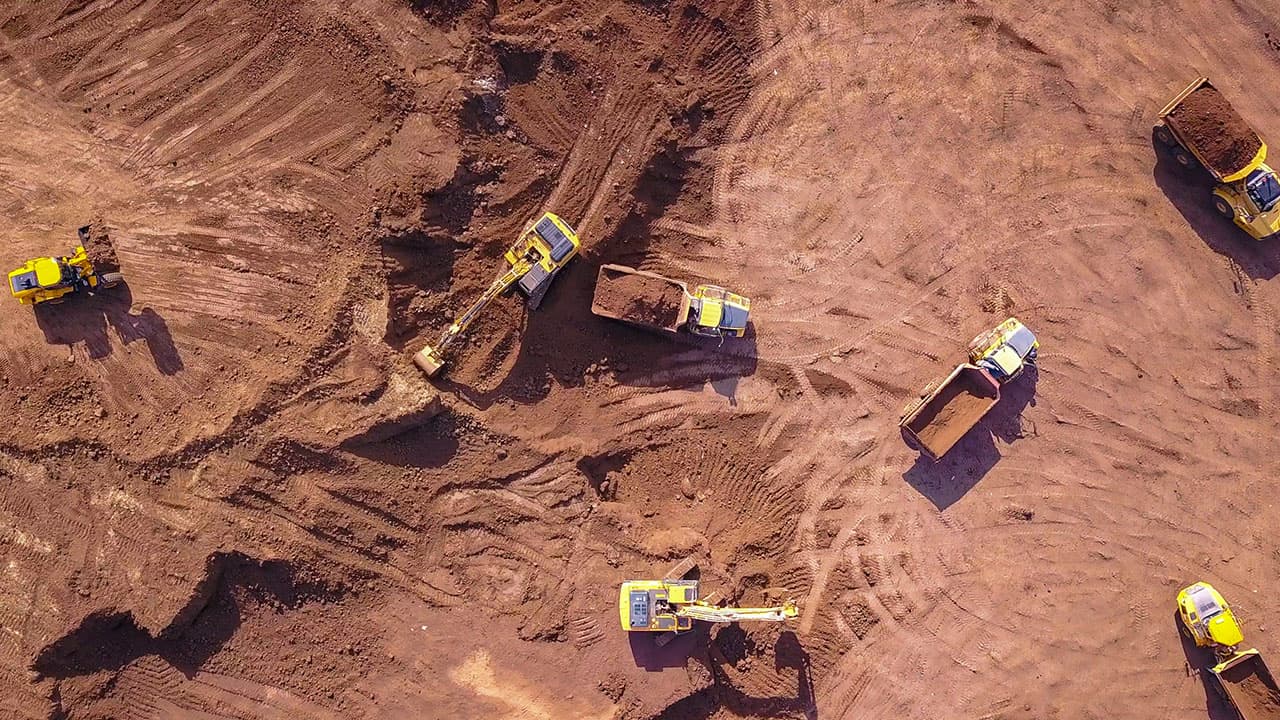
Earthmoving safety means keeping people and heavy plant apart. Most serious earthmoving incidents involve a worker being struck by a moving machine, caught between a machine and an object, or hurt when a machine tips or rolls. The main controls are a clear separation of people and plant, a safe system of work written for the job, operators who are trained and licensed for the machine, and a plant inspection before each shift.
This guide covers the machines you'll see on earthmoving sites, the hazards around them and the controls to put in place.
What earthmoving involves
Earthmoving is the removal, shifting and shaping of soil, rock and other material. It happens on building sites, civil works, mines and farms. Typical tasks include:
- cutting roads, driveways and building pads;
- digging footings, trenches for pipes and service lines;
- moving spoil and fill to and from the site;
- levelling and compacting ground for slabs and pavements.
The machines most often used are excavators, bulldozers, loaders, graders, scrapers, backhoes, rollers and tipper trucks. Each has its own blind spots, reach and stability limits, so the safe way to work around one is not always the safe way to work around another.
The main hazards
Struck-by and caught-between
Earthmoving machines move slowly, but their booms, buckets and blades carry a lot of force. People get hit when they walk into the swing radius, stand between a machine and a wall or pile of material, or work in a blind spot the operator can't see. Flying rock or spoil can also strike people.
Controls:
- Set up a clear exclusion zone around each machine's swing and travel path, and mark it with barriers or cones.
- Use a spotter when a machine reverses or works near people, and make sure the operator can see them.
- Don't let anyone stand between a machine and a fixed object.
- Keep people out of the reach of a loaded bucket or raised blade.
Rollover and tipping
Machines tip when they work on a slope, near the edge of an excavation, or with a load that's off-centre or too heavy for the reach. A rollover can crush the operator, and a tipping machine can also drop a load on people below.
Controls:
- Check the ground before setting up. Look for soft edges, cracks and undermining, especially near trenches.
- Keep machines back from the edge of an excavation by a safe distance, and don't let them work on slopes they aren't rated for.
- Follow the manufacturer's load charts and never exceed the rated load.
- Use a ROPS (roll-over protective structure) and seatbelt, and keep both in use.
See the plant roll-away or roll-over hazard page for more on these controls.
Access and falls
Getting on and off a machine is a common cause of falls. Steps, handrails and boot grip are often poor, and many people climb on with a tool in one hand. Engine covers and attachments are also places where people work at height.
Controls:
- Use the machine's steps and handholds, facing the machine, three points of contact at all times.
- Don't climb onto a moving or running machine.
- Use a harness and a fall-arrest anchor when working on the top of a machine or at height.
- Keep steps, handrails and the cab clean.
Mobile plant and people working together
Earthmoving sites usually have trucks, loaders, workers on foot and light vehicles moving at the same time. Most near misses happen where those paths cross.
Controls:
- Plan separate routes for plant and pedestrians, and keep them out of each other's way.
- Use traffic controllers at site entrances, crossings and reversing areas.
- Make sure every operator knows the site traffic plan before starting.
Our guide to managing plant in the workplace covers the wider plant risk process.
Other hazards
Earthmoving sites also have noise, vibration, dust, fatigue and electrical hazards. Overhead and underground services are a particular risk: a machine that touches a power line can energise the whole machine and the people near it. Locate and mark services before digging, and keep a safe distance from overhead lines.
Before the work starts
Earthmoving work often falls into high-risk construction work. Under the model Regulations, excavation work deeper than 1.5 metres, and work where a fall of more than 2 metres is possible, both count (regulation 291). Where that applies, a SWMS must be prepared before the work starts (regulation 299).
Before the first shift, check:
- the site plan, including the locations of services and any overhead lines;
- the ground conditions and the stability of any excavation;
- the plant to be used, its inspection status and its attachments;
- the operators' licences or competency for each machine;
- the exclusion zones, spotter arrangements and traffic routes.
If you're not sure whether the job is high-risk, check it against the Do I need a SWMS? checker in our template library.
Daily controls
- Pre-start inspection. Check the brakes, lights, horn, reverse alarm, mirrors or cameras, hydraulics, tyres or tracks and guards. Record the inspection and report any fault. Don't operate a machine with a known defect.
- Toolbox talk. Brief the crew on the day's tasks, the exclusion zones, the spotter and any changes to the plan.
- Operator fatigue. Plan rest breaks and rotate operators on long or repetitive tasks.
- Clear communication. Agree on hand signals or radio calls, and make sure everyone understands them.
- Stop when unsafe. Anyone can stop work when a person or machine is at risk, and the work restarts only when the risk is controlled.
Licences and training
Operators need the right licence or competency for each machine. Requirements are set by the state or territory regulator, and they vary with the type of machine. Check the rules where you work, keep the certificates on file, and check that each operator is trained on the specific machine and attachments they'll use.
Every construction worker also needs a general induction card (commonly called a 'white card'). Workers must show it on request to the PCBU on site and to any inspector.
Documents for earthmoving
These documents turn the controls above into a plan people can follow:
| Document | What it covers | When to use it |
|---|---|---|
| Earthmoving equipment SWMS | Hazards and controls for earthmoving equipment | Before any earthmoving work starts |
| Plant risk assessment form | Hazards for each machine on site | When a new machine or attachment arrives |
| Excavator SOP | Safe operation steps for excavators | For each operator, before first use |
| Plant safety management plan | How plant is managed across the whole site | For the project, from set-up to demobilisation |
Keep your SWMS current. Review it when the machines, the site layout or the methods change, and after any incident (regulation 302).
For excavations near trenches or confined spaces, our guide to working in a confined space covers the extra entry controls. For the wider rules on high-risk construction work, see safety in high-risk construction work.
How SafetyDocs helps
SafetyDocs has 1,250+ expert-written templates for earthmoving, including SWMS, plant SOPs and checklists, so you aren't writing them from scratch. The job, client and site details fill in automatically. The builder can comment on the exact line and approve the document before it goes out. Workers sign on any phone, with no app or account. When a plan changes, everyone who signed is asked to sign the new version.
Common questions
What is the biggest risk around earthmoving plant? Being struck by or caught between a moving machine. Keep people out of the swing and travel paths of each machine, and use a spotter when a machine moves near people.
Does every earthmoving job need a SWMS? Not every job. Work that counts as high-risk construction work does, such as excavation deeper than 1.5 metres or work where a fall of more than 2 metres is possible.
Do operators need a licence? Often, yes. The state or territory regulator sets the requirement for each type of machine, so check the rules where you work.
What should a pre-start inspection cover? Brakes, lights, alarms, mirrors or cameras, hydraulics, tyres or tracks, guards and attachments. Record it and don't use a machine with a known fault.
This is general information, not legal advice. Check the current law with your WHS regulator.
Thư viện mẫu
Áp dụng ngay với một SWMS soạn sẵn.
Xem các mẫu SWMS viết cho các ngành nghề ở Úc. Xem trước miễn phí bất kỳ mẫu nào, rồi điều chỉnh cho công việc của bạn trong vài phút.
Mẫu cho công việc này
- Bản mô tả phương pháp làm việc an toàn (SWMS)Manual Handling
- Bản mô tả phương pháp làm việc an toàn (SWMS)Forklift
- Bản mô tả phương pháp làm việc an toàn (SWMS)Mobile Plant Working Near-Around
- Bản mô tả phương pháp làm việc an toàn (SWMS)Tipper and Dog
Hướng dẫn liên quan

Xây dựng
Excavation safety: best practice for excavation work
Excavation safety for crews: the cave-in, underground service, atmosphere and plant hazards, when a SWMS is needed, and the controls to use.
Xây dựng
What is an ITP in construction? Inspection and test plans
ITP stands for inspection and test plan. Learn what an ITP is in construction, what goes in one, how hold and witness points work, and how to write one.
Xây dựng
Top 10 safety forms every site supervisor should have
The 10 safety forms a site supervisor needs, from pre-start checks and inductions to incident reports and contractor sign-in, and what each one is for.