Safety data sheets (SDS) and hazard communication
What a safety data sheet (SDS) contains, how to read its hazard and first aid sections, and how to keep an SDS register workers can actually use.
Hiện bài viết này chỉ có bằng tiếng Anh.
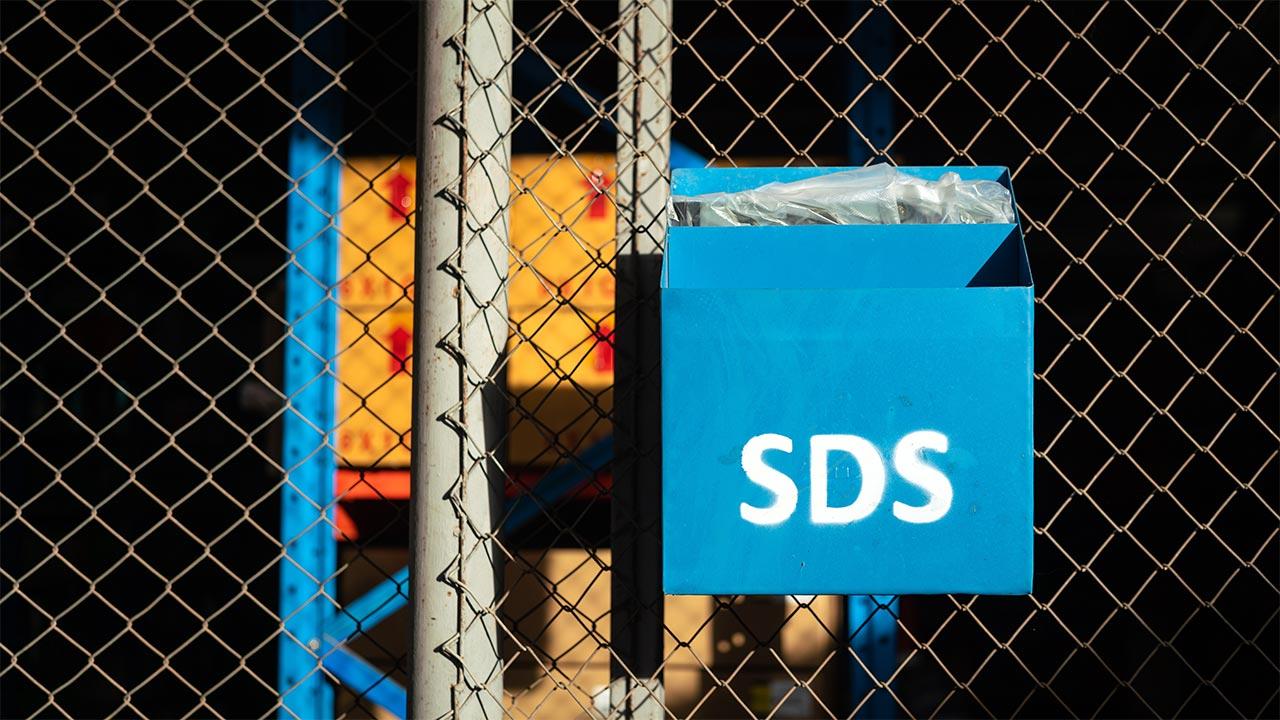
A safety data sheet (SDS) is the standard document that tells you what a hazardous chemical is, what its hazards are, and how to store, use, handle and dispose of it safely. It also sets out first aid and spill response. The manufacturer or importer must prepare one, and the employer must hold an up-to-date SDS for each hazardous product and make it available to workers, contractors and emergency services.
Picture a warehouse where workers handle industrial solvents. Before they open a drum, they check the SDS for flammability, skin and breathing hazards, the right gloves and what to do if the product spills. Without an SDS, they'd be guessing.
What is an SDS?
An SDS, formerly called a material safety data sheet (MSDS), is a standard document with the same structure for every hazardous chemical. The structure follows the Globally Harmonized System (GHS), so the same type of information appears in the same place, whichever supplier made the product. That consistency is what makes hazard communication work: a worker who learns to read one SDS can read most others.
When do you use an SDS?
- Before a new chemical is used, so workers know the hazards and controls first.
- During training, to explain how a product should be handled.
- During safety audits, to check that stored chemicals match the register and are used as the SDS says.
- In an emergency, so first aiders and responders know what they're dealing with.
- When a product changes, such as a new formulation or a new supplier.
What's on an SDS?
The sections follow a set order. You don't need to read all of them every time, but these are the ones that matter most day to day:
| Section | What to look for | Why it matters |
|---|---|---|
| Identification | Product name, supplier contact details, recommended uses | Confirms you have the right product and who to call |
| Hazard identification | Pictograms, signal word, hazard and precautionary statements | Shows the risks at a glance |
| First aid measures | Steps for inhalation, skin, eye and ingestion | Tells first aiders what to do, and when to get medical help |
| Accidental release measures | How to contain, clean up and dispose of a spill | Lets the team act quickly and safely |
| Handling and storage | Storage conditions, incompatible materials | Prevents dangerous mixing and storage mistakes |
| Exposure controls and PPE | Exposure limits, ventilation and the PPE needed | Sets the controls for the task |
The rest of the sheet covers physical and chemical properties, stability and reactivity, toxicology, ecological information, disposal, transport and regulatory information.
How to read the hazard information
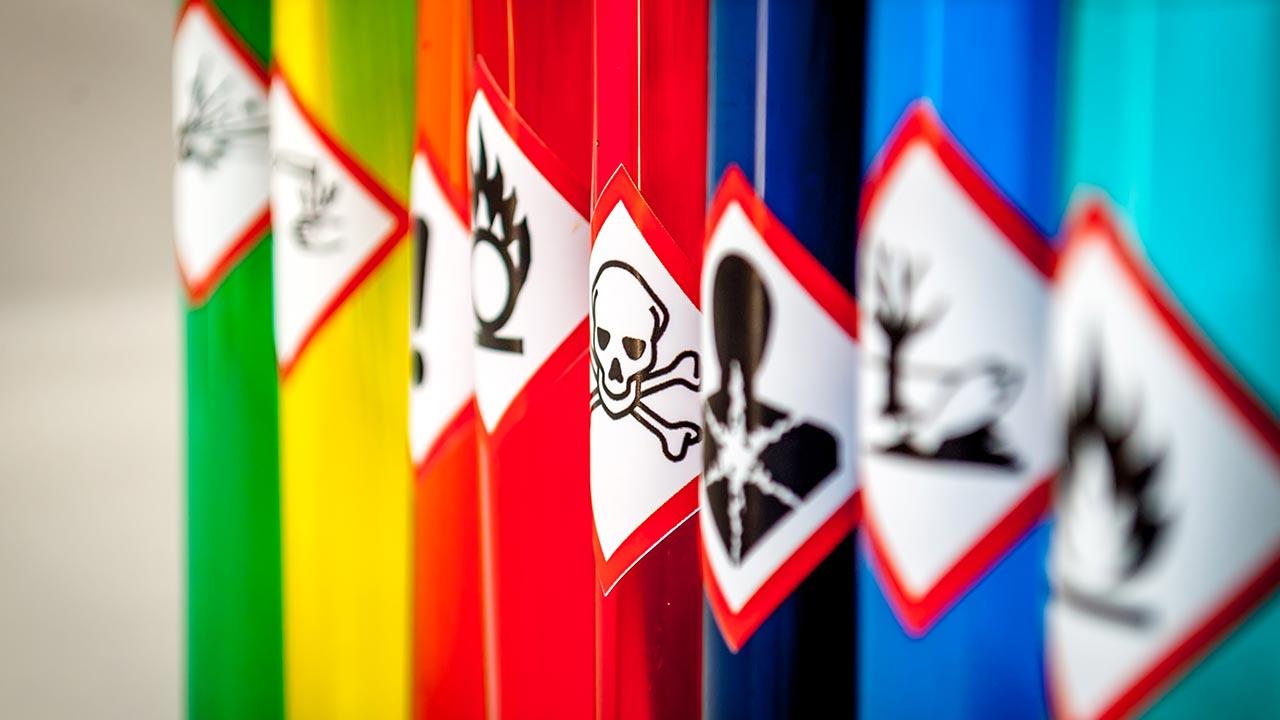
Pictograms are symbols that show the type of hazard. The GHS includes a flame for flammable materials, a skull and crossbones for acute toxicity, an exclamation mark for less severe hazards such as irritation or skin sensitisation, and a health hazard symbol for serious long-term effects.
Signal words are either "Danger" or "Warning". "Danger" marks the more severe hazards.
Hazard statements describe the hazard, such as "Causes skin irritation", and carry a code, such as H315. The code lets you compare hazards across products.
Precautionary statements tell you what to do. They're grouped into prevention ("wear protective gloves"), response ("if swallowed, do not induce vomiting") and storage ("store in a cool, dry place"), plus disposal.
Read the hazard section before you open the container, not after something goes wrong.
First aid and spills
First aid instructions are given by route of exposure, so follow the one that matches how the person was exposed. For inhalation, move the person to fresh air. For skin contact, remove contaminated clothing and rinse the skin with water. For eye contact, rinse cautiously with water for several minutes and remove contact lenses if they're easy to remove. In every case, get medical help if symptoms continue.
For spills, the SDS tells you how to contain the material, what absorbent to use, which PPE to wear and how to dispose of the waste. Put the spill steps in your chemical spill response plan, so the team doesn't need to find the SDS in the middle of an incident.
What your duties are
A business that uses hazardous chemicals is a person conducting a business or undertaking (PCBU). It must identify and classify the hazardous chemicals it uses, keep labels and SDSs, and manage the risks in the way the work is done. The model Code of Practice on managing risks of hazardous chemicals in the workplace covers these duties in more detail.
WorkSafe Victoria's guidance on SDSs sets out these points:
- the SDS must be written in English and be legible;
- manufacturers and importers must review and update each SDS as often as necessary, and at least every five years;
- employers must hold an up-to-date SDS for each product and make it accessible to employees, contractors and emergency services.
Check the rules that apply in your state or territory, because the detail varies.
Build an SDS register that workers can use
A register is the list of hazardous chemicals in your workplace, with a link to each SDS. Make it simple enough to use at the point of use.
- List every product. Include anything stored, used or produced on site, including cleaning products, adhesives and fuels.
- Link the SDS. Store the current version next to the entry, and record the revision date.
- Record where each product is kept, and who is responsible for it.
- Make it accessible. Workers need to reach the SDS before they handle the product, so keep it in the work area or on a shared device.
- Train workers. Show them how to find the SDS, and how to read the hazard, first aid and PPE sections.
- Review the register when a product changes, a new one arrives or a sheet is revised.
The chemical and SDS register and chemical manifest give you a starting structure. For the wider picture, read our guide to handling and storing chemicals in the workplace.
Common questions
Who must provide an SDS? The manufacturer or importer prepares it, and downstream suppliers pass it on. The employer must hold one for every hazardous product used at work.
Can I rely on the product label instead? No. A label gives a short summary. The SDS gives the full hazard, first aid, storage and spill information. You need both.
How often should I check an SDS for updates? Check the revision date each time you update your register. Manufacturers must review each SDS at least every five years, so an old sheet may have been revised.
Does an SDS have to be in English? In Victoria, yes. It must be written in English and be legible. Check the rules in your own state or territory.
This is general information, not legal advice. Check the current law with your WHS regulator.
Thư viện mẫu
Áp dụng ngay với một SWMS soạn sẵn.
Xem các mẫu SWMS viết cho các ngành nghề ở Úc. Xem trước miễn phí bất kỳ mẫu nào, rồi điều chỉnh cho công việc của bạn trong vài phút.
Mẫu cho công việc này
- Biểu mẫu, sổ đăng ký hoặc danh sách kiểm traChemical & SDS Register
- Biểu mẫu, sổ đăng ký hoặc danh sách kiểm traChemical Manifest
Hướng dẫn liên quan
Mối nguy
Managing chemical hazards and safe chemical storage
Manage chemical hazards at work: label and classify chemicals, keep safety data sheets and registers, control exposure, and store substances safely.
Mối nguy
Types of chemical spills and how to plan your response
The main types of chemical spill, how to tell a minor spill from a major one, and the steps for a chemical spill response plan that works on site.

Mối nguy
Environmental risks in industrial operations: 10 key areas
The environmental risks most common in industrial operations, from air and water pollution to chemical spills, and how to manage each one on site.