Preventing falls from heights: a guide to keeping workers safe
How to prevent falls from heights at work: the main hazards, the control hierarchy from guardrails to harnesses, and a fall risk review that keeps working.
هذا المقال متوفر بالإنجليزية حاليًا.
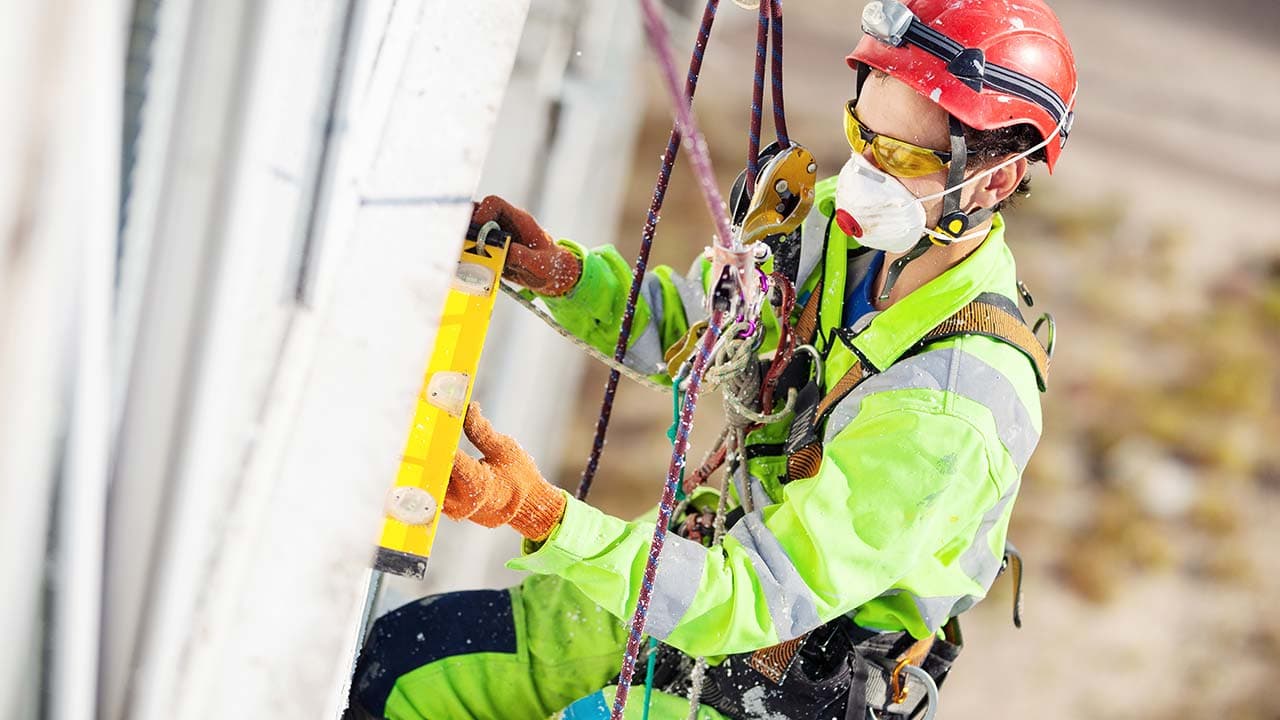
You prevent falls from heights by removing the need to work at height where you can, then stopping the fall with guardrails, edge protection or platforms. Where that's not possible, use fall arrest systems, and treat administrative controls and personal protective equipment (PPE) as the support, not the main defence. Falls are one of the leading causes of death and serious injury at work in Australia, so the plan needs to be written, checked and reviewed.
Working at height means any work where a person could fall far enough to be injured. For construction work, work where a person could fall more than 2 metres is high-risk construction work, and it needs a safe work method statement (SWMS) before work starts. For the wider list of high-risk work, see safety in high-risk construction work.
Why falls are so serious
The fall itself is the main hazard. The further the fall, the greater the risk of death or serious injury, and the landing surface matters as much as the height. Between 2015 and 2019, falls from heights accounted for about 13% of worker fatalities, according to Safe Work Australia's falls data.
Most falls come from a handful of hazards:
- Slips, trips and falls on the work surface, from clutter, wet or uneven ground, poor lighting, the wrong footwear or a faulty ladder.
- Falling objects, when tools or materials aren't secured, or when people work below without a barrier.
- Structural collapse, from a scaffold, platform or roof that wasn't built or inspected properly.
- Electrocution, when a worker's ladder, mast or tool touches overhead power lines.
- Weather, including strong wind, rain, lightning and ice, which can make a surface unsafe or move a platform.
What is the control hierarchy for falls?
The WHS Regulations require you to work through the hierarchy of control. Start at the top, and use a combination of controls where one isn't enough.
| Level | Examples | What it does |
|---|---|---|
| Eliminate the work at height | Prefab components, ground-level assembly, pole or telescopic tools | Removes the fall entirely |
| Fall prevention | Guardrails, edge protection, scaffolds, working platforms, covers over openings | Stops the worker reaching the edge, with no ongoing adjustment |
| Work positioning | Restraint lanyard, rope access | Holds the worker in a safe position so they can't reach the edge |
| Fall arrest | Safety nets, catch platforms, harnesses with a shock-absorbing lanyard | Stops a fall once it starts and limits the impact |
| Administrative controls | No-go zones, permits, sequencing, SWMS, training | Supports the physical controls, doesn't replace them |
| PPE | Full-body harness, anchor point, self-retracting lifeline | Last line of defence, used with the controls above |
Fall prevention first
Guardrails are the most common fall prevention device. The top rail should sit between 900 mm and 1,100 mm above the working surface, with a mid-rail and toe board to stop people sliding under or objects going over. Put them around the perimeter of the work area, and keep them in place until the work is finished.
Edge protection on roofs works the same way. Temporary platforms and scaffolds provide a stable place to work. Scaffolds must be built and inspected to the AS/NZS 1576 series. Use scaffold and ladder failure as the hazard reference when you plan a job that depends on them.
Work positioning and fall arrest
Work positioning uses a harness and a lanyard to hold the worker back from the edge. Fall arrest catches a fall that happens anyway. The options are:
- Catch platforms placed under the work area, built to take the full impact load.
- Safety nets around the perimeter, used with other prevention devices.
- Individual fall arrest systems, with a body harness, shock-absorbing lanyard and anchorage. Workers must be trained to use them, and inspect them before each use.
- Vertical lifelines or rails for ladder or tower climbing.
Fall-arrest equipment should meet the AS/NZS 1891 series. AS/NZS 1891.4 covers selecting, using and maintaining it.
Administrative controls and PPE
Administrative controls are changes to how the job is run. No-go areas, permit systems, and sequencing work so people aren't working above each other all reduce exposure. Training makes the rest work, so cover fall hazards, the rescue plan and how to use the equipment.
PPE is the last line of defence. A full-body harness, a shock-absorbing lanyard or a self-retracting lifeline only works if it fits, is inspected and is attached to a sound anchor point.
How to run a fall risk assessment
Use a simple cycle: find the hazards, assess the risk, control it and review the controls. Involve the crew at each step.
- Identify the hazards. Walk the site and list each place someone could fall from. Look for fragile surfaces, unprotected edges, skylights and roof hatches, ladders and stairways, slopes, openings, and work over or near plant and holes in the ground.
- Inspect the surface. Check the stability and capacity of the surface, the condition of the ground, and the state of any scaffold, ladder, handrail or safety device.
- Assess the risk. Consider how often people are exposed, the height of the fall, what they'd land on, whether a fall could be stopped and how likely serious injury is.
- Choose controls. Work down the hierarchy. Record why each control was chosen, and what happens if it fails.
- Assign and check. Name the person who will install, inspect and maintain each control. Check that it's in place before work starts, and at the start of each shift.
- Review. Look at the controls again after an incident or near miss, a change in the method, new equipment, bad weather, or when a worker raises a concern.
For the site walk, a falls prevention checklist and a working at height risk assessment checklist give you a set of questions to work through.

Electrocution and falling objects
Keep a safe distance from overhead power lines, and don't use metal ladders, mast climbers or long tools near them. Ask the network operator to isolate or cover the lines if you can't keep the required distance. The overhead power lines hazard page covers the basic controls, and electrical emergency preparedness for contractors explains what to do if contact happens.
Falling objects injure people below as well as the person dropping them. Secure tools with lanyards, store materials away from edges, use toe boards and mesh, and cordon off the area below. Warning signs help, but a barrier works better.
Common questions
When is a SWMS required for work at height? For construction work, a SWMS is required for high-risk construction work. That includes work where a person could fall more than 2 metres. The SWMS must describe the controls and how they'll be implemented and monitored.
Are harnesses enough on their own? No. A harness is PPE, and it only works with an anchor point and a rescue plan. It's the last control in the hierarchy, so use guardrails, edge protection or platforms first where you can.
How high is a guardrail? The top rail should be between 900 mm and 1,100 mm above the working surface, with a mid-rail and toe board. Check the exact requirement for your state, because regulators give specific guidance for roofs and other surfaces.
Who has to plan for a rescue? The person who controls the work should have a rescue plan before anyone works at height. A worker in a harness can be harmed by suspension trauma if they're left hanging, so rescue needs to be quick.
This is general information, not legal advice. Check the current law with your WHS regulator.
مكتبة النماذج
طبّق ذلك عمليًا مع نموذج SWMS جاهز.
تصفّح نماذج SWMS المكتوبة للحِرف في أستراليا. عاين أيًّا منها مجانًا، ثم عدّل واحدًا ليناسب مهمتك في دقائق.
نماذج لهذا العمل
- بيان طريقة العمل الآمن (SWMS)EWP, Boom, Cherry Picker and Scissor Lift
- بيان طريقة العمل الآمن (SWMS)Height Access Equipment
- بيان طريقة العمل الآمن (SWMS)Painting and Decorating
- بيان طريقة العمل الآمن (SWMS)Roof Work
أدلة ذات صلة
المخاطر
Environmental risks in industrial operations: 10 key areas
The environmental risks most common in industrial operations, from air and water pollution to chemical spills, and how to manage each one on site.
المخاطر
3 types of environmental hazards in the workplace: examples
The three types of workplace environmental hazards are chemical, physical and biological. See examples of each, and the controls that reduce the risk.

المخاطر
Heat stress management: a plan for hot working conditions
Manage heat stress at work: spot the warning signs, assess heat risks, apply controls, train your crew and review the plan, under Australian WHS laws.