Pinch points: what they are, examples and controls
A pinch point is where a body part can be caught between moving and fixed parts. See examples on site and in plant, and how to control them with the hierarchy.
6 min read
A pinch point is any place where part of a person's body can be caught between two objects when at least one of them moves: a moving part and a fixed one, or two moving parts coming together. Fingers in a closing door, a hand drawn into a belt and pulley, or a worker trapped between a reversing truck and a wall are all pinch point injuries.
If you searched "pinch point" or "pinch point hazard", that's the short answer. The rest of this page gives examples from plant and construction sites, and works through the controls from most to least effective.
What is a pinch point?
A pinch point is where two things meet with enough force to crush, cut or trap whatever is between them. The injuries range from bruised fingers to amputations and deaths, depending on the force and the part of the body caught.
You'll also hear pinch points called nip points, crush points or caught-between hazards. Safe Work Australia's Model Code of Practice: Managing the risks of plant in the workplace asks you to think about whether plant could cause injury through entanglement, crushing, trapping, cutting or shearing during every stage of its life, from installation to maintenance and dismantling. It also warns that guards themselves must not introduce new hazards "such as pinch points".
There are two broad kinds:
- Pinch points in plant and machinery, where moving parts meet: rollers, gears, chains, belts and pulleys. The entanglement and moving parts hazard page covers these.
- Pinch points between people, plant, loads and structures, where a whole body or limb is caught between a moving vehicle, load or piece of equipment and something solid. The crushing and entrapment hazard page covers these.
Pinch point examples
In plant and machinery
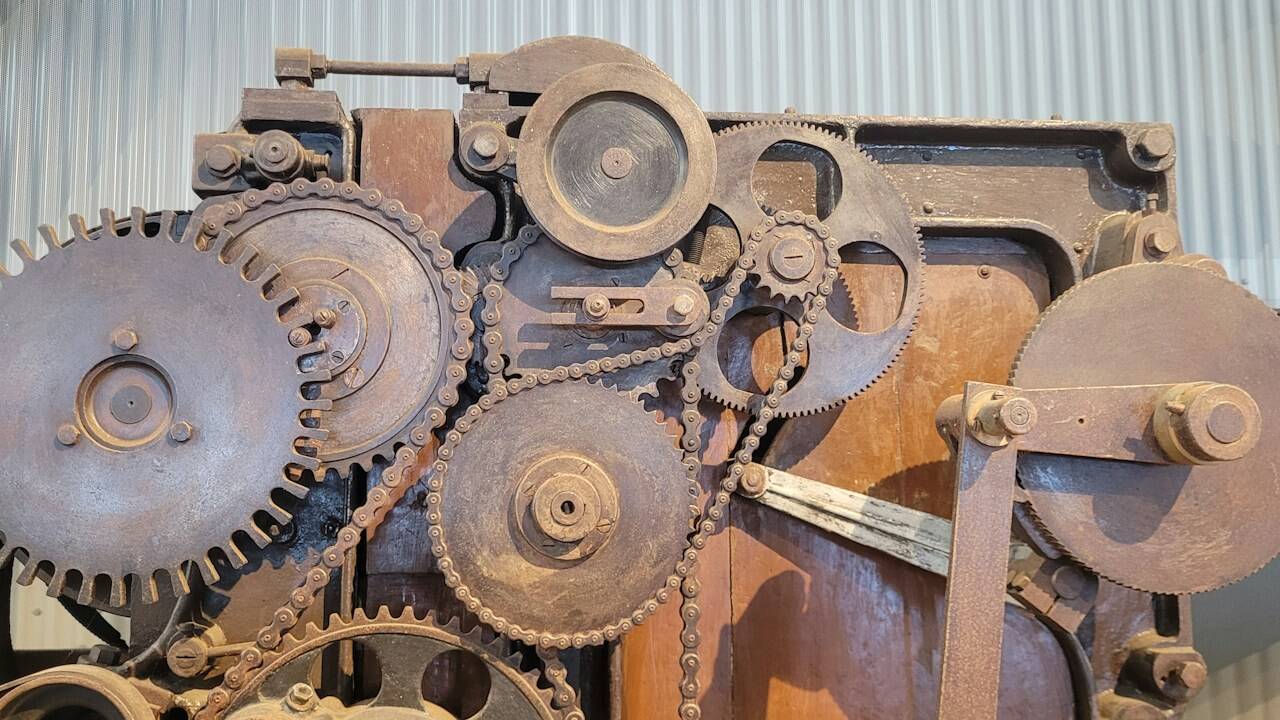
- In-running nip points: where two rollers turn towards each other, or a belt runs onto a pulley, or a chain onto a sprocket. A glove, sleeve or finger touching the belt is drawn in.
- Gears: meshing teeth on exposed gear trains, such as on older machines and some farm equipment.
- Presses and guillotines: the closing gap between a ram or blade and the bed.
- Conveyors: the point where the belt meets the head or tail drum, and the rollers underneath.
- Hydraulic arms and linkages: the scissor action of a lifting arm, a tipper body or a boom closing on itself.
- Doors, hatches and lids: heavy machine guards, bin lids and access hatches closing on hands.
On construction sites and in warehouses
- Mobile plant and structures: a worker between an excavator's counterweight and a wall as it slews, or between a reversing truck and a loading dock.
- Suspended loads: hands between a load and its landing as a crane or forklift lowers it, or between a swinging load and a column.
- Formwork, props and panels: fingers caught when lowering panels, adjusting props or stacking materials.
- Tailgates, trailer ramps and couplings: hitching a trailer, dropping a tailgate or lowering a ramp.
- Hand tools and materials: a hammer and nail, pipe being joined, timber being stacked.
How to control pinch points: the hierarchy of controls
Where a pinch point can't be eliminated, the model WHS Regulations require you to work down the hierarchy of controls (regulation 36): substitute, isolate or use engineering controls first, then administrative controls, and personal protective equipment last. Our guide to the hierarchy of controls explains each level.
1. Eliminate the pinch point
- Design it out: when buying or modifying plant, choose designs with no exposed nip points, enclosed drives and automatic feeding.
- Change the task so nobody needs to be near the moving parts, for example remote operation or feeding by conveyor rather than by hand.
- On site, plan the layout so plant never needs to work close to walls, stacks or other plant where a person could be trapped.
2. Substitute, isolate or engineer
- Guarding. This is the main control for machinery. If guarding is used, the model Regulations (regulation 208) require a permanently fixed barrier where access isn't needed during operation, maintenance or cleaning, or an interlocked barrier where it is. If neither is reasonably practicable, the guard must need a tool to remove, or the plant must have a presence-sensing system that eliminates the risk when someone enters the area. Guards must be hard to bypass, maintained and not create new hazards.
- Operating controls and emergency stops. Controls must be clearly marked, within easy reach, protected against being bumped on, and able to be locked off (regulation 210). Where several people operate or attend plant with several emergency stops, they must be stop and lock-off types (regulation 211).
- Separation. Exclusion zones, barriers and separate walkways keep people out of the path of moving plant and loads.
- Isolation before access. Isolate and lock out plant before cleaning, clearing a jam or doing maintenance, and prop or block raised parts before anyone works under them. See our lockout/tagout guide.
- Tools instead of hands. Tag lines for suspended loads, push sticks and magnetic or long-handled tools keep hands out of the gap.
3. Administrative controls
- Safe work procedures that say where hands go and where they never go, and a SWMS for high-risk construction work.
- Training and supervision, especially for new workers and for anyone using unfamiliar plant.
- Spotters with agreed signals when plant is reversing or working in tight areas.
- Signs and markings on pinch points that can't be fully guarded.
- Never reaching past or removing a guard while the plant is running.
4. Personal protective equipment
PPE comes last because it doesn't stop the crush. Gloves can help against minor pinches from hand tools and materials, but they can be caught and drawn into rotating parts, so don't wear them near unguarded moving machinery. Loose clothing, jewellery and long hair are hazards around moving parts for the same reason.
Keeping pinch point controls working
Controls only work if they're kept up. A duty holder must keep control measures effective, fit for purpose and used correctly (regulation 37), and plant must be maintained and inspected by a competent person (regulation 213). The plant code says guards and warning devices must be regularly inspected and tested, and all guards replaced before plant is used after maintenance or cleaning.
A machine guarding checklist gives inspectors the same list for every machine: guards in place and secure, interlocks working, nothing bypassed. Our guide to machine guarding covers the types of guard in more detail.
Common questions
What is the difference between a pinch point and a crush point? They're often used to mean the same thing. Some people use pinch point for smaller gaps that catch fingers and hands, and crush point for gaps that can trap a whole body, such as between plant and a wall.
What is an in-running nip point? The point where two rotating parts turn towards each other, or where a belt or chain runs onto a pulley or sprocket. Anything touching one part is pulled into the gap.
Are pinch points a WHS hazard I must manage? Yes. Pinch points are crushing and entanglement hazards, and the model WHS Regulations require the person with management or control of plant to manage its risks (regulation 203), including by guarding where guarding is used.
Do gloves protect against pinch points? Only against minor pinches. Gloves don't stop a crush injury, and near rotating machinery they can make things worse by being caught.
This is general information, not legal advice. Check the current law with your WHS regulator.
Template library
Put it into practice with a ready-made SWMS.
Browse SWMS templates written for Australian trades. Preview any of them free, then tailor one to your job in minutes.
Templates for this work
- Safe Work Method Statement (SWMS)Earthmoving Equipment
- Safe Work Method Statement (SWMS)Brick and Block Laying
- Safe Work Method Statement (SWMS)Forklift
- Safe Work Method Statement (SWMS)Framing and Trusses - Timber-Steel