What does WHS mean? Work health and safety explained
WHS means work health and safety. Learn what it covers, how it differs from OHS and OH&S, which WHS laws apply in each state and who has duties under them.
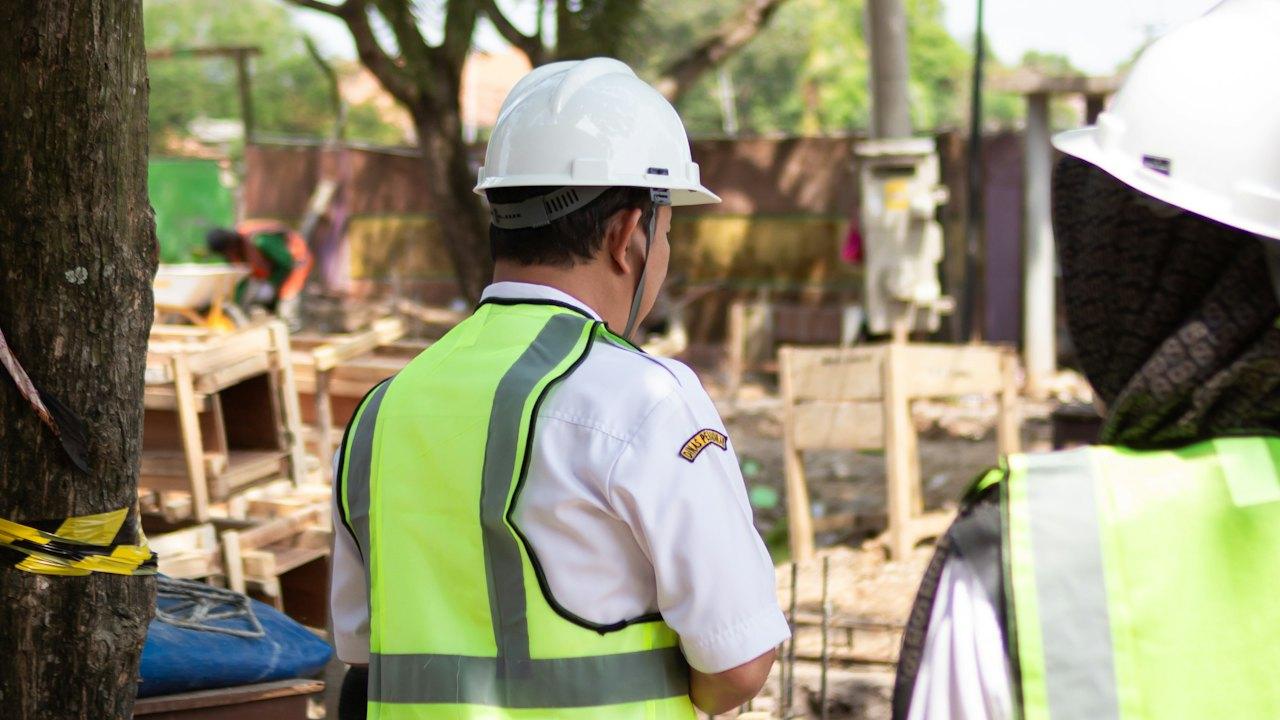
WHS stands for work health and safety. It means managing work so that it doesn't injure people or make them ill, physically or mentally, and in Australia it's also the name of the laws that require this: the Work Health and Safety Act, the WHS Regulations and the codes of practice that sit under them.
If you searched "whs meaning", "what is WHS" or "OH&S or WHS?", that's the short answer. The rest of this page explains how WHS differs from OHS, which law applies where you work, and who has to do what.
What does WHS mean?
Work health and safety covers everything a business does to protect the people who do its work and the people its work affects. That includes employees, contractors, labour hire workers, apprentices, volunteers, visitors and members of the public.
"Health" is wider than many people expect. The model WHS Act defines it as physical and psychological health, so stress, bullying and fatigue are WHS matters just as falls and machinery are.
In day-to-day use, WHS means three things:
- the outcome: people go home from work as healthy as they arrived;
- the work: finding hazards, controlling risks, training people, consulting them and keeping records; and
- the law: the WHS Act, Regulations and codes of practice that set the duties.
WHS vs OHS and OH&S: what's the difference?
OHS and OH&S both stand for occupational health and safety. It's the older name for the same subject. Before the national model laws, Australia's states and territories each had their own OHS laws and OHS regulators, as Safe Work Australia's history of the model laws describes. The model laws that replaced most of them use the name work health and safety.
So the difference is mostly about which law you're under, not what you have to do:
| WHS | OHS or OH&S | |
|---|---|---|
| Stands for | Work health and safety | Occupational health and safety |
| Where the law uses it | The Commonwealth and every state and territory except Victoria | Victoria |
| Main duty holder | The person conducting a business or undertaking (PCBU) | The employer |
| Who it protects | Workers, including contractors and volunteers, and anyone else affected by the work | Employees and other people at work, and the public |
Plenty of people still say OHS or OH&S out of habit, and many job titles and management systems use it. If you work outside Victoria, use WHS in your documents so they match the law you're under. In Victoria, use OHS.
What are the model WHS laws?
Safe Work Australia developed the model WHS laws in 2011. It maintains them but doesn't enforce them. To become binding, each jurisdiction has to pass them as its own law, and some have made changes along the way. The model laws have three parts:
- The WHS Act. It sets the duties, the rights of workers to be consulted and represented, and the regulator's powers. The model WHS Act is the template for each jurisdiction's Act.
- The WHS Regulations. They set detailed requirements for particular hazards and work, such as falls, hazardous chemicals, asbestos and high-risk construction work, plus licences and record keeping. See the model WHS Regulations.
- Codes of practice. Model codes of practice are practical guides to meeting the Act and Regulations. A model code only has legal effect once a jurisdiction approves it. Approved codes aren't law, but courts can use them as evidence of what is reasonably practicable, and in most cases following one achieves compliance.
Our guide to what codes of practice are explains how codes work, whether they're enforceable and how to find the ones that apply to you.
Which WHS law applies in my state or territory?
Every jurisdiction except Victoria has implemented the model laws. The dates come from Safe Work Australia:
| Jurisdiction | Main Act | In force since | Regulator |
|---|---|---|---|
| New South Wales | Work Health and Safety Act 2011 (NSW) | 1 January 2012 | SafeWork NSW |
| Queensland | Work Health and Safety Act 2011 (Qld) | 1 January 2012 | Workplace Health and Safety Queensland |
| Australian Capital Territory | Work Health and Safety Act 2011 (ACT) | 1 January 2012 | WorkSafe ACT |
| Northern Territory | Work Health and Safety (National Uniform Legislation) Act 2011 (NT) | 1 January 2012 | NT WorkSafe |
| Commonwealth | Work Health and Safety Act 2011 (Cth) | 1 January 2012 | Comcare |
| South Australia | Work Health and Safety Act 2012 (SA) | 1 January 2013 | SafeWork SA |
| Tasmania | Work Health and Safety Act 2012 (Tas) | 1 January 2013 | WorkSafe Tasmania |
| Western Australia | Work Health and Safety Act 2020 (WA) | 31 March 2022 | WorkSafe WA |
| Victoria | Occupational Health and Safety Act 2004 (Vic) | Not on the model laws | WorkSafe Victoria |
Two states are worth a closer look:
- Western Australia was the last to move. Its WHS Act and regulations came into effect on 31 March 2022, and WorkSafe WA says they cover all workplaces in the state, including mines and petroleum and geothermal energy operations. The general regulations are the Work Health and Safety (General) Regulations 2022.
- Victoria still has the Occupational Health and Safety Act 2004 and the Occupational Health and Safety Regulations 2017. It uses its own terms, such as employer and employee rather than PCBU and worker, and WorkSafe Victoria publishes its own compliance codes.
For the Acts, regulations and regulator in each state, with the differences that matter for construction, see WHS laws by state.
Who has duties under WHS laws?
WHS laws give duties to everyone involved in work, not only the boss. Safe Work Australia's summary of duties sets them out. Under the model Act:
- The PCBU has the primary duty of care (section 19 of the model WHS Act). It must ensure, so far as is reasonably practicable, the health and safety of its workers and of other people affected by its work. A PCBU can be a company, a sole trader, a partnership or a government agency. Our guide to what a PCBU is and what it must do covers the duty in detail.
- Officers, such as directors and senior managers who make decisions affecting the whole business, must exercise due diligence to make sure the PCBU meets its duties (section 27).
- Workers must take reasonable care for their own health and safety and that of others, follow reasonable instructions, and cooperate with reasonable health and safety policies and procedures they've been told about (section 28).
- Other people at the workplace, such as visitors and customers, must take reasonable care and follow reasonable instructions (section 29).
PCBUs that design, manufacture, import, supply or install plant, substances and structures have further duties of their own (sections 22 to 26).
In Victoria, the Act puts the main duties on employers and employees. WorkSafe Victoria's guide to legal duties says employers must provide and maintain a working environment that is safe and without risks to health, so far as is reasonably practicable, and employees must take reasonable care and cooperate with their employer.
What does WHS look like in practice?
The law doesn't ask for paperwork for its own sake. It asks you to find what could hurt people and deal with it. Safe Work Australia's Code of Practice: How to manage work health and safety risks describes four steps:
- Identify hazards: find out what could cause harm.
- Assess risks, where you need to: how likely harm is, and how serious it could be.
- Control risks: use the most effective control that's reasonably practicable, and keep it working.
- Review hazards and controls to check they're working as planned.
If the difference between the first two steps isn't clear, our guide to hazard vs risk explains it with examples.
Around those steps, most workplaces have a WHS policy that sets out their commitment and who is responsible for what, procedures for things like incidents and emergencies, induction and training records, and a way to consult workers. Our list of WHS policies and procedures every workplace should have covers the core set. If you're starting from scratch, a WHS policy template is the usual first document.
Common questions
Is WHS the same as OHS? They cover the same subject. WHS is the name used by the model laws, which apply everywhere except Victoria. OHS is the older name, and it's still the name of Victoria's law.
What does OH&S stand for? Occupational health and safety. OH&S and OHS are two ways of writing the same term.
Are WHS laws the same in every state? Not quite. Every jurisdiction except Victoria has based its law on the model WHS laws, but some have made changes. Check the Act and Regulations for the state where the work happens.
Do WHS laws apply to small businesses and sole traders? Yes. A PCBU can be a sole trader or a small business, and the primary duty applies whatever its size. What is reasonably practicable depends on the circumstances, including how likely and how serious the harm is (section 18 of the model WHS Act).
Who enforces WHS laws? Each state and territory has its own regulator, and Comcare covers Commonwealth workplaces. Safe Work Australia writes the model laws but doesn't enforce them.
This is general information, not legal advice. Check the current law with your WHS regulator.
Template library
Put it into practice with a ready-made SWMS.
Browse SWMS templates written for Australian trades. Preview any of them free, then tailor one to your job in minutes.
Templates for this work
Browse the template libraryRelated guides

WHS law
WHS policies and procedures: what every workplace needs
What a WHS policy is, how it differs from a procedure, and the core set of WHS policies and procedures every Australian workplace should have.

WHS law
10 common WHS misconceptions and the facts behind them
Ten common WHS myths, from 'it only applies to high-risk industries' to 'the rules never change', with the facts and what to do about each.

WHS law
Preventing sexual and gender-based harassment at work
How to manage sexual and gender-based harassment as a WHS psychosocial hazard: assess the risk, put controls in place, handle complaints and review.