
Free JSA template
Start a JSA or JSEA free, with no sign-up: open the template in the editor, break the job into steps and add the hazards and controls for each. Sign up free to save it, share it by QR code or link, and have your crew sign on their phones. A library template is $89.95 to keep, once.
What a JSA is
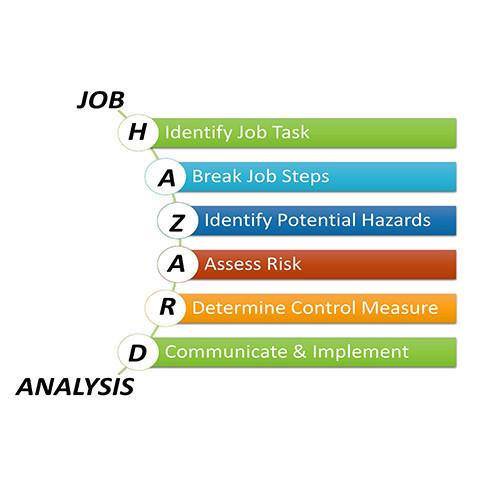
A job safety analysis (JSA) breaks one job into steps, lists the hazards in each step and sets out how each will be controlled. You'll also see it called a job hazard analysis (JHA), or a job safety and environmental analysis (JSEA) when it covers environmental risks such as spills and dust as well.
The WHS laws don't require a JSA. It's a practical way to meet the duty to ensure health and safety so far as is reasonably practicable, for a task that needs planning. High-risk construction work needs a SWMS instead, and a JSA can't replace it.Sources: WHS Act, section 19
How to write a JSA
Break the job into steps
List the job's steps in order, from setting up to packing away. Keep each step to one action: most jobs take five to ten.
List the hazards in each step
Ask the crew who'll do the work what could go wrong at each step: the plant, the substances, the heights, the traffic and the people nearby.
Set a control for each hazard
Start at the top of the hierarchy of control: remove the hazard if you can, then isolate it or engineer it out, and use procedures and PPE last. Name who checks each control.
Brief the crew and sign on
Go through the JSA before work starts and have everyone sign. Review it when the job, the plant or the crew changes, and after an incident or near miss.
JSA templates to start from
Job safety analysis forms, and a Take 5 for the quick check before each task. Try any of them in the editor before you sign up.

What you get free
- The editor, to fill in and tailor any library template before you sign up
- Printable toolbox talks on common hazards
- The 5×5 risk matrix calculator
- Share by QR code, link or site tablet
- See who's signed
- Join other companies' jobs and sign
- 20 AI credits a month, to convert files and translate
Related pages and guides
Common questions
- Is the JSA template really free?
- Trying it is: open the JSEA template in the editor and fill it in with no sign-up. A free account lets you save it, share it and get it signed. A library template costs $89.95 to keep, once, and workers sign free.
- Is a JSA a legal requirement?
- No. The WHS laws don't name a JSA. They require you to ensure health and safety so far as is reasonably practicable (section 19 of the WHS Act), and a JSA is one way to show you planned a task. A principal contractor or client may ask for one in their site rules.Sources: WHS Act, section 19
- What's the difference between a JSA and a SWMS?
- A SWMS is required before high-risk construction work, the 18 kinds listed in regulation 291, and covers the activity as a whole. A JSA covers one task, in any industry, and isn't required by law. A JSA can support a SWMS, but it can't replace one.
- What does JSEA mean?
- Job safety and environmental analysis. It's a JSA that also lists each step's environmental hazards, such as a fuel spill, dust leaving the site or runoff into a drain, with a control for each.
- When should a JSA be reviewed?
- Check it still matches the job before each use, and review it when the task, plant, site or crew changes or after an incident or near miss. The WHS Regulations also require controls to be reviewed when a control isn't working, before a change at the workplace that could bring new risks, when a new hazard is found, when consultation shows a review is needed, and when a health and safety representative asks (regulation 38).Sources: WHS Regulations, regulation 38