PPE: how to choose, fit and look after safety equipment
Where PPE fits in the hierarchy of controls, what a business must provide under the WHS laws, and how to choose, fit, check and record PPE for each job.

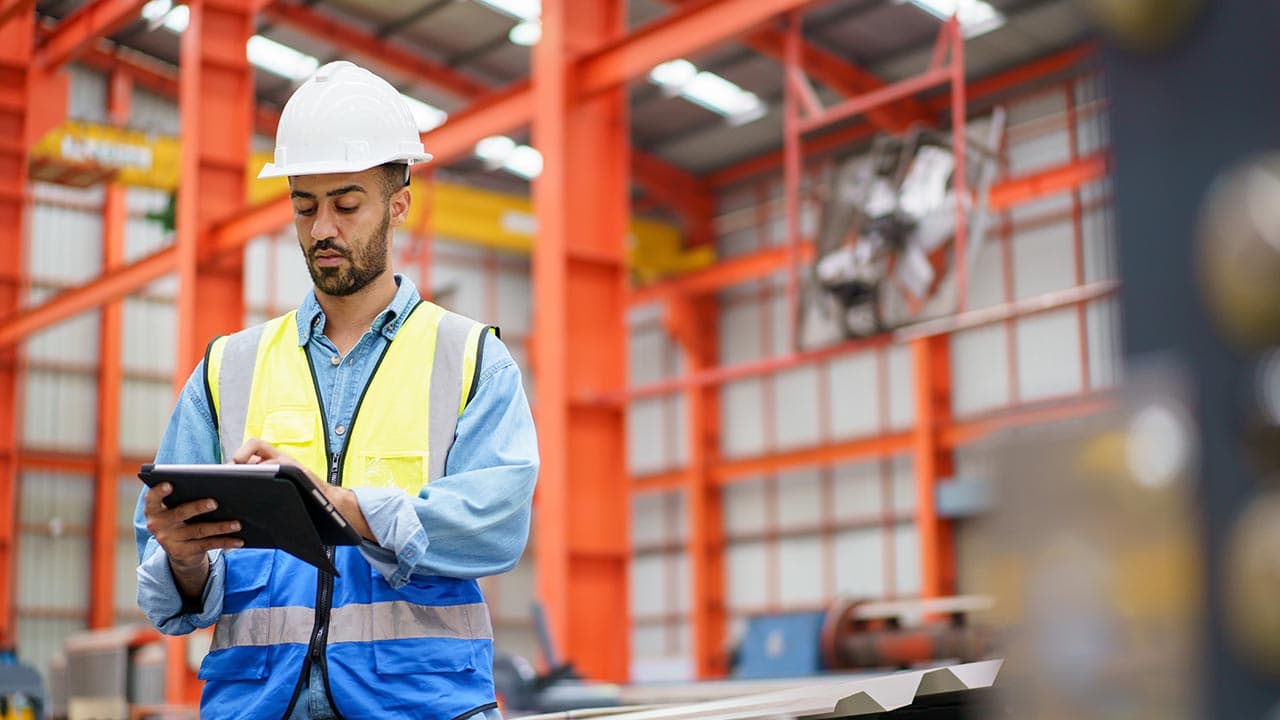
Personal protective equipment (PPE) is the gear a worker wears to protect them from a hazard: hard hats, safety glasses, hearing protection, respirators, gloves, safety boots, hi-vis and fall-arrest harnesses. It's on every site, but it only protects people when it's the right gear for the hazard, it fits, it's in good condition and it's actually worn.
This guide covers where PPE fits in managing risk, what a business has to provide, and how to choose, fit, check and record it so it does its job.
PPE is the last line of defence
PPE sits at the bottom of the hierarchy of controls. Before relying on it, a business should eliminate the hazard where it can, then minimise the risk by substituting a safer method, isolating people from the hazard or using engineering controls, then administrative controls such as procedures and training.
PPE is still essential. It's often used alongside higher controls, and it's the backup when they aren't enough. But it depends on people wearing it correctly every time, so it shouldn't be the only thing standing between a worker and a serious injury.
What a business must provide
Under the model WHS Regulations, a business that directs the work must provide PPE to workers when it's needed to manage a risk, unless another business provides it. It must make sure the PPE is:
- Right for the job and the hazard, so it actually minimises the risk.
- The right size and fit, and reasonably comfortable for the person wearing it.
- Maintained, repaired or replaced so it stays clean, hygienic and in good working order.
- Used or worn by the worker, so far as is reasonably practicable.
The business also has to give workers information, training and instruction on how to use, wear, store and maintain their PPE. Workers have duties too: use the PPE as they've been trained, don't misuse or damage it, and tell the business if it's damaged or doesn't fit. A business can't charge workers for PPE it's required to provide.
The detail varies by state and territory, so check your regulator's guidance for your work.
Choose PPE for the hazard
Start from the hazards in your risk assessment and match the protection to each one.
- Head: hard hats where there's a risk of falling objects or bumping your head. Add a chin strap for work at height. Head protection at Mitti Supply
- Eyes and face: safety glasses for flying particles, goggles for dust and chemical splashes, and face shields for grinding and cutting. Eye protection at Mitti Supply
- Hearing: earplugs or earmuffs where noise exceeds the exposure standard, rated for the noise level on site. Hearing protection at Mitti Supply
- Breathing: respirators for dust, fumes and vapours. Work with crystalline silica needs a respirator that's fit tested to the wearer, along with dust controls. Respiratory protection at Mitti Supply
- Hands: gloves for the specific task, such as cut-resistant, chemical-resistant or insulated. The wrong glove can be worse than none. Hand protection at Mitti Supply
- Feet: safety boots with toe protection and slip-resistant soles for the ground you're working on.
- Visibility: hi-vis clothing where people work near traffic or mobile plant, suited to day or night work.
- Falls: harnesses, lanyards and anchors for work at height where edge protection isn't enough, with a rescue plan in place.
Don't forget the conditions on site. In hot weather, cooling gear, shade and water matter as much as the PPE itself, because heavy gear adds to heat stress. Hydration and cooling at Mitti Supply
Make sure it fits and works together
PPE that doesn't fit doesn't protect, and people stop wearing gear that's uncomfortable. When you choose PPE:
- Offer a range of sizes, including gloves and harnesses that fit smaller and larger workers.
- Fit test respirators for each person, and check facial hair doesn't break the seal.
- Check items work together: safety glasses under a face shield, earmuffs with a hard hat, a respirator with glasses.
- Ask the crew. The people wearing it know what gets in the way of the job.
Inspect it, look after it and replace it
Set up simple checks so PPE stays in good order:
- Before each use, the wearer checks for cracks, tears, worn straps and expired dates.
- Harnesses and fall-arrest gear get a documented inspection by a competent person at the interval the manufacturer sets.
- Store it properly, clean and out of the sun, so it lasts.
- Replace it when it's damaged, past its use-by date, or after a harness has arrested a fall.
Keeping stock on hand makes the difference. If a crew member can grab new gloves or a fresh respirator filter on site, they won't make do with worn-out gear. Mitti Supply can replenish PPE automatically so you don't run out.
Put PPE in your SWMS
For high-risk construction work, the PPE each task needs belongs in the Safe Work Method Statement, next to the hazard it controls. That way the crew knows exactly what to wear for each step, and the business has a record that it was planned.
In SafetyDocs, the crew reads the SWMS on their phone and signs it, so you can see who has read the PPE requirements before work starts. If the job changes and the PPE changes with it, update the SWMS and have the crew read and sign it again.
Get the gear you need
Mitti Supply stocks PPE and safety equipment for Australian workplaces, from hard hats and gloves to respirators, first aid and site equipment. Choose the gear your risk assessment calls for, record it in your SWMS, and make sure every crew member has it before they start.
Template library
Put it into practice in your own RAMS.
Expert-written templates are on their way to the UK. Until then, write your own RAMS in SafetyDocs, share it with your crew and get it signed on any phone.
Related guides
Safety management
What is a safety management system (SMS) and why use one?
Understand what a Safety Management System (SMS) is and discover why your business needs one to enhance workplace safety and ensure compliance.

Safety management
SOP templates: a guide to safe operating procedures
What a safe operating procedure (SOP) is, when to use one, what an SOP template should include, and examples for common high-risk tasks and equipment.

Safety management
Workplace health and safety in the cleaning industry
Common hazards in the cleaning industry, from chemicals and biological risks to slips, ergonomics and confined spaces, and how to manage them safely.