Managing chemical hazards and safe chemical storage
Manage chemical hazards at work: label and classify chemicals, keep safety data sheets and registers, control exposure, and store substances safely.
यह लेख अभी अंग्रेज़ी में है।
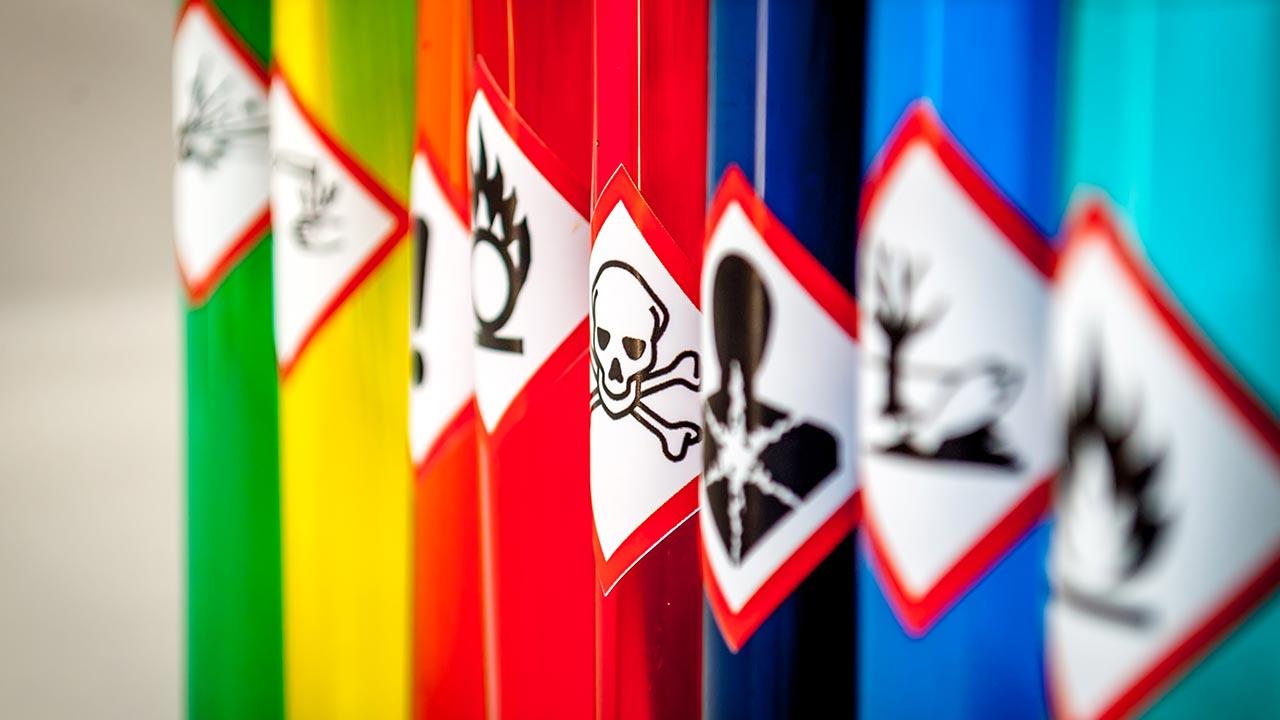
Managing chemical hazards means knowing exactly what chemicals are on site, controlling how workers are exposed to them, and storing each one so it can't cause a fire, a spill or a poisoning. Start with a register of your hazardous chemicals and the safety data sheet (SDS) for each one. Then control exposure using the hierarchy of controls, and store incompatible chemicals apart in suitable, labelled containers.
What counts as a hazardous chemical
A hazardous chemical is any substance, mixture or article that's classified as hazardous under the Globally Harmonized System of Classification and Labelling of Chemicals (GHS). The GHS gives every chemical a consistent classification and communicates its hazards through labels, registers and safety data sheets.
If you manufacture, import, supply or use these chemicals, you have work health and safety (WHS) duties for them. Under the primary duty of care, the person conducting the business or undertaking (PCBU) must manage the risks so far as is reasonably practicable. That includes identifying the chemicals, assessing the risks and controlling them, and making sure everyone who might be exposed knows what they're working with.
The two types of chemical hazard
Chemical hazards fall into two groups:
- Health hazards. These harm the body. Exposure happens by inhalation, skin contact or swallowing. Some effects are immediate, such as headaches, nausea or skin burns. Others build up over years, such as asthma, dermatitis, nerve damage and cancer.
- Physicochemical hazards. These come from the chemical's physical or chemical properties. They include fire, explosion, corrosion, reactivity and oxidising substances. Mishandling them can cause injury and property damage.
Many chemicals carry both kinds of hazard, so check the SDS for the full picture.
Common types of chemical hazard
The table below sets out the main categories you'll see on SDSs and labels.
| Hazard type | What it does | Examples |
|---|---|---|
| Asphyxiants | Displace oxygen in the air, so people can't breathe normally | Nitrogen, carbon dioxide |
| Carcinogens | Can cause cancer | Asbestos, benzene |
| Corrosives | Damage skin, eyes and other tissue on contact | Strong acids and alkalis |
| Mutagens | Change the structure of a cell's DNA | Some alkylating agents |
| Neurotoxins | Damage or destroy nerve tissue | Lead, mercury |
| Teratogens | Can cause malformation of an embryo or foetus | Thalidomide |
Cleaning, pest control, painting and surface preparation are the work most likely to involve exposure. But anyone who works with chemicals regularly is at risk, so the controls should cover them too.
How to manage chemical risk
1. Keep a register and check the labels
You need to know every chemical on your site before you can manage it. A register of hazardous chemicals lists each product, where it's kept, how much there is and which SDS applies. Review it when you buy a new product, and walk the site to check it's accurate.
Every chemical container should carry a label with:
- A signal word, such as "Danger" or "Warning"
- Hazard statements, such as "Causes severe skin burns and eye damage"
- Precautionary statements on safe handling, storage and first aid
- The GHS pictograms for the hazards
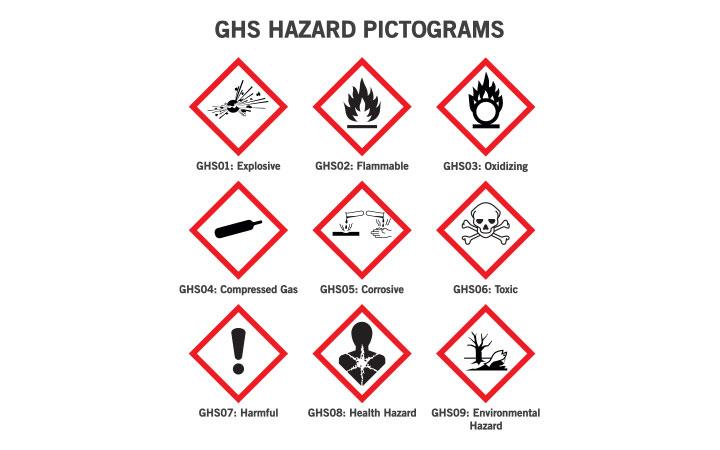
That includes containers you decant into. A spray bottle filled from a drum with no label is a common cause of mix-ups, and the crew working with it won't know what it does.
2. Keep the safety data sheet for every chemical
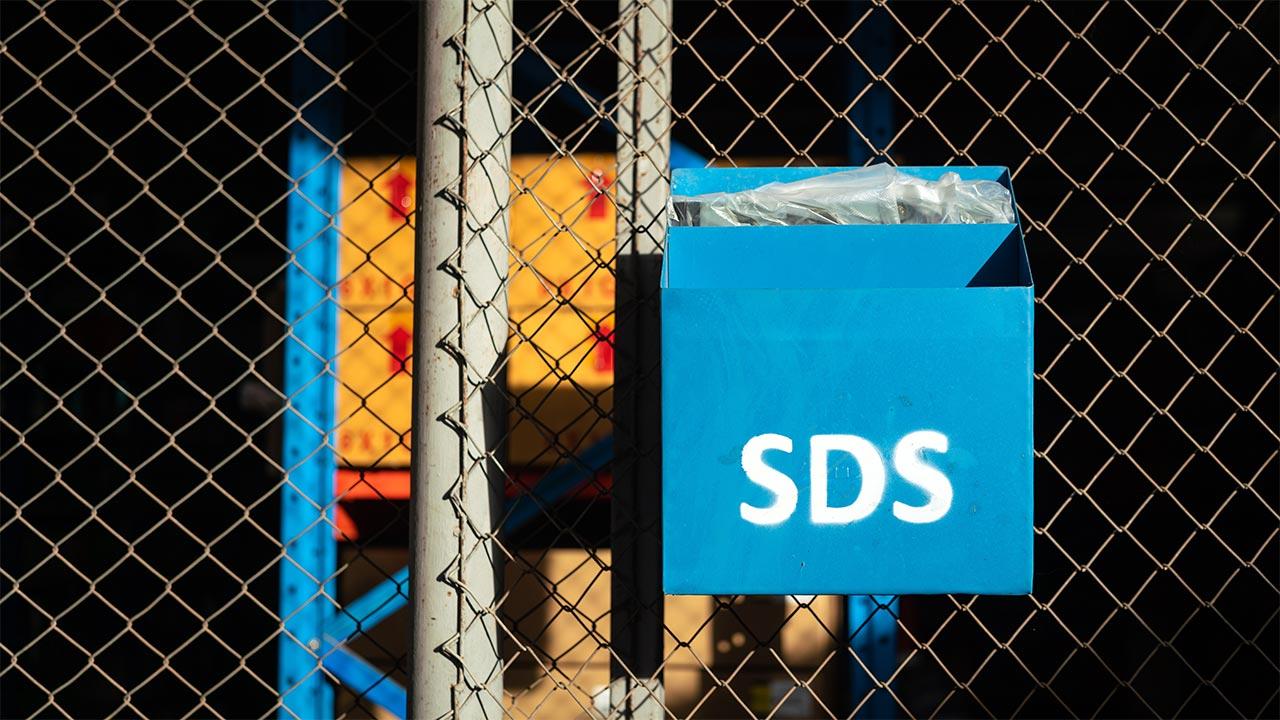
An SDS gives the detail you need to use a product safely. It covers the product's identity, its hazardous ingredients, its health effects, its physical hazards, and how to handle and store it. It also gives emergency information, including first aid and fire-fighting advice.
Chemical suppliers must provide an SDS. If one wasn't supplied, get it from the supplier before anyone starts work with the product. Manufacturers and importers must review each SDS at least every five years, and sooner if new information makes it out of date. Keep the current SDS where workers can reach it, either in print or on a device they can use on site. Our post on safety data sheets in hazard communication explains what to look for.
The Safe Work Australia guidance on preparing SDSs sets out the content the codes of practice require for labels and SDSs.
3. Keep records, manifests and signs
Workers and visitors need to know what's on site and where. Put up signs wherever chemicals are stored or used, showing the hazards and the precautions. Keep your register and SDSs in a folder, on a shared drive or in your chemical and SDS register.
For larger quantities of dangerous goods, you also need a manifest and placards so emergency services know what's on site. A chemical manifest is a simple way to keep that record.
4. Assess the risk
A chemical risk assessment identifies who could be exposed, what's causing the exposure, and what controls are needed. It should consider the type of chemical, how much is used, how it's used and how likely exposure is. Use it to check whether your existing controls actually work, not just whether they're in place.
You may not need a formal assessment for every product. For anything that is used regularly, or that carries a serious hazard, a written assessment is usually the best way to decide the controls. A chemical risk assessment form gives you a structure for it.
5. Control the exposure
Use the hierarchy of controls to choose controls, starting with the most effective:
- Eliminate the chemical. Can the task be done without it?
- Substitute a less hazardous product, such as a water-based paint in place of a solvent-based one.
- Isolate the chemical or the process, for example by using a closed transfer system.
- Engineering controls, such as local exhaust ventilation, enclosures and automatic dosing.
- Administrative controls, such as safe work procedures, training, limits on exposure time and signage.
- PPE, such as gloves, eye protection and respirators. PPE is the last line of defence, so use it with the other controls, not instead of them.
Make sure PPE is rated for the chemical you're using, and that workers are trained to put it on and take it off. If you need to buy PPE, our partner Mitti Supply stocks a range of it.
Store hazardous chemicals safely
A chemical can be dangerous even when nobody is using it. Stored badly, it can catch fire, explode, poison someone, release toxic or corrosive gas, or corrode its own container. Most storage incidents come from one of three mistakes: incompatible chemicals stored together, the wrong container, or an unlabelled store.
Safe storage comes down to a few habits:
- Separate incompatible chemicals. Keep acids away from alkalis, and oxidisers away from flammables. Check the SDS for each product.
- Use a container that suits the chemical. It should be in good condition, sealed, and compatible with the substance. Some chemicals react with metal, so they can't go in metal drums.
- Store in a suitable place. Choose a cool, dry, ventilated area away from heat, open flames and sources of ignition. Use bunding or spill trays where a spill could reach drains or other stock.
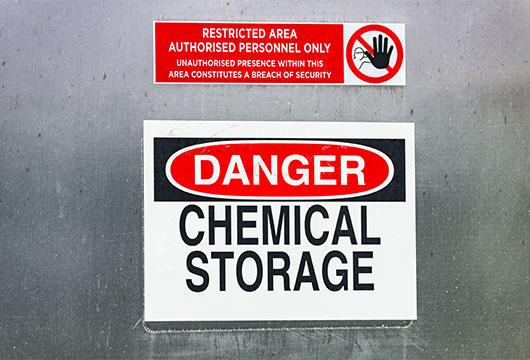
- Label the store and the containers. Every container needs a readable label, and the store needs a sign showing the hazards and the restrictions on access.
- Restrict access. Only trained people should go in, and only with the SDS and the right PPE.
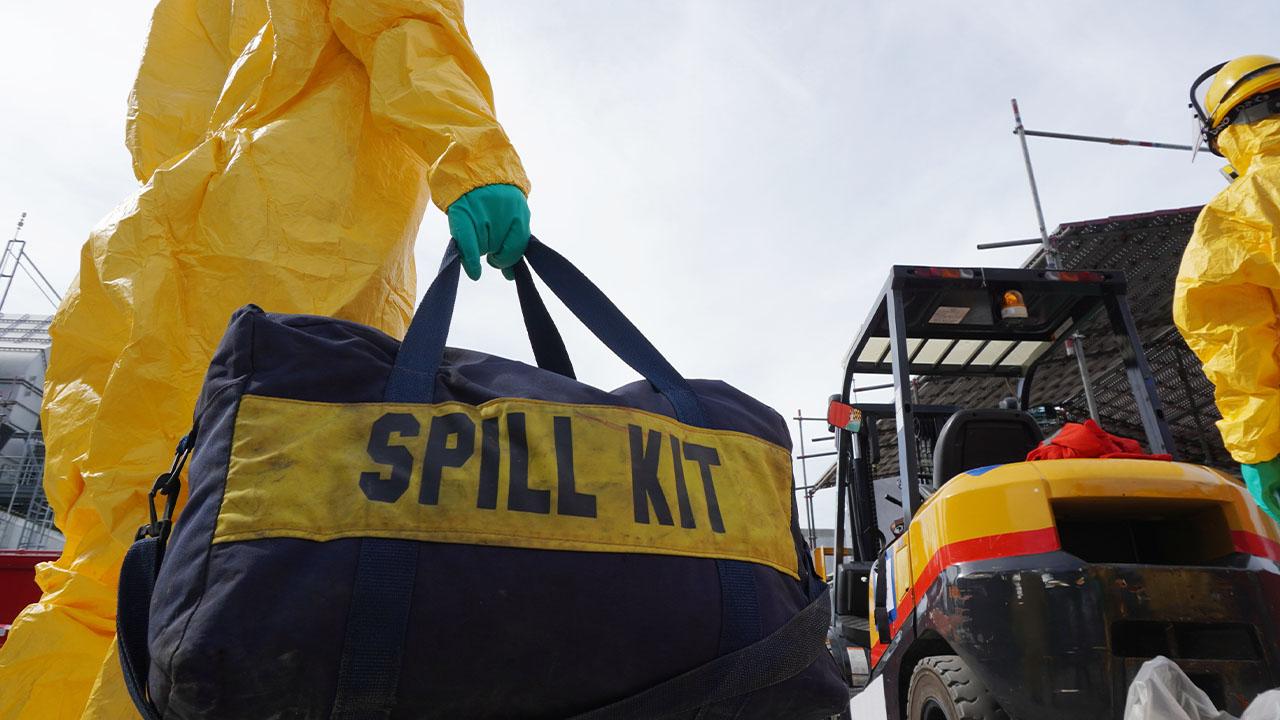
- Plan for spills. Keep spill kits in the store and know who to call. Our guide to creating a chemical spill response plan covers the steps.
A storage and handling system includes everything that holds or carries the chemical: bottles, drums, cylinders, intermediate bulk containers, tanks, vessels and any pipework or safety devices connected to them. The PCBU must make sure each system is fit for its purpose, and that the people who operate, test and maintain it are trained in its safety features, its maintenance needs, and its safe operating limits such as temperature and pressure.
For a fuller plan covering dangerous goods, see the chemicals and dangerous goods management plan.
How SafetyDocs helps
Most businesses already have a chemical register somewhere, but it's out of date, and the SDSs are scattered across emails and supplier websites. SafetyDocs gives you expert-written chemical templates, including registers, risk assessments and a dangerous goods management plan, with your job and site details filled in. When a document changes, everyone who signed the old version is asked to sign the new one.
Common questions
Do I need a register of hazardous chemicals? If your business uses hazardous chemicals, you generally need a register of them on site, plus signage to warn people of the dangers. Check your state's WHS rules for the details that apply to you.
Who must provide the SDS? The supplier, manufacturer or importer must provide one. If you don't have one for a product, get it before anyone uses the product.
How often does an SDS need to be reviewed? The manufacturer or importer must review it at least every five years, and sooner when new information makes it out of date.
Can I pour a chemical into an unlabelled bottle? No. Any container you decant into needs a label that shows the chemical and its hazards, so the next person knows what it is.
This is general information, not legal advice. Check the current law with your WHS regulator.
टेम्पलेट लाइब्रेरी
इसे तैयार SWMS के साथ अमल में लाएँ।
ऑस्ट्रेलियाई ट्रेड के लिए लिखे SWMS टेम्पलेट देखें। किसी का भी प्रीव्यू मुफ़्त देखें, फिर कुछ ही मिनटों में उसे अपने काम के हिसाब से बदलें।
इस काम के लिए टेम्पलेट
- फ़ॉर्म, रजिस्टर या चेकलिस्टChemical & SDS Register
- फ़ॉर्म, रजिस्टर या चेकलिस्टChemical Risk Assessment Form
- मैनेजमेंट प्लानChemicals/Dangerous Goods Management Plan
- फ़ॉर्म, रजिस्टर या चेकलिस्टChemical Manifest
मिलती-जुलती गाइड
ख़तरे
Safety data sheets (SDS) and hazard communication
What a safety data sheet (SDS) contains, how to read its hazard and first aid sections, and how to keep an SDS register workers can actually use.
ख़तरे
Types of chemical spills and how to plan your response
The main types of chemical spill, how to tell a minor spill from a major one, and the steps for a chemical spill response plan that works on site.

ख़तरे
Environmental risks in industrial operations: 10 key areas
The environmental risks most common in industrial operations, from air and water pollution to chemical spills, and how to manage each one on site.