Environmental risks in industrial operations: 10 key areas
The environmental risks most common in industrial operations, from air and water pollution to chemical spills, and how to manage each one on site.
यह लेख अभी अंग्रेज़ी में है।
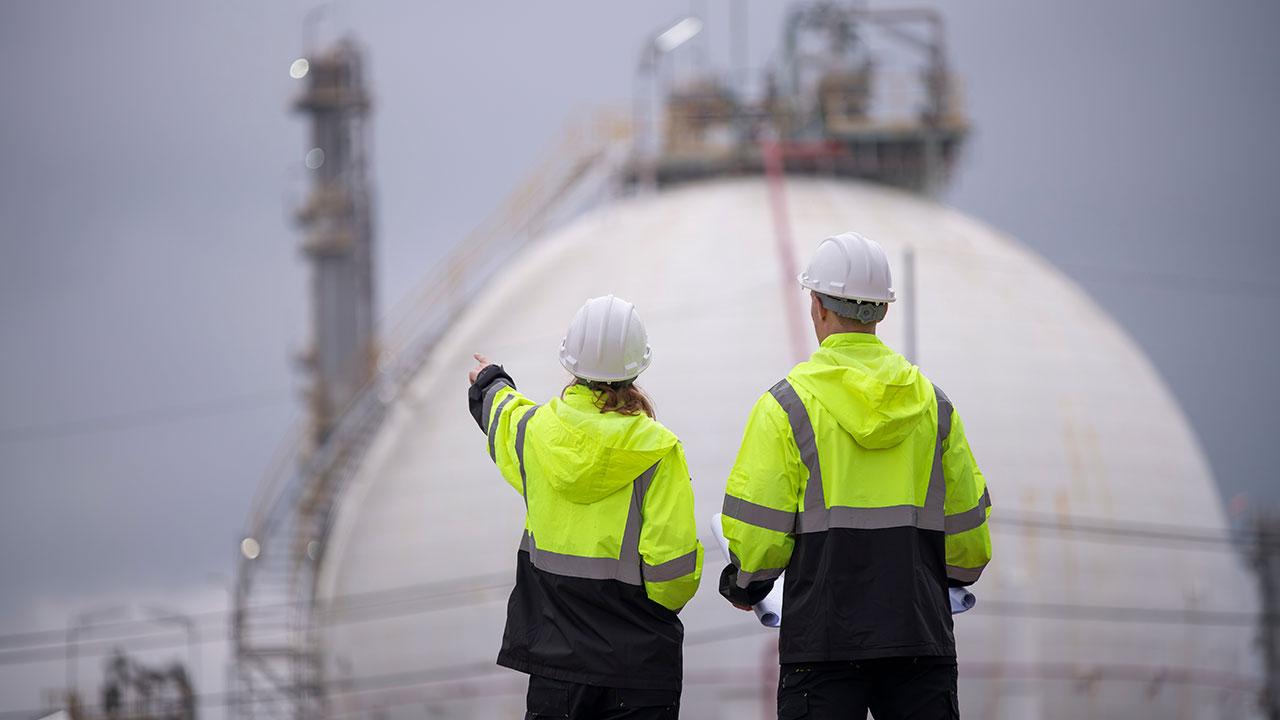
The main environmental risks in industrial operations are air and water pollution, soil degradation, hazardous waste, noise, energy use, biodiversity loss, greenhouse gas emissions, chemical spills and overuse of resources. You manage them by finding each source, controlling it where it starts, and checking that the controls keep working. Many of these risks also hurt workers, so they belong in your WHS risk register as well as your environmental records.
Environmental harm is regulated by state and territory environment protection authorities (EPAs). Work health and safety law covers risks to workers and anyone else affected by your work. This guide covers both, and points to templates you can use to record what you find.
Air and water pollution
Industrial sites release pollutants into the air and into stormwater, wastewater and groundwater. Common air pollutants include fine particles, volatile organic compounds (VOCs), sulphur dioxide, oxides of nitrogen and benzene. In water, the usual concerns are petroleum hydrocarbons from storage and spills, heavy metals such as lead and cadmium, surfactants from cleaning products, and PFAS.
These pollutants affect health as well as the environment. Fumes, dust and contaminated water can cause breathing problems, skin irritation and stomach illness in workers and nearby residents.
What to do:
- Map every point where emissions or discharges leave the site, including vents, washdown areas and stormwater drains.
- Check the licence or approval conditions your state EPA has set, and record your monitoring against them.
- Fit extraction or ventilation at fume sources, and keep it maintained.
- Put spill kits and bunding where liquids are stored, and route drains to a treatment point.
- Use real-time air monitoring in high-risk areas, and keep a log of the results.
Soil degradation
Soil on industrial sites is damaged by leaks and spills, heavy machinery that compacts it, and poor drainage or erosion. Contaminated soil holds water poorly, stops plants growing, and harms the animals and micro-organisms that rely on it.
What to do:
- Store fuel, oil and chemicals on sealed, bunded surfaces.
- Keep vehicles and plant on marked routes, and off ground you're protecting.
- Use sediment fences, cover stockpiles and plan revegetation for disturbed ground.
- Fix leaks straight away, and record any contamination so it can be assessed and cleaned up.
Hazardous waste
Industrial sites generate hazardous waste such as solvents, used oil, batteries, e-waste and contaminated rags. State EPAs regulate how it's stored, transported, treated and disposed of. Commonwealth law also controls the import and export of hazardous waste under the Hazardous Waste (Regulation of Exports and Imports) Act 1989, which requires a permit from the Environment Minister.
Waste handling is a WHS issue too. Workers can be exposed to toxic substances, cut or burned during collection, or injured lifting heavy drums.
What to do:
- Separate and label waste where it's produced, so streams don't get mixed.
- Store waste in closed, suitable containers with secondary containment.
- Use licensed carriers and treatment facilities, and keep the consignment records.
- Train staff on each waste stream, and review the process if volumes climb.
Noise
Machinery, vehicles, compressors and power plant all make noise. Safe Work Australia's noise guidance sets the exposure standard at an average of 85 dB(A) over an eight-hour shift, or a peak of 140 dB(C) for sudden, impact noise such as hammering. Staying below those levels doesn't make noise safe, because hearing damage builds up over time. Noise also disturbs neighbours and wildlife, and can cause stress and poor sleep.
What to do:
- Measure noise across the site, and mark the areas above 85 dB(A).
- Work through the hierarchy of controls: quieter equipment first, then enclosures, barriers or acoustic lining.
- Schedule the loudest work away from neighbours and night-time hours where you can.
- Give workers hearing protection that fits, and check they wear it. Arrange audiometric testing where exposure is high.
Energy use and greenhouse gas emissions
Burning fossil fuels for power, transport and process heat releases greenhouse gases. Large companies have had to report climate risks and emissions under Australia's mandatory climate reporting regime since 1 January 2025, and other businesses are being phased in later. Even if your business isn't covered yet, customers and lenders may ask for your figures.
What to do:
- Measure your energy use and emissions to set a baseline.
- Start with the biggest users: heating and cooling, compressed air, lighting and idle equipment.
- Switch off equipment that isn't needed, and schedule heavy loads outside peak tariffs.
- Check progress against the baseline every quarter.
Biodiversity loss
Land clearing, habitat fragmentation and runoff damage local ecosystems. Sites next to waterways or bushland carry the most risk. Before you clear ground or build, check whether your approvals set conditions such as buffers, offsets or monitoring.
What to do:
- Confirm the approval conditions before any clearing starts.
- Protect waterways with buffer zones and sediment controls.
- Talk to local land managers or environmental groups if the site borders habitat.
Chemical spills and resource overuse
Chemicals can spill during transfer, storage or transport, and they can reach soil, stormwater and groundwater quickly. Overuse of water and raw materials adds pressure on local ecosystems and usually points to waste you can cut.
Chemical spills are a WHS risk as well as an environmental one. Your response plan should say who to call, how workers are protected, and how the spill is contained and cleaned up. Keep a current safety data sheet (SDS) for every chemical on site, where workers can find it.
What to do:
- Store chemicals by compatibility, with a spill kit within reach.
- Inspect containers and hoses regularly, and replace worn parts.
- Train workers on the spill response plan, and run drills.
- Track water and material use to find waste, and set reduction targets.
| Risk | Common sources | First control to check |
|---|---|---|
| Air and water pollution | Vents, stormwater, washdown areas | Licence conditions and monitoring records |
| Soil degradation | Leaks, heavy plant, stockpiles | Bunding and sealed storage |
| Hazardous waste | Solvents, oils, batteries, e-waste | Labelled, segregated containers and carrier records |
| Noise | Plant, compressors, vehicles | Noise survey and marked high-noise areas |
| Energy and emissions | Heating, cooling, lighting, compressed air | Energy baseline and idle-equipment checks |
| Chemical spills | Transfers, storage, transport | Spill kits and an up-to-date response plan |
Turning the list into a plan
A plan works when each risk has an owner and a set of controls you can check. Start here:
- Map every source of emissions, discharges, noise, waste and energy on site.
- Rate each risk for likelihood and consequence, and record the rating.
- Choose controls from the top of the hierarchy down: eliminate, substitute, engineer, then administrative controls and PPE last.
- Assign an owner and a review date to each control.
- Review the controls after an incident, a process change or a new hazard, and when a worker raises a concern.
The chemical spill emergency response plan and the chemicals and dangerous goods management plan give you a starting structure. For the monitoring side, the noise risk register and the environmental risk assessment form help you record what you find and what you did about it.
If you're setting up a wider system, ISO 14001 and environmental management systems explain how the pieces fit together. For the chemical side, see the role of safety data sheets and handling and storing chemicals in the workplace.
Common questions
Are environmental risks covered by WHS law? Partly. Environmental harm is regulated by state and territory EPAs under environment law. WHS law covers risks to people at work, and many environmental risks, such as chemicals, noise and dust, are WHS risks too.
Do I need an environmental licence? Many industrial activities do. Your state EPA publishes a list of scheduled activities and the conditions that apply to them, so check that list for your site.
What belongs in a chemical spill plan? Who to call, how to stop or contain the spill, what protective equipment to use, where the spill kit and SDSs are kept, and how the spill is cleaned up and reported.
How often should I review controls? After any incident, change of process or new hazard, and whenever a worker raises a concern. Otherwise, check them on a regular schedule that you write into the plan.
This is general information, not legal advice. Check the current law with your WHS regulator.
टेम्पलेट लाइब्रेरी
इसे तैयार SWMS के साथ अमल में लाएँ।
ऑस्ट्रेलियाई ट्रेड के लिए लिखे SWMS टेम्पलेट देखें। किसी का भी प्रीव्यू मुफ़्त देखें, फिर कुछ ही मिनटों में उसे अपने काम के हिसाब से बदलें।
इस काम के लिए टेम्पलेट
- मैनेजमेंट प्लानChemicals/Dangerous Goods Management Plan
- मैनेजमेंट प्लानChemical Spill Emergency Response Plan
- फ़ॉर्म, रजिस्टर या चेकलिस्टNoise Risk Register
- फ़ॉर्म, रजिस्टर या चेकलिस्टEnvironmental Risk Assessment Form
मिलती-जुलती गाइड

ख़तरे
Plant safety: managing plant risks in Australian workplaces
How to buy, register, guard, maintain, operate and dispose of plant safely, and how each stage links to your WHS duties and the model code of practice.

ख़तरे
3 types of environmental hazards in the workplace: examples
The three types of workplace environmental hazards are chemical, physical and biological. See examples of each, and the controls that reduce the risk.

ख़तरे
Heat stress management: a plan for hot working conditions
Manage heat stress at work: spot the warning signs, assess heat risks, apply controls, train your crew and review the plan, under Australian WHS laws.