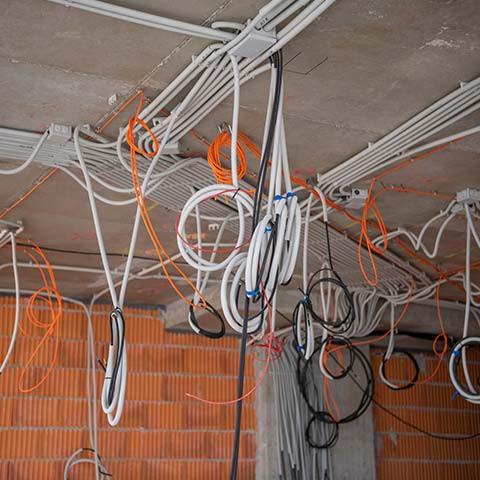
Underground and concealed services
Striking buried or concealed pipes, cables and other utilities when digging, drilling, piling or breaking into ground, walls or ceilings.
이 페이지는 현재 영어로만 제공됩니다.
underground and concealed services 무료 툴박스 미팅 자료
다른 이름: Contact with underground services, Contact with underground assets, Contact with utilities, Contact with existing underground services, Accidental contact (future excavations), Damage to underground services, Contact with services, Impact on nearby underground assets
underground and concealed services 관리 방법
- Get current plans from Before You Dig Australia and the asset owners, and request a site meeting where services are complex or critical.
- Plan the job to avoid digging near services, and relocate or de-energise services that cannot be avoided before work starts.
- Locate services on site with an electronic locator, and confirm their position by potholing with non-destructive methods such as vacuum excavation before using mechanical plant.
- Mark service positions on the ground and on plans, and keep a record of them for any future excavation at the same location.
- Dig by hand or with vacuum equipment near marked services, and use a spotter to watch the excavation while plant is working.
- If a service is struck, stop work, keep everyone clear and call the asset owner and emergency services, and never repair or cover the damage yourself.
일반적인 관리 조치를 효과가 큰 순서로 정리했습니다. 실제 작업과 현장의 관리 조치는 내 SWMS에서 정합니다.
Underground and concealed services 관련 템플릿










업종별 SWMS
함께 나타나는 위험 요소
이 템플릿들이 인용하는 법령
- WHS Act 2011템플릿 70개
- WHS Regulations 2011템플릿 70개
- OHS Act 2004 (Vic)템플릿 67개
- OHS Regulations 2017 (Vic)템플릿 66개
- Code of Practice: Construction work템플릿 62개
- Code of Practice: First aid in the workplace템플릿 62개
- Code of Practice: How to manage WHS risks템플릿 58개
- Code of Practice: Work environment and facilities템플릿 58개