Electrical emergency preparedness for contractors and trades
Plan for electrical emergencies on site: spot the common hazards, respond safely to shock and fire, and write an emergency plan your crew can follow.
यो लेख अहिलेलाई अंग्रेजीमा छ।
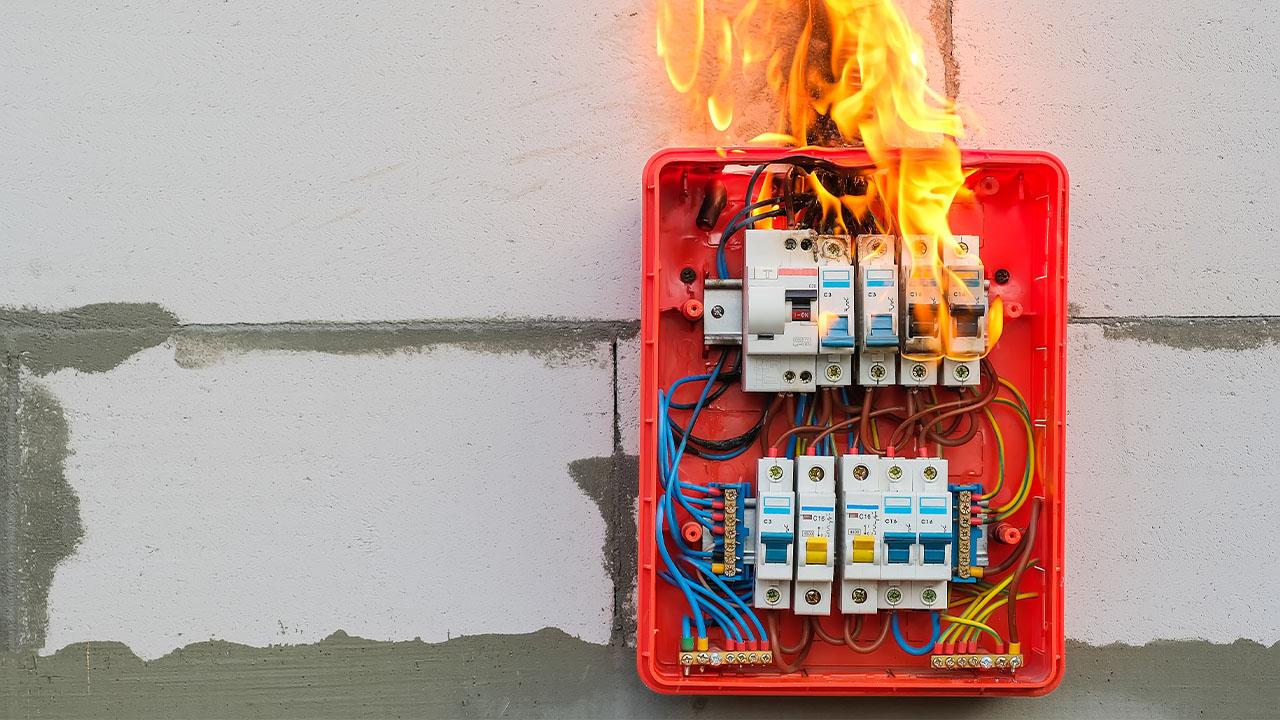
Electrical emergency preparedness means having a plan, trained people and the right equipment in place before something goes wrong. For contractors and trades, that comes down to three things: knowing the electrical hazards on your site, knowing how to cut power and get help without putting yourself at risk, and writing down who does what. A plan your crew has practised is worth far more than a fire extinguisher nobody knows how to use.
Why electrical emergencies happen on trade sites
Electrical emergencies rarely come from nowhere. On most sites they come from a short list of causes:
- Live equipment that wasn't isolated. Work is done on a circuit or machine that still has power, or someone switches it back on during the job.
- Contact with services. Ladders, scaffold, metal sheeting, plant or a drill hits an overhead line or a buried cable.
- Overloaded or damaged leads. Borrowed extension leads, double adaptors and cut cables carry more load than they should.
- Water near electrical gear. Rain, wet ground, flooded floors and washdowns bring water close to live connections.
- Untested equipment. Portable tools and leads that haven't been inspected and tested.
- Storm damage. Lightning, power surges and downed lines after bad weather.
Trades are exposed to all of these because work often moves between electricians, plumbers, carpenters and labourers in the same space. One trade's tools or materials can become another trade's hazard.
Common electrical emergencies on site
- Electric shock. Contact with a live conductor can cause burns, cardiac arrest or death.
- Arc flash and arc blast. A fault releases intense heat, light and pressure. It can cause severe burns and blast injuries, even when nobody touches the circuit.
- Electrical fire. Often caused by overloaded circuits, damaged cables or faulty equipment.
- Downed or damaged power lines. A fallen line can still be live. Treat every line as live until the network owner confirms it is not.
- Carbon monoxide. Generators and fuel-burning equipment used in enclosed spaces can produce carbon monoxide, which you can't see or smell.
- Power loss during work. Sudden outages can leave people in confined areas or on machinery in unsafe positions.
How to respond to an electrical emergency
The first priority is always your own safety. If you can't see that the source is isolated, don't go near the person.
- Don't touch the person while they're in contact with the source. Your body can become part of the circuit.
- Cut the power if you can do it safely. Switch off the circuit at the switchboard, or the isolator for that equipment. Only do this if you know where it is and it's within reach.
- If you can't cut the power, move the person clear. Use a dry, non-conductive object such as a wooden broom handle or a rope. Don't use metal, and don't step into water to reach them.
- Call 000 and ask for ambulance. Tell them what happened and where you are on site.
- Check breathing. If the person isn't breathing normally, start CPR and keep going until emergency services take over, following the instructions from the call handler.
- Fires involving electrical equipment. Cut the power first if it's safe. Don't use water on energised equipment. Use an extinguisher labelled for electrical fires (an E rating, usually a dry powder ABE or CO2 unit), or smother a small fire with a heavy blanket.
- Power outages. Switch off or unplug equipment and tools before the power returns. That stops a surge from damaging them or starting a fire when supply comes back.
- Never repair live equipment yourself. Have a licensed electrician do repairs and installations.
Every person on site should know these steps before the day they're needed. Put them on a laminated card at the switchboard and at the first aid point, and run through them at the start of a job.
How to prevent electrical emergencies
Preparation is about stopping the incident as well as responding to it.
Provide the right PPE and equipment
- Insulated gloves rated for the voltage you're working with, plus eye protection and non-conductive footwear.
- An emergency kit kept at the work area with a voltage tester, insulated tools, a first aid kit and a suitable fire extinguisher.
- Matched PPE. Choose gear for the task and the voltage. Protective equipment that isn't rated for the job gives a false sense of safety.
Isolate before you work
Lock out and tag out equipment before you work on it, so it can't be re-energised by mistake. Use a personal lock and a tag on every isolation point, and test that the circuit is dead before you touch it. Our guide to lockout/tagout procedures covers the steps.
Test and inspect portable equipment
Keep a register of electrical equipment, and make sure portable tools and leads are inspected and tested on a set schedule. The AS/NZS 3760 standard sets out in-service inspection and testing for electrical equipment and residual current devices (RCDs). Remove any damaged equipment from service straight away, and tag it so nobody uses it by accident.
Check the AS/NZS 3012 requirements too if you're working on a construction or demolition site, since they cover temporary electrical installations.
Keep plant and people clear of overhead lines
Before you start work, identify where overhead and underground services run. Keep cranes, elevating work platforms, ladders and tipper trays outside the required clearance distance from live lines. The distance depends on the line's voltage and the rules in your state, so confirm it with the network owner and your WHS regulator.
Train your people
- CPR and first aid, with a focus on electric shock.
- Fire extinguisher use, so workers can pick the right unit and use it without hesitation.
- Emergency contacts, including who calls 000, who meets the ambulance and who talks to the network owner.
Keep records
Record inspections, tests, isolations and incidents. Good records show what was checked, when, and by whom. They also show what changed after an incident, which is what a regulator will ask about.
Write an electrical emergency response plan
An emergency response plan turns all of the above into a document your crew can use. It should be specific to your site, not copied from a generic template. A good plan covers:
- Site hazards: where the switchboards, isolation points and overhead lines are.
- Roles: who isolates the power, who calls 000, who meets emergency services and who keeps people clear.
- Equipment: where the first aid kit, extinguishers and voltage tester are kept.
- Muster and evacuation: where the crew gathers and how a site is cleared if a fire starts.
- Contacts: emergency services, the network owner, the site supervisor and the on-call electrician.
- Review: when the plan is checked. Review it after any incident or near miss, when the site layout changes, and when new equipment or a new trade arrives.
Our Electrical Emergency Response Plan is a starting point. Fill in the site details and the named roles, and have each worker sign that they've read it.
Under the WHS Act, the primary duty of care falls on the person conducting a business or undertaking (PCBU). That duty covers workers and anyone else affected by the work, and it includes emergencies. Emergency planning is one of the practical ways to show you've managed that risk. The rules differ between states, so check the WHS laws by state guide for the law that applies to you.
How SafetyDocs helps
Most contractors already have an emergency procedure somewhere. The problem is getting it onto site, in the crew's hands, and up to date. SafetyDocs gives you expert-written templates, including electrical emergency and management plans, and fills in your job, client and site details so you're not retyping them. When you change a plan, everyone who signed the old version is asked to sign the new one, so the crew is never working from a stale copy.
If your electrical work sits within a larger project, your principal contractor will expect your emergency arrangements to fit their plan. Our guide to WHS documentation for principal contractors and subcontractors explains how to line the two up.
Common questions
Do I need a written emergency plan for electrical work? The model WHS Regulations require a workplace emergency plan. Electrical work often needs a more specific plan because of the hazards involved. Your state regulator can confirm what it expects for your site.
What's the first thing to do if someone is electrocuted? Don't touch them while they're in contact with the source. Cut the power if you can do it safely, call 000, then check breathing and start CPR if needed.
Which fire extinguisher is right for an electrical fire? Use an extinguisher with an E rating for electrical fires. Dry powder ABE and CO2 units are the usual choices. Never use water on energised equipment.
Do I need CPR training if I'm not a first aider? The WHS Regulations require first aid to be available at a workplace, and CPR training is a sensible part of that. Many contractors train all their crew, not just a designated first aider, because the first response is often given by whoever is nearest.
This is general information, not legal advice. Check the current law with your WHS regulator.
टेम्प्लेट लाइब्रेरी
यसलाई व्यवहारमा उतार्नुहोस्, तयारी SWMS सँग।
अस्ट्रेलियाका ट्रेडका लागि लेखिएका SWMS टेम्प्लेट हेर्नुहोस्। जुनसुकै पनि निःशुल्क प्रिभ्यू गर्नुहोस्, अनि केही मिनेटमै आफ्नो कामअनुसार मिलाउनुहोस्।
यो कामका लागि टेम्प्लेट
- सुरक्षित काम विधि विवरण (SWMS)EWP, Boom, Cherry Picker and Scissor Lift
- सुरक्षित काम विधि विवरण (SWMS)Manual Handling
- सुरक्षित काम विधि विवरण (SWMS)Confined Space Work
- सुरक्षित काम विधि विवरण (SWMS)Electrical New Installation
सम्बन्धित गाइड

खतरा
Climate change and workplace safety: how to prepare
Climate change is raising heat, storm, smoke and UV risks at work. Learn what Australian businesses should assess, control and plan for.
खतरा
Types of chemical spills and how to plan your response
The main types of chemical spill, how to tell a minor spill from a major one, and the steps for a chemical spill response plan that works on site.

खतरा
Lone worker safety in remote areas: what employers must do
Lone workers face injury, violence and isolation risks, especially in remote areas. Learn the duties that apply and the check-ins and plans to set up.