SWMS examples: 10 templates for high-risk construction work
Ten SWMS examples for high-risk construction work, from earthmoving to asbestos, with the hazards each one should cover and where to start.
本文目前只有英文版。
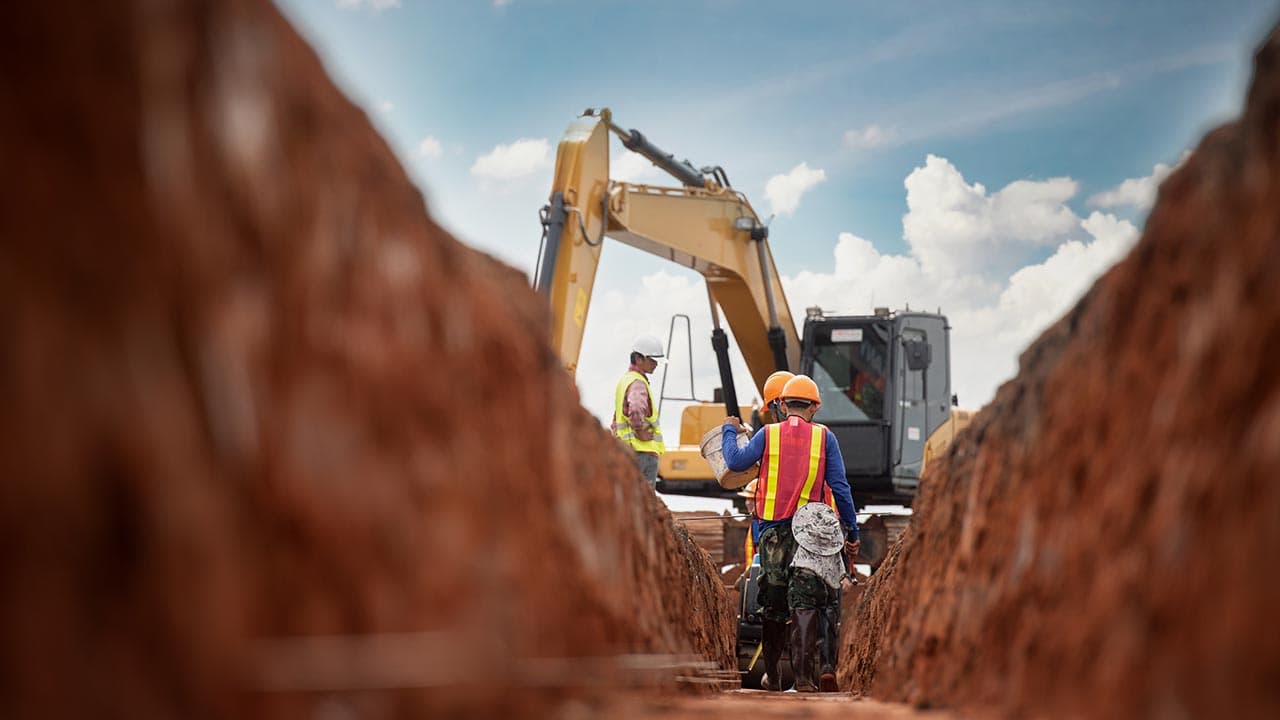
You need a Safe Work Method Statement (SWMS) before you start any of the 18 kinds of high-risk construction work in the WHS Regulations. A SWMS sets out the work, its hazards and risks, the controls, and how those controls will be put in place, monitored and reviewed. The ten examples below show what a good SWMS covers for common jobs, and where to start.
What a SWMS must cover
Under regulation 299, a SWMS must:
- identify the high-risk construction work being done;
- specify the hazards and the risks they create;
- describe the control measures, and how they'll be implemented, monitored and reviewed;
- take account of the conditions on the site and, on a construction project, the principal contractor's WHS management plan; and
- be readily accessible and understandable to the people who use it.
A SWMS with the job name changed but nothing else doesn't meet the regulation. For a full breakdown, read what must a SWMS include.
Which work needs a SWMS
The regulations list 18 kinds of high-risk construction work in regulation 291:
- work where there's a risk of a person falling more than 2 metres;
- work in or near an excavation deeper than 1.5 metres;
- work around mobile plant;
- structural alterations or repairs that need temporary support;
- disturbance of asbestos;
- work on telecommunication towers;
- demolition of a load-bearing structure;
- work in or near a confined space;
- use of explosives, other than explosive power tools;
- work in or near pressurised gas mains or piping;
- work on or near chemical, fuel or refrigerant lines;
- work on or near energised electrical installations;
- work in an area that may have a contaminated or flammable atmosphere;
- work with tilt-up or pre-cast concrete elements;
- work adjacent to a road or other traffic or transport corridor;
- work in areas with artificial extremes of temperature;
- work in or near water or other liquid that carries a risk of drowning;
- diving work.
If your job isn't on that list, you still have to manage its risks, but you may not need a SWMS. Use the Do I need a SWMS? checker to check quickly.
On a construction project worth $250,000 or more (regulation 292), the principal contractor must have a WHS management plan (regulation 309). Your SWMS has to take that plan into account.
Who prepares the SWMS
The business carrying out the high-risk work must make sure a SWMS is prepared before the work starts. It can write one itself or use one that someone else has prepared, but it's still responsible for the content.
In practice, write it with the supervisor and the workers who'll do the job. They know how the work is actually done. A SWMS written at a desk, without input from the crew, is likely to miss the way the work is really done.
Once it's ready, a copy must go to the principal contractor before work starts (regulation 301), and the principal contractor must take reasonable steps to get it (regulation 312). Our guide on who prepares, signs and keeps a SWMS covers the detail.
Ten SWMS examples
1. Earthmoving
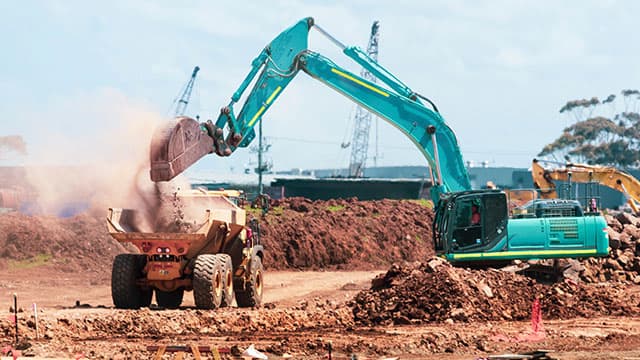
Earthmoving covers any work that uses powered mobile plant to dig, move or grade earth, such as a bulldozer, backhoe, loader or grader. It's high-risk because workers can be struck by the machine, caught between moving parts or crushed by falling material. Work next to a road also triggers the SWMS requirement on its own.
A good earthmoving SWMS sets out exclusion zones around the plant, who signals or spots for the operator, pre-start checks, and what happens when a worker enters the plant's path. If the job includes slinging loads or working near powerlines, those tasks need their own controls in the same document. Start from the earthmoving equipment SWMS.
2. Height access equipment
Work at height is one of the most common hazards in construction. The SWMS for scaffolds, cherry pickers and scissor lifts should cover how each piece of equipment is inspected before use, who is trained to operate it, how workers are protected from falls, and how a casualty is rescued from it.
Check the ground, power line clearances and the manufacturer's limits. Use the height access equipment SWMS as the base and add the details for the specific machine on site.
3. Bricklaying
Bricklayers work at height, lift heavy blocks all day and often work near mobile plant. The hazards are falling bricks and debris, sharp tools and back or shoulder strain. A bricklaying SWMS should cover edge protection, the method for lifting and placing blocks, how scaffolds are checked, and where materials are stacked away from the edge.
The brick and block laying SWMS gives a starting point for most residential and commercial jobs.
4. Confined space work
Confined spaces such as tanks, pits, ducts and roof voids can have too little oxygen or too many toxic fumes. Workers can also be overcome by dust, and a rescue from inside a confined space is hard to do quickly.
The SWMS must cover atmospheric testing before entry and during the work, ventilation, an entry permit, a standby person outside, and a rescue plan that doesn't rely on the first person going in. If the rescue relies on the emergency services, say how long they'll take. The confined space work SWMS covers these steps.
5. Concrete pool construction
Building an in-ground concrete pool means excavating deep trenches, running heavy plant close to the edge, and working around underground services. Trench collapse, falls into the excavation, being struck by equipment and contact with buried or overhead electrical lines are the main risks.
The SWMS should cover the excavation method, how the trench is supported, the location of services checked before digging, the reinforcement and shotcrete or concrete pour, and who is responsible for each control. The concrete pool construction SWMS is a starting point.
6. Demolition
Demolition work often disturbs asbestos, can bring down a load-bearing structure and produces noise and dust. Falling debris is a constant hazard. An asbestos survey before any demolition is the first control, and the SWMS needs to say what happens if an unexpected material is found.
The demolition SWMS covers the sequence of work, exclusion zones and the controls for dust and noise. If asbestos is found, stop work and follow the asbestos SWMS for that job.
7. Solar panel installation
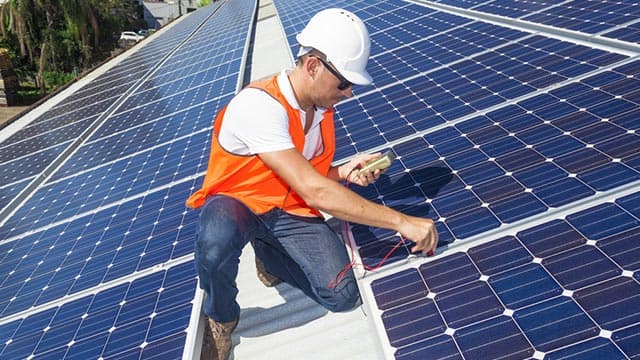
Solar installs combine roof work with electrical risk. Workers can fall from the roof edge, handle heavy panels awkwardly, and work near energised DC and AC circuits. The SWMS should cover roof access and edge protection, how panels are lifted and fixed, isolation of the system before live work, and the electrical checks before the system is energised.
The solar installation SWMS gives the general controls, and the site's roof type and electrical layout add the specific ones.
8. Painting and decorating
Painting work is often seen as low risk, but it involves ladders and scaffolds at height, solvent and VOC exposure, and dust from sanding or stripping old coatings. In older buildings the old coatings may contain lead, and the old roofing may contain asbestos.
The SWMS should cover the height access method, ventilation, the PPE for the coatings used (read the product's safety data sheet), and how old coatings are tested before they're disturbed. The painting and decorating SWMS covers the base controls.
9. Air conditioning service and repairs
Air conditioning work involves refrigerant lines, energised electrical circuits and roof-level work. Refrigerant can cause frostbite and asphyxiation in enclosed spaces, and an electrical fault can cause shock or fire.
The SWMS should cover isolating the unit before work, the refrigerant recovery method, safe lifting of condensers, working at height on the roof and the manufacturer's instructions for the specific unit. The air conditioning service and repairs SWMS is the base document.
10. Working with asbestos
Asbestos fibres cause lung cancer, mesothelioma and asbestosis, and the risk grows with the amount and length of exposure. Any work that disturbs asbestos is high-risk construction work, and some removal must be done by a licensed removalist.
The SWMS must say what material is involved, how it's identified, how the area is sealed, what PPE is used, how waste is bagged and labelled, and how the area is cleared for re-entry. Licensed removal has its own requirements, so use the asbestos licensed removal SWMS and read our guide to managing safe asbestos removal.
Using a template well
A template gives you the structure. You still have to make it fit the job:
- Check the scope. Make sure the SWMS covers the actual tasks, not just the trade.
- Add the site. Name the access routes, overhead services, neighbours, other trades and ground conditions.
- Consult the crew. Ask the people who'll do the work what's missing, and record that you asked.
- Confirm the controls. Each control should say what's done, by whom and how it's checked.
- Review when things change. Revise the SWMS when a control doesn't work, when the method or site changes, when a new hazard appears, or when a health and safety representative asks (regulation 38 and regulation 302).
How SafetyDocs helps
SafetyDocs has 1,250+ expert-written templates, including SWMS for each of the examples above, written by safety experts since 2004 with input from Standards Australia. The job, client and site details fill themselves in, so you spend your time on the site-specific controls. Builders can comment on the exact line and approve the SWMS before the crew starts. Workers sign from a text, a link or a QR code on any phone, with no app or account.
Common questions
Do I need a SWMS for every job? No. A SWMS is only required for the 18 kinds of high-risk construction work. Other tasks still need their risks managed, often with a JSA or a safe work procedure.
Can I use a template instead of writing my own? Yes, as long as it's adapted to the actual work and site. A template that hasn't been fitted to the job doesn't meet the regulation.
Does a SWMS have to be signed? The regulations don't require a signature, but most principal contractors ask workers to sign on. It shows the crew has read the SWMS and understands the controls.
How long do I keep a SWMS? Keep it until the high-risk construction work is finished. If a notifiable incident happens during that work, keep it for at least 2 years after the incident (regulation 303).
This is general information, not legal advice. Check the current law with your WHS regulator.
模板库
用一份现成的 SWMS付诸实践。
浏览为澳大利亚各工种编写的 SWMS 模板。任何模板都可免费预览,几分钟就能按你的工作改好。
适用于这项工作的模板
- 安全作业方法说明(SWMS)Earthmoving Equipment
- 安全作业方法说明(SWMS)Height Access Equipment
- 安全作业方法说明(SWMS)Painting and Decorating
- 安全作业方法说明(SWMS)Brick and Block Laying
相关指南

SWMS 和 JSA
SWMS template: what it must include and how to use it
What a SWMS template must include under the WHS Regulations, how to adapt one to the job, and the mistakes that leave a template too generic to use.
SWMS 和 JSA
Free 'Do I need a SWMS?' checker for your website
Add our free SWMS checker to your website. Visitors tick the work a job involves and see straight away whether the WHS laws need a SWMS.
SWMS 和 JSA
What does SWMS stand for? Safe work method statement explained
SWMS stands for safe work method statement. Learn what it is, when the WHS Regulations require one, what it must include and how it differs from a JSA.