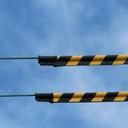
Overhead Electric Lines - Working Near
- Company doing the work
- [Company]
- Business contact and phone
- —
- Responsible person (for monitoring SWMS and work)
- —
- Responsible person's phone
- —
- Responsible person's signature
- —
- Date signed
- —
- Principal Contractor (PC)
- —
- PC Address
- —
- PC phone
- —
- Date SWMS provided to PC
- —
- Job Site Address
- —
- Part of a construction project
- —
Site management plan
If the work is part of a construction project, this SWMS must align with requirements of the Site Management Plan in place for the Construction Project.
High-risk construction work
This work activity involves the following “High-Risk Construction Work” (HRCW - identified in the Job Task column)
- Gas MainsPressurised gas distribution mains or piping
- Hazardous LinesChemical, fuel or refrigerant lines
- Energised ElectricalEnergised electrical installations or services
Planning and preparation
Planning/Preparation
Liaise with Principal Contractor to identify on-site safety systems and procedures
Establish supervisory and communication arrangements
Principal contractor to confirm emergency response procedures are in place.
Hold points
Hold points identified and signed off before continuing work. (specify the hold points)
Training/licence
All workers to have a General Construction Induction Card
Relevant workers have relevant certificates of competency, licenses, and training. Specify on the SWMS Sign-off for each worker.
Trained First Aider on site
All workers trained in site-specific emergency and evacuation procedures, SWMS, safe work procedures, and safety data sheets.
Worker duties and responsibilities
Fit condition for work, i.e., no signs of fatigue, alcohol or drugs
Attend all site inductions/briefings
Comply with all site requirements, e.g. PPE, Traffic Management Plans (TMP)
Only carry out work related to the contract
Inspect completed work and report possible safety, environmental and quality matters to the supervisor.
Monitoring and review
All people involved in the task must have this SWMS communicated to them before work commences
SWMS to be reviewed and amended if necessary, in consultation with relevant people after any near miss or incident
If additional site hazards identified, review this SWMS and amend control measures to suit
People, including workers, contractors and sub-contractors, affected by the revisions to this SWMS, must be informed ASAP
Give the principal contractor a copy of the revised SWMS
The site supervisor to monitor works against the controls stated in this SWMS
SWMS must be kept on-site and made available for inspection or review
Keep a record of this SWMS until the job is complete or for two years if involved in a notifiable incident
Regardless of any other factor, the person in control of the workplace must review this SWMS at least annually.
Site-specific notes
Legislation and codes of practice
None listed.
Personal protective equipment (PPE)
- Foot Protection
- High Visibility
Do not wear rings, watches or jewellery that may become entangled. Long and loose hair must be tied back.
Job steps, hazards and controls
- Work activity
Planning
- Hazard
Contact with overhead electric lines; Electrocution; Fire
Before controls4 AcuteControlsAll work must be undertaken with reference to the applicable State/Territory documents relating to work near overhead and underground assets.
Refer to your State/territory Guidance Material for working distances. i.e., No-Go Zones etc. (Enter distances in the table of assets and approach limits below.)
If a permit to work system used, always work within the terms of the permit. (have a copy of the permit on-site).
If work may infringe on no go zone assume all overhead and underground lines are energised unless the following is sighted:
An access authority confirming the electric lines have been de-energised, or
Another written document from the Electricity Supply Authority that allows people to work in a no-go zone
The spotter must know:
The voltage and height of all power lines on the project (use a non-contact height indicator e.g. Ultrasonic cable height indicator)
If the height or voltage of the overhead power lines cannot be accurately determined, consult the network operator.
The fully extended height and/or reach of all plant and equipment; particularly tippers, cranes and earthworks machinery.
Never use a contact method to determine height. If the height of the overhead electric lines cannot be accurately estimated, seek advice from the Electricity supply authority.
After controls2 ModerateResponsible- Supervisor
- Hazard
Exclusion zone breach; Electrocution; Fire
Before controls4 AcuteControlsWhere it is critical to maintaining separation distances, the following must be employed:
Nominate a trained powerline ‘observer/spotter’ (who is not to perform any other tasks while they are observing the work being carried out)
Workers and their equipment should not approach overhead powerlines any closer than the following
The following safe working distances are only to be used if the following conditions have been met:
Completion of a written risk assessment prior to the commencement of work
The application of a safe system of work, including the use of a safety observer if required
If required by the network asset owner, and/or as an outcome of the risk assessment, consultation with the network operator regarding the proposed work and compliance with any conditions imposed.
After controls2 ModerateResponsible- Supervisor
- Hazard
Untrained personnel; Electrocution; Fire
Before controls4 AcuteControlsEnsure all workers involved with the task have nationally accredited Work Near Overhead Powerlines (WNP) training
Ensure all spotters have undertaken training and/or received instruction in working as a spotter and training/experience in the safe use of the associated plant/equipment/task being spotted for (e.g. Riggers ticket if spotting a crane around electrical installations)
For work that requires a Certificate of Competency or WorkSafe High Risk Licence for an item of plant that person will be spotting for, ensure that certificate is valid and in place
For high risk tasks, e.g. electrical spotting, work at heights etc. a spotter must have a current appropriate level First Aid Certificate and, a current Cardiopulmonary Resuscitation / Expired Air Resuscitation (CPR/EAR) certificate.
People spotting must also be competent in the task being spotted for e.g. High risk plant operator or Electrician for high voltage work
Spotters and relevant workers must understand:
Rescue and emergency evacuation equipment
Reporting procedures for incidents
Authority to cease unsafe work.
After controls2 ModerateResponsible- Supervisor
- Hazard
Electrocution; Fire
Before controls4 AcuteControlsImplement an Emergency Electrical Response Plan
After controls2 ModerateResponsible- Supervisor
IR before controls · RR after controls1 LLow2 MModerate3 HHigh4 AAcute
Overall risk after controls2 MModeratethe highest rating after controls
Thêm 5 bước công việc, từ Arrival on-site & assess onsite conditions đến Emergency response
Mỗi bước đều có mối nguy, mức rủi ro và biện pháp kiểm soát, cùng phần ký nhận của đội.