Forklift pre-start checklist: what to check every shift
What a forklift pre-start checklist should cover, when to do it, who signs it and what to do when a check fails, with notes on truck and vehicle pre-starts.
7 min read
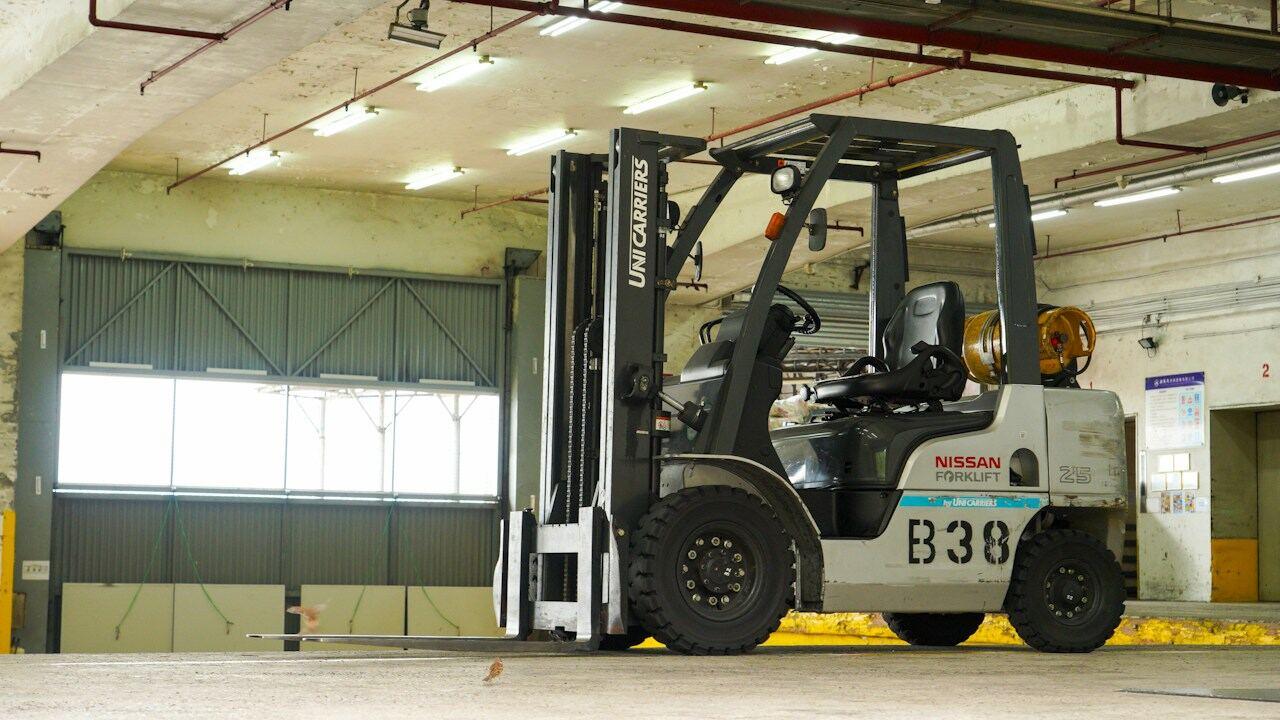
A forklift pre-start checklist is the set of checks an operator does before using a forklift: a walk-around look at the forks, mast, tyres, hydraulics and safety equipment, then a test of the brakes, steering, horn, lights and lifting controls. It's done at the start of every shift and whenever someone takes over a different forklift, and anything that fails takes the forklift out of service until it's fixed.
If you searched "forklift pre start checklist" or "forklift checklist", that's the short answer. Below is what to check and why, who signs the checklist, what happens with a failed check, and how the same idea applies to trucks and other vehicles.
Why forklift pre-start checks matter
Forklifts are heavy, quiet, often top-heavy when loaded, and they work close to people. Safe Work Australia's forklift information sheet says most forklift incidents involve pedestrians, and lists the causes of tip-overs: speed, especially when turning, heavy braking, overloading, travelling with the load raised, slopes and ramps, slippery surfaces and shifting loads.
A pre-start check won't stop a forklift being driven badly. It does catch the faults that turn a small mistake into a serious incident: brakes that don't hold, a horn or reversing beeper that doesn't sound, a seatbelt that doesn't latch, worn forks, or a leaking hydraulic hose that lets a raised load drop.
When should a forklift pre-start check be done?
The regulators agree on the basics:
- Safe Work Australia's information sheet says a pre-start check should be done at the beginning of each shift and every time you use a different forklift, because the previous operator may not have left it in a safe condition.
- WorkSafe Victoria's guidance on forklift maintenance and inspection says a pre-operation inspection should follow the manufacturer's recommendations and be done at the start of each shift, before first daily use and when the operator changes.
- SafeWork NSW's forklift safety fact sheet says safety checks are to be done at the start of each day.
The law behind this is the duty to keep plant safe in the model WHS Regulations. The person with management or control of plant must have it maintained and inspected by a competent person in line with the manufacturer's recommendations (regulation 213), and must manage the risks of powered mobile plant overturning, ejecting the operator or colliding with people (regulation 214). A daily pre-start doesn't replace the scheduled service by a forklift technician; it's the operator's check in between.
What to check: the forklift pre-start checklist
Start with your forklift's operator manual, which lists the checks the manufacturer wants. Most checklists then fall into two parts: a visual check with the forklift off, and an operational check with it running.
Visual checks (engine off, forks lowered)
| Item | What to look for |
|---|---|
| Forks | Cracks, bends, wear at the heel, and locking pins in place. SafeWork NSW says forks worn more than 10 percent must be replaced |
| Mast and chains | Damage, cracked welds, chains evenly tensioned and lubricated, nothing caught in the mast |
| Hydraulics | Leaks from hoses, fittings and cylinders, and oil on the floor under the forklift |
| Tyres and wheels | Damage, chunks missing, wear, wheel nuts present, pressure on pneumatic tyres |
| Overhead guard and load guard | Secure and undamaged. The load backrest must be in good condition |
| Load rating plate | Present and readable, showing the capacity and the working load limit of any attachment fitted |
| Seat and seatbelt | Seat secure and undamaged, seatbelt latches and retracts |
| Fluids | Engine oil, coolant, hydraulic oil and fuel, as the manual specifies |
| LPG forklifts | Cylinder secure in its bracket, no damage or leaks, pressure relief valve at the 12 o'clock position, as SafeWork NSW's fact sheet requires |
| Electric forklifts | Battery charged, connectors and cables undamaged, no electrolyte leaks |
| Attachments | Secured as the manufacturer instructs, with its own rating information available |
Operational checks (engine running)
| Item | What to look for |
|---|---|
| Warning devices | Horn, flashing light, reversing beeper and any blue pedestrian warning lights all work |
| Lights | Headlights, brake lights and indicators, especially for forklifts driven on a road |
| Brakes | Service brake stops the forklift smoothly; park brake holds it |
| Steering | Responds properly, without too much play |
| Lift, lower and tilt | Each control works smoothly through its full range, with no jerking, and returns to neutral |
| Gauges and warning lights | No warnings on the dash; fuel or battery charge enough for the shift |
| Inching pedal and travel | Forward and reverse work, the inching pedal works as it should |
The warning devices, load rating plate, forks, load guard and LPG items come from SafeWork NSW's fact sheet, which also notes that the seatbelt must be worn at all times. Adjust the list to each forklift: a reach truck, a counterbalance forklift and a rough-terrain forklift each have their own items.
Who completes and signs the checklist?
The operator does the check and signs the checklist, because they're the one about to rely on the forklift. They must hold a high risk work licence for forklift operation, unless they're a trainee enrolled with an RTO and directly supervised by a licence holder, as Safe Work Australia's information sheet explains. A verification of competency should test that an operator can do the pre-start properly on the forklifts they'll use.
A supervisor should review completed checklists regularly, not just file them. Patterns, like the same fault reported three days running, show a maintenance problem.
WorkSafe Victoria says inspection and maintenance records should show what needs inspecting at each interval, what has been inspected, any maintenance done, and any defects and the repairs made, including work still waiting for sign-off.
What to do when a check fails
A failed item means the forklift isn't used until it's fixed:
- Don't operate it. If the forklift is already running, park it safely, lower the forks, apply the park brake and turn it off.
- Tag it out. Put an out-of-service tag on the controls and remove the key. WorkSafe Victoria says you should have a system to lock a forklift or attachment out of service when a defect makes it unsafe.
- Report it to the supervisor straight away, and record the fault on the checklist.
- Get it repaired by a competent forklift technician, and record the repair.
- Check it again before it goes back into service.
Decide in advance which faults stop the forklift and which can wait for the next service. A blown bulb in a work light might be fine for a day shift; brakes, steering, seatbelts, warning devices, forks and hydraulic leaks never are.
Truck and vehicle pre-start checklists
The same idea applies to trucks, utes and other vehicles: check before you drive. A vehicle pre-start usually covers the engine, electrical system and lights, wheels and tyres, body, brakes and the safety equipment carried. Our vehicle pre-operational checklist works through those in tick-box form, with space for comments and the driver's signature.
Heavy vehicles can have more to check, such as load restraint and couplings, and the vehicle's own manual and your fleet's procedures will set those. For forklifts working around trucks at a loading dock, see 10 mobile plant safety tips.
Build the checklist into your forklift procedures
A pre-start checklist works best as part of a written procedure for each type of forklift, so operators learn the checks with the rest of the safe operating method. Start from the procedure for the forklift you run:
- LPG forklift safe operating procedure
- Diesel or petrol forklift safe operating procedure
- Electric forklift safe operating procedure
In SafetyDocs you can build your own forklift pre-start checklist in the editor, from the checks in your forklift's manual, then have operators complete it on their phones at the start of each shift.
Common questions
Is a forklift pre-start checklist a legal requirement? The WHS laws don't name the document, but they require plant to be inspected and maintained in line with the manufacturer's recommendations, and the regulators' guidance is to check a forklift at the start of every shift. A written checklist is how you show it was done.
How long does a forklift pre-start take? A few minutes, once the operator knows the checklist. It depends on the forklift and how many items your list has. Rushing it defeats the point.
How long should pre-start checklists be kept? The WHS laws don't set a period for forklift pre-starts. Keep them with your plant maintenance records, for at least as long as your own procedures, clients or insurer require.
Do I need to do a pre-start if someone else already did one today? Yes, if you're taking over the forklift. Safe Work Australia's advice is to check every time you use a different forklift, because you can't be sure what state it was left in.
This is general information, not legal advice. Check the current law with your WHS regulator.
Template library
Put it into practice with a ready-made SWMS.
Browse SWMS templates written for Australian trades. Preview any of them free, then tailor one to your job in minutes.
Templates for this work
- Safe Work Method Statement (SWMS)Manual Handling
- Safe Work Method Statement (SWMS)Forklift
- Safe Work Method Statement (SWMS)Tipper and Dog
- Safe Work Method Statement (SWMS)Heavy Vehicles Service Maintenance