Hot work permit: when you need one and what it covers
When a hot work permit is needed, what it covers (fire watch, gas testing, isolation), who issues it, and how it fits with a SWMS under Australia's WHS laws.
8 min read
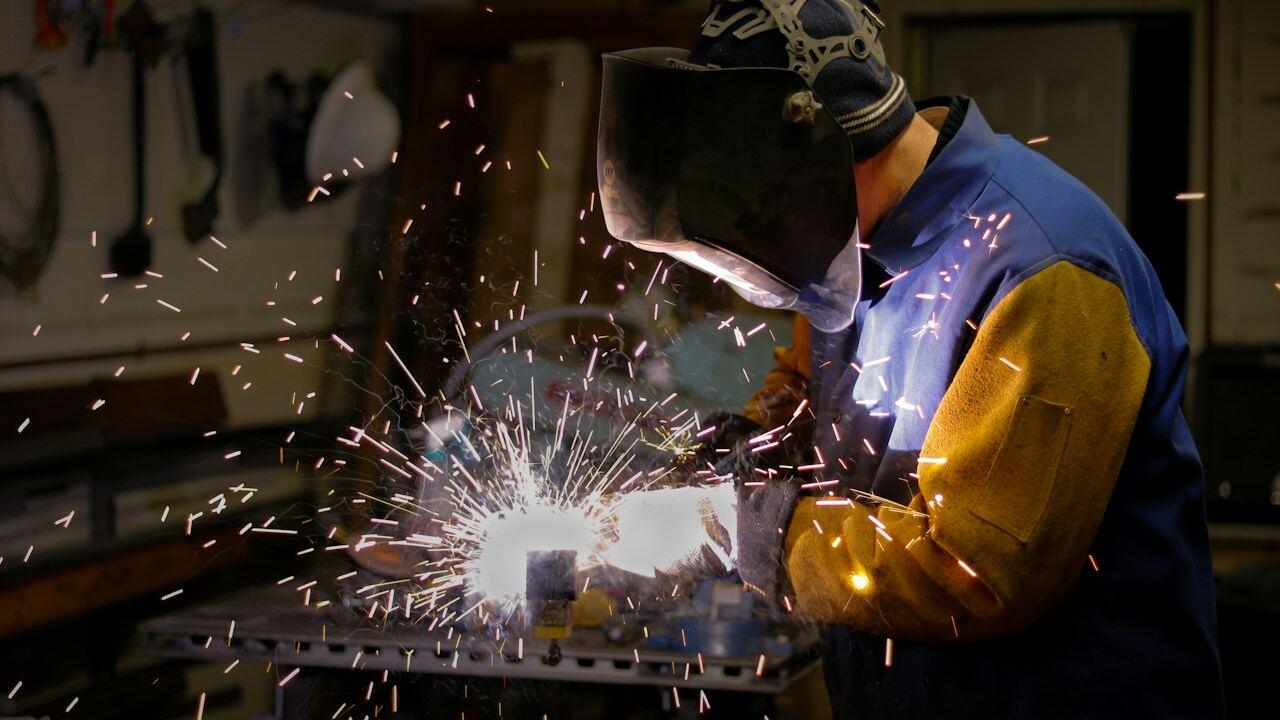
A hot work permit is a written authorisation to do work that creates heat, sparks or flame, such as welding, grinding, oxy cutting or brazing, in a particular place for a set time. Before it's signed, someone checks the area for anything that could catch fire or explode, removes or covers it, isolates services, sets up firefighting equipment and a fire watch, and tests the air where flammable gas or vapour could be present.
If you searched "hot works permit" or "what is a hot work permit", that's the short answer. This page explains when you need one, what it should cover, who issues it and how it relates to a SWMS.
What counts as hot work?
SafeWork NSW's hot work safety alert describes hot work as grinding, welding, oxy cutting or other processes that produce a flame or other ignition source. That includes:
- arc, MIG, TIG and oxy-acetylene welding;
- oxy cutting and plasma cutting;
- grinding and abrasive cutting with angle grinders and cut-off saws;
- brazing, soldering and heat shrinking with a gas torch; and
- heating, thawing or bending metal with a flame.
The hazards are the same in each case: heat, sparks, molten metal and flame meeting something that burns. SafeWork NSW lists fire, explosions when working on or near drums, tanks, pipes or vessels that hold or have held flammable materials, burns, injuries from explosions, toxic fumes and oxygen depletion.
When do you need a hot work permit?
SafeWork NSW's advice is direct: before carrying out any hot work on site, implement a hot work permit system that identifies the hazards of the proposed work and eliminates them, or controls the risks where elimination isn't reasonably practicable.
Safe Work Australia's Model Code of Practice: Welding processes says the same for welding: when you weld somewhere that isn't a confined space, you should still document specific procedures, including issuing a hot work permit. It points to AS 1674.1, Safety in welding and allied processes, Part 1: Fire precautions, for guidance on hot work and hot work permits.
In practice, use a permit whenever hot work happens outside a workshop or fabrication bay set up for it. Common examples:
- welding or cutting on a construction site, a roof or inside a building;
- maintenance on plant, pipework or tanks in a factory, a plant room or a farm shed;
- any hot work on or near drums, tanks, fuel lines or vessels that hold or have held flammable liquids or gases;
- hot work in a confined space, which needs a confined space entry permit as well (regulation 67); and
- any work in an area where a flammable atmosphere could be present.
The law behind hot work permits
No WHS law names a hot work permit. The permit is how most businesses meet these duties under the model WHS Regulations:
- Hazardous atmospheres. A PCBU must manage the risks of a hazardous atmosphere (regulation 51). An atmosphere is hazardous if, among other things, the oxygen level isn't safe or flammable gas, vapour, mist or fumes exceed 5% of the lower explosive limit (LEL).
- Ignition sources. A PCBU must manage the risks of an ignition source in a hazardous atmosphere (regulation 52).
- Flammable materials. Flammable or combustible substances kept at the workplace must be kept to the lowest practicable quantity (regulation 53).
- Hazardous areas. Where an ignition source could cause a fire or explosion in a hazardous area, it must not be brought into that area (regulation 355).
- Confined spaces. A PCBU must manage the risks of a confined space, including a risk assessment by a competent person (regulation 66).
All sit under the primary duty to ensure health and safety so far as is reasonably practicable (section 19 of the model WHS Act). Our guide to permits to work covers how permit systems work in general.
What a hot work permit covers
A good permit is a checklist that has to be completed before work starts, not a form signed afterwards. Based on SafeWork NSW's list of key measures, the welding code and its hot work explosion alert, it should cover:
The work
- Who is doing the work, what it is, where, and the start and expiry time of the permit.
- The equipment: welding set, gas cylinders, grinder, torch.
The area
- Flammable and combustible material. Find and remove anything that could burn, including rubbish, paper, packaging, dust and plastic sheeting or mesh. Cover what can't be moved with non-flammable covers or screens.
- Drums, tanks and vessels. Find out what they held, using the safety data sheets and other duty holders. Clean and purge them before any hot work, and preferably fill them with an inert substance such as nitrogen or water, as the welding code advises.
- Confined space. Confirm whether the work area is a confined space. If it is, a confined space entry permit and its controls apply too.
- Ventilation. Make sure the area is ventilated so flammable vapours can't build up.
- Exclusion zone. Isolate and secure the area, limit people and vehicle traffic, and put up signs.
Gas testing
Where flammable gas or vapour could be present, test the atmosphere before work starts, and don't start if it's hazardous. SafeWork NSW's explosion alert says to treat the space above the contents of a waste oil tank as a hazardous atmosphere until testing proves otherwise, and in a confined space to monitor the atmosphere continuously during hot work, using a calibrated gas detector operated by a competent person. Record the readings, the time and who tested on the permit.
Isolation
Locate, protect and isolate services before work starts, such as gas, fuel and chemical lines and electrical supply. SafeWork NSW's explosion alert calls for services to be isolated using lock out and tag out procedures. Our lockout/tagout guide covers how.
Equipment and PPE
- Gas cylinders undamaged, secured upright and fitted with flashback arrestors, with valves closed when not in use.
- Firefighting equipment suitable for the hazard, ready to use, and people trained to use it.
- Non-flammable PPE for the workers doing the hot work.
Fire watch
A fire watch is a person who watches for fire during the hot work, and deals with it or raises the alarm. They shouldn't be doing the hot work themselves. SafeWork NSW lists a fire watch as a key measure. The permit should name the fire watch and say how long they stay after the work stops.
Finishing up
Before leaving the area for a break, at the end of the shift or when the job is done, check for smouldering material. Then sign off the permit and close it.
Who issues a hot work permit?
The permit is issued by an authorised person: someone the business has trained and authorised to assess hot work, who isn't the person doing it. On a construction site that's usually the principal contractor's supervisor or the site manager; in a factory, a maintenance supervisor or the person in charge of the area.
SafeWork NSW says the permit should be reviewed and signed off by the people in control of the site and those involved in the hot work, kept in the site file and displayed at the work area. A typical permit has three signatures: the person doing the work agreeing to the conditions, the authorised person issuing it, and a final sign-off when the work, fire watch and post-work check are complete.
The hot work permit template covers the site and work details, the equipment, emergency information, controls including isolated services, a spotter and fire watch, the applicant's agreement, and the authorised person's approval and final sign-off.
Hot work permit vs SWMS
A SWMS and a hot work permit do different jobs, and you'll often need both.
- A SWMS describes how high-risk construction work will be done safely, and must be prepared before the work starts (regulation 299). It covers the activity as a whole and stays in place for as long as the work goes on.
- A hot work permit authorises one piece of hot work, in one place, for a set time, after someone has checked the conditions on the day.
Welding isn't high-risk construction work by itself, but it often happens as part of it. Regulation 291 lists work in or near a confined space, work in an area that may have a contaminated or flammable atmosphere, work on or near pressurised gas mains or piping, work on or near chemical, fuel or refrigerant lines and work with a risk of a fall of more than 2 metres among its 18 kinds. Hot work during any of those needs a SWMS for the activity and a permit for each job.
SafeWork NSW's explosion alert, after a worker was burnt grinding in a pit with old tanks, calls for both: a SWMS and a hot work permit system that address work in contaminated or flammable atmospheres. A welding SWMS sets out the method, and an oxy-acetylene welding procedure covers the equipment's safe set-up and use.
Common questions
Is a hot work permit a legal requirement? The WHS laws don't name it, but they require you to manage the risks of ignition sources, hazardous atmospheres and flammable materials. Regulators and the welding code expect a permit system for hot work outside a dedicated workshop, and many sites make it a rule.
How long does a hot work permit last? As long as the permit says, usually one shift or less. If the conditions, the location or the workers change, issue a new one.
Do I need a hot work permit in a workshop? Not usually for routine welding in a bay set up for it, with screens, ventilation and nothing combustible nearby. You would for hot work elsewhere in the building, or on a tank, drum or anything that has held flammable material.
Who can be a fire watch? Someone trained in fire watch duties and in using the firefighting equipment provided, who isn't doing the hot work and can keep watching the whole time.
This is general information, not legal advice. Check the current law with your WHS regulator.
Template library
Put it into practice with a ready-made SWMS.
Browse SWMS templates written for Australian trades. Preview any of them free, then tailor one to your job in minutes.
Templates for this work
- Safe Work Method Statement (SWMS)Earthmoving Equipment
- Safe Work Method Statement (SWMS)EWP, Boom, Cherry Picker and Scissor Lift
- Safe Work Method Statement (SWMS)Powered Non-powered Tools
- Safe Work Method Statement (SWMS)Painting and Decorating