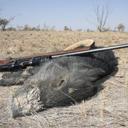
Feral Animal Culling
Document details
- Company doing the work
- [Company]
- Business contact and phone
- —
- Responsible person (for monitoring SWMS and work)
- —
- Responsible person's phone
- —
- Responsible person's signature
- —
- Date signed
- —
- Principal Contractor (PC)
- [Principal contractor]
- PC Address
- —
- PC phone
- [PC phone]
- Date SWMS provided to PC
- —
- Job Site Address
- [Site address]
- Part of a construction project
- —
Site Management Plan
If the work is part of a construction project, this SWMS must align with requirements of the Site Management Plan in place for the Construction Project.
High-risk construction work
This work activity involves the following “High-Risk Construction Work” (HRCW - identified in the Job Task column)
- Traffic CorridorsWork on, in or adjacent to a road, railway, shipping lane or other traffic corridor in use by traffic other than pedestrians
Planning and preparation
Planning
Liaise with Principal Contractor to identify on-site safety systems and procedures
Establish supervisory and communication arrangements
Principal contractor to confirm emergency response procedures are in place.
Hold points
Hold points identified and signed off before continuing work.
(specify the hold points)
Training and licences
All workers to have a General Construction Induction Card
Relevant workers have relevant certificates of competency, licenses, and training.
Trained First Aider on site
All workers trained in site-specific emergency and evacuation procedures, SWMS, safe work procedures, and safety data sheets.
Specify on the SWMS Sign-off for each worker.
Worker duties and responsibilities
Fit condition for work, i.e., no signs of fatigue, alcohol or drugs
Attend all site inductions/briefings
Comply with all site requirements, e.g. PPE, Traffic Management Plans (TMP)
Only carry out work related to the contract
Inspect completed work and report possible safety, environmental and quality matters to the supervisor.
Monitoring and review
All people involved in the task must have this SWMS communicated to them before work commences
SWMS to be reviewed and amended if necessary, in consultation with relevant people after any near miss or incident
If additional site hazards identified, review this SWMS and amend control measures to suit
People, including workers, contractors and sub-contractors, affected by the revisions to this SWMS, must be informed ASAP
Give the principal contractor a copy of the revised SWMS
The site supervisor to monitor works against the controls stated in this SWMS
SWMS must be kept on-site and made available for inspection or review
Keep a record of this SWMS until the job is complete or for two years if involved in a notifiable incident
Regardless of any other factor, the person in control of the workplace must review this SWMS at least annually.
Site-specific notes
Legislation and codes of practice
None listed.
Personal protective equipment (PPE)
- Foot Protection
- Hearing Protection
- Eye Protection
- Hand Protection
- Protective Clothing
- Sun Protection




Job steps, hazards and controls
- Work activity
Training
- Hazard
Unlicensed / untrained workers
Before controls3 HighControlsAll operators/workers to be trained and licensed to carry and are proficient with a firearm, licences must be current
All operators/workers to be trained and competent to carry out remote 4-wheel driving:
Only drive vehicles you hold the appropriate licence for
Confirmation of an individual’s licence is to be sighted before the commencement of the use of any vehicle
If vehicle is over:
4.5-ton GVM and no more than 8-ton GVM then a Light Rigid Licence is required
8 tonnes GVM with 2 axles, then a Medium Rigid Licence is required
8 tonnes GVM with 3 or more axles, then a Heavy Rigid Licence is required
A high level of operator skill is essential for the humane killing of animals. Operators must be trained in:
Animal behaviours and handling
Selection of the best killing method
Correct application of the killing method.
After controls2 ModerateResponsible- Supervisor
- Hazard
Adjacent to railway
Before controls4 AcuteControlsEnsure all people working within rail corridor (15m from outer tracks or between track and fence line) have undergone formal Rail Industry Safety Induction and certificate of competencies
Do not work within Danger Zones of railway tracks (3m horizontal from outermost tracks) without an appointed Protection Officer.
After controls2 ModerateResponsible- Supervisor
IR before controls · RR after controls1 LLow2 MModerate3 HHigh4 AAcute
Overall risk after controls2 MModeratethe highest rating after controls
작업 단계 12개 더: Planning부터 Emergency response까지
단계마다 위험 요소, 위험도 평가, 관리 조치가 있고, 작업자 서명란도 포함됩니다.