
Manual Handling
- Company doing the work
- [Company]
- Business contact and phone
- —
- Responsible person (for monitoring SWMS and work)
- —
- Responsible person's phone
- —
- Responsible person's signature
- —
- Date signed
- —
- Principal contractor (PC)
- [Principal contractor]
- PC address
- —
- PC phone
- [PC phone]
- Date SWMS provided to PC
- —
- Job site address
- [Site address]
- Part of a construction project
- —
Site management plan
If the work is part of a construction project, this SWMS must align with requirements of the Site Management Plan in place for the Construction Project.
High-risk construction work (HRCW)
This work activity involves the following “High-Risk Construction Work” (HRCW - identified in the Job Task column)
- Mobile PlantWork in an area where there is any movement of powered mobile plant
Planning and preparation
Planning/Preparation
Liaise with Principal Contractor to identify on-site safety systems and procedures
Establish supervisory and communication arrangements
Principal contractor to confirm emergency response procedures are in place.
Hold points
Hold points identified and signed off before continuing work. (specify the hold points)
Training/Licence
All workers to have a General Construction Induction Card
Relevant workers have relevant certificates of competency, licenses, and training. Specify on the SWMS Sign-off for each worker.
Trained First Aider on site
All workers trained in site-specific emergency and evacuation procedures, SWMS, safe work procedures, and safety data sheets.
Worker duties and responsibilities
Fit condition for work, i.e., no signs of fatigue, alcohol or drugs
Attend all site inductions/briefings
Comply with all site requirements, e.g. PPE, Traffic Management Plans (TMP)
Only carry out work related to the contract
Inspect completed work and report possible safety, environmental and quality matters to the supervisor.
Monitor/Review
All people involved in the task must have this SWMS communicated to them before work commences
SWMS to be reviewed and amended if necessary, in consultation with relevant people after any near miss or incident
If additional site hazards identified, review this SWMS and amend control measures to suit
People, including workers, contractors and sub-contractors, affected by the revisions to this SWMS, must be informed ASAP
Give the principal contractor a copy of the revised SWMS
The site supervisor to monitor works against the controls stated in this SWMS
SWMS must be kept on-site and made available for inspection or review
Keep a record of this SWMS until the job is complete or for two years if involved in a notifiable incident
Regardless of any other factor, the person in control of the workplace must review this SWMS at least annually.
Site-specific notes
Legislation and codes of practice
Australian Government
Acts and regulations
- Work Health and Safety Act 2011
- Work Health and Safety Regulations 2011
Australian Capital Territory
Acts and regulations
- Work Health and Safety Act 2011
- Work Health and Safety Regulation 2011
Queensland
Acts and regulations
- Work Health and Safety Act 2011
- Work Health and Safety Regulation 2011
New South Wales
Acts and regulations
- Work Health and Safety Act 2011
- Work Health and Safety Regulation 2025
Northern Territory
Acts and regulations
- Work Health and Safety (National Uniform Legislation) Act 2011
- Work Health and Safety (National Uniform Legislation) Regulations 2011
South Australia
Acts and regulations
- Work Health and Safety Act 2012
- Work Health and Safety Regulation 2012
Tasmania
Acts and regulations
- Work Health and Safety Act 2012
- Work Health and Safety Regulations 2022
Western Australia
Acts and regulations
- Work Health and Safety Act 2020
- Work Health and Safety (General) Regulations 2022
Personal protective equipment (PPE)
- Foot Protection
- High Visibility
- Head Protection
- Hand Protection
- Protective Clothing
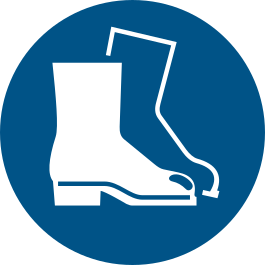
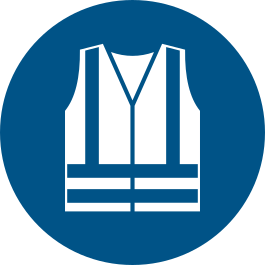

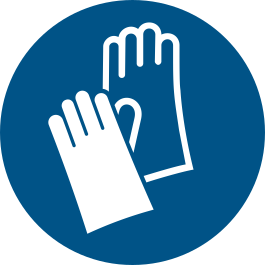
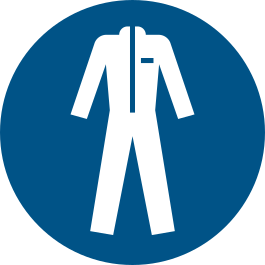
Do not wear rings, watches or jewellery that may become entangled. Long and loose hair must be tied back.
Job steps, hazards and controls
- Work activity
Training
- Hazard
Musculoskeletal Disorder (MSD) injuries
Before controls3 HighControlsEnsure all workers have undertaken training for hazardous manual tasks
Manual tasks include all physical activity, yet only present a risk when they are considered hazardous. Hazardous manual tasks can lead to injuries that are called “Musculoskeletal Disorder Injuries” or MSD’s.
MSD injuries include but not limited to - muscles, ligaments, nerves, and tendons in the wrists, arms, shoulders, neck or legs, muscles, ligaments or discs in the back, carpal tunnel syndrome, tendonitis, sprains and more. These injuries can be sudden or occur gradually over time
Indirect injuries:
Crushed by the loss of loads
Falls from height
Cuts and lacerations
Lifting aid training includes:
Check that the lifting aid is correct type and size for the intended work
Pre-inspection requirements
Safe Load Limit (SLL) or Safe Working Load (WLL)
The positioning of items on the aid
Safe movement of the aid
Potential hazards in the work zone (plant /vehicles/people)
Set up the work area to minimise travel distance with loaded aid
Powered mobile plant - groundworkers instructed on:
The UHF channel to communicate with plant operators
Not to approach mobile plant until the operator has agreed to their request to approach
On set distances to maintain from the mobile plant while in operation
Groundworkers and mobile plant operators are aware of any traffic management plan and no go zones
Are made familiar with the blind spots of the mobile plant.
After controls2 ModerateResponsible- Supervisor
IR before controls · RR after controls1 LLow2 MModerate3 HHigh4 AAcute
Overall risk after controls2 MModeratethe highest rating after controls
Thêm 17 bước công việc, từ Provide adequate resources đến Emergency response
Mỗi bước đều có mối nguy, mức rủi ro và biện pháp kiểm soát, cùng phần ký nhận của đội.