Working On or Near Telecommunications Towers Safe Work Method Statement (SWMS)
- Company doing the work
- [Company]
- Business contact and phone
- —
- Responsible person (for monitoring SWMS and work)
- —
- Responsible person's phone
- —
- Responsible person's signature
- —
- Date signed
- —
- Principal Contractor (PC)
- [Principal contractor]
- PC Address
- —
- PC phone
- [PC phone]
- Date SWMS provided to PC
- —
- Job Site Address
- [Site address]
- Part of a construction project
- —
Site management plan
If the work is part of a construction project, this SWMS must align with requirements of the Site Management Plan in place for the Construction Project.
High-risk construction work
This work activity involves the following “High-Risk Construction Work” (HRCW - identified in the Job Task column)
- FallsInvolves a risk of a person falling from 2m or more, including work on telecommunications towers
- Hazardous AtmosphereWork in an area that may have a contaminated or flammable atmosphere
Working with a risk of a fall over 2 metres
The fall from height hierarchy of control level considered when establishing controls:
- L1Work on the ground or solid construction, not chosen
- L2Use a passive fall restraint system, e.g. guard rails, scaffolding, EWP, not chosen
- L3Use a work positioning system, e.g. travel restraint, rope access, not chosen
- L4Use a fall arrest system, e.g. safety harness, catch platforms, not chosen
- L5Implement administrative controls, e.g. signage or instruction, not chosen
No level has been chosen yet.
Planning and preparation
Planning/preparation
Liaise with Principal Contractor to identify on-site safety systems and procedures
Establish supervisory and communication arrangements
Principal contractor to confirm emergency response procedures are in place.
Hold points
Hold points identified and signed off before continuing work. (specify the hold points)
Training/licence
All workers to have a General Construction Induction Card
Relevant workers have relevant certificates of competency, licenses, and training. Specify on the SWMS Sign-off for each worker.
Trained First Aider on site
All workers trained in site-specific emergency and evacuation procedures, SWMS, safe work procedures, and safety data sheets.
Worker duties and responsibilities
Fit condition for work, i.e., no signs of fatigue, alcohol or drugs
Attend all site inductions/briefings
Comply with all site requirements, e.g. PPE, Traffic Management Plans (TMP)
Only carry out work related to the contract
Inspect completed work and report possible safety, environmental and quality matters to the supervisor.
Monitor/review
All people involved in the task must have this SWMS communicated to them before work commences
SWMS to be reviewed and amended if necessary, in consultation with relevant people after any near miss or incident
If additional site hazards identified, review this SWMS and amend control measures to suit
People, including workers, contractors and sub-contractors, affected by the revisions to this SWMS, must be informed ASAP
Give the principal contractor a copy of the revised SWMS
The site supervisor to monitor works against the controls stated in this SWMS
SWMS must be kept on-site and made available for inspection or review
Keep a record of this SWMS until the job is complete or for two years if involved in a notifiable incident
Regardless of any other factor, the person in control of the workplace must review this SWMS at least annually.
Site-specific notes
Legislation and codes of practice
None listed.
Personal protective equipment (PPE)
- Foot Protection
- High Visibility
- Head Protection
- Protective Clothing
- Sun Protection
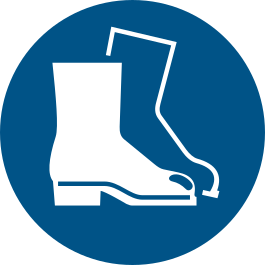
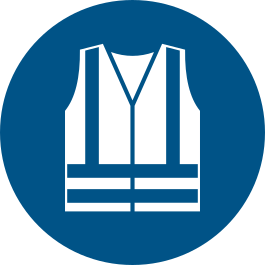

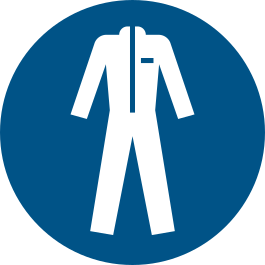
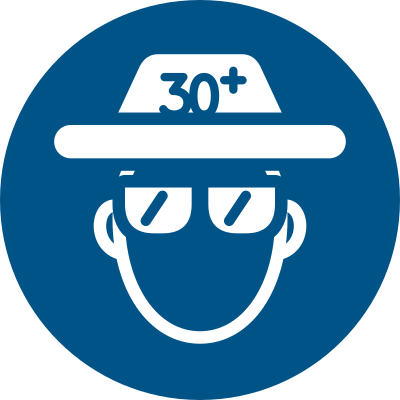
Do not wear rings, watches or jewellery that may become entangled. Long and loose hair must be tied back.
Job steps, hazards and controls
- Work activity
Planning & preparation
- Hazard
Lack of safety information
Before controls3 HighControlsBefore carrying out work with exposure to RF fields applicable to continuous wave (CW), pulsed and modulated electromagnetic fields at single or multiple frequencies within the range 3 kHz to 300 GHz, or working close to base stations, buildings or other facilities with radio transmitting antennas, managers and workers must access safety information about the location at which they are going to be carrying out work. Workers should;
Use the Radio Frequency National Site Archive (RFNSA) to search for Australian Mobile Network base stations to find Electromagnetic Energy (EME) Reports, site locations, carrier contact details for existing sites and community consultation information for new sites.
Use the online 'Mobile Site Safety tool' before accessing a building rooftop, tower or another facility with mobile base station antennas
Supervisors/workers must review the information in the above tools before working on or near an RF transmitter or antenna or,
if working near a small cell mounted on a pole or small structure not listed in the online resources, Contact the carrier or structure owner
If mounted on a building, contact the building owner
Note: if the transmitter licensee is not shown on the RFNSA or MobileSiteSafety App, the Australian Communications and Media Authority (ACMA) register of radio licenses can assist in identifying the correct licence holder so contact may be made.
After controls2 ModerateResponsible- Supervisor
- Hazard
Personal injury from fall
Before controls4 AcuteControlsImplement a Falls Emergency Rescue Plan
Amend the plan if conditions of the work change in a way that could affect a rescue/response
Trained first aid providers must be available on site
Ensure a reliable means to contact emergency services is available.
After controls2 ModerateResponsible- Supervisor
- Hazard
Extreme weather
Before controls3 HighControlsCheck weather conditions – do not work in extreme conditions
Reschedule works to work in more moderate temperatures.
After controls2 ModerateResponsible- Supervisor
- Hazard
Hyperthermia / Hypothermia
Before controls3 HighControlsEnsure that workers trained to recognise the symptoms of hyperthermia and hypothermia
Hot conditions. Ensure:
Suitable protective clothing
Sun brim on hard hats
Safety glasses - UV rated
Use 30+ sunscreen on exposed skin
Adequate drinking water
Access to shade on breaks
Adequate breaks.
Cold conditions. Ensure:
Schedule warm-up breaks
Hold breaks inside
Dress warmly in layers
Stay dry (wet clothing chills the body rapidly)
Workers must get out of the cold as soon as they can if starting to feel symptoms
Alcohol, cigarettes, caffeine and certain medications increase susceptibility to cold.
After controls2 ModerateResponsible- Supervisor
- Hazard
Working alone or in remote areas
Before controls4 AcuteControlsImplement communication, emergency response and incident management procedures that reflect the remote conditions and address operational needs
Personnel trained to use the equipment.
A 'Buddy' system should always be used when working in remote areas. Ensure:
GPS locator on relevant vehicles
Mobile phone (where service is available in the work area, pre-programmed with emergency numbers)
Satellite phones and EPIRB are fit for purpose, tested before departure & phones have spare, fully charged batteries and facilities for continuous charging.
Communication and check-in protocols developed and used.
After controls2 ModerateResponsible- Supervisor
- Hazard
Emergency
Before controls4 AcuteControlsWhere the Risk Assessment has identified high-risk tasks, the 'buddy' system may be utilised where a second person's presence is required at all times
Where serious consequence is possible, do not expose both people to the hazard simultaneously. The second person should be within sight, but safely removed from the immediate area
The 'buddy' must be trained in the specific activities the worker he/she is observing for is undertaking
The buddy must be properly equipped with emergency equipment and be capable of undertaking pre-planned rescue or emergency operations where needed and it is safe to do so.
After controls2 ModerateResponsible- Supervisor
IR before controls · RR after controls1 LLow2 MModerate3 HHigh4 AAcute
Overall risk after controls2 MModeratethe highest rating after controls
Thêm 7 bước công việc, từ Arrival on-site & risk assess on-site conditions đến Emergency response
Mỗi bước đều có mối nguy, mức rủi ro và biện pháp kiểm soát, cùng phần ký nhận của đội.