Electrical safety at work: managing electrical risks
Manage electrical risks at work: the hazards to look for, the duties and standards that apply, and the controls, testing and emergency steps you need.
本文目前只有英文版。
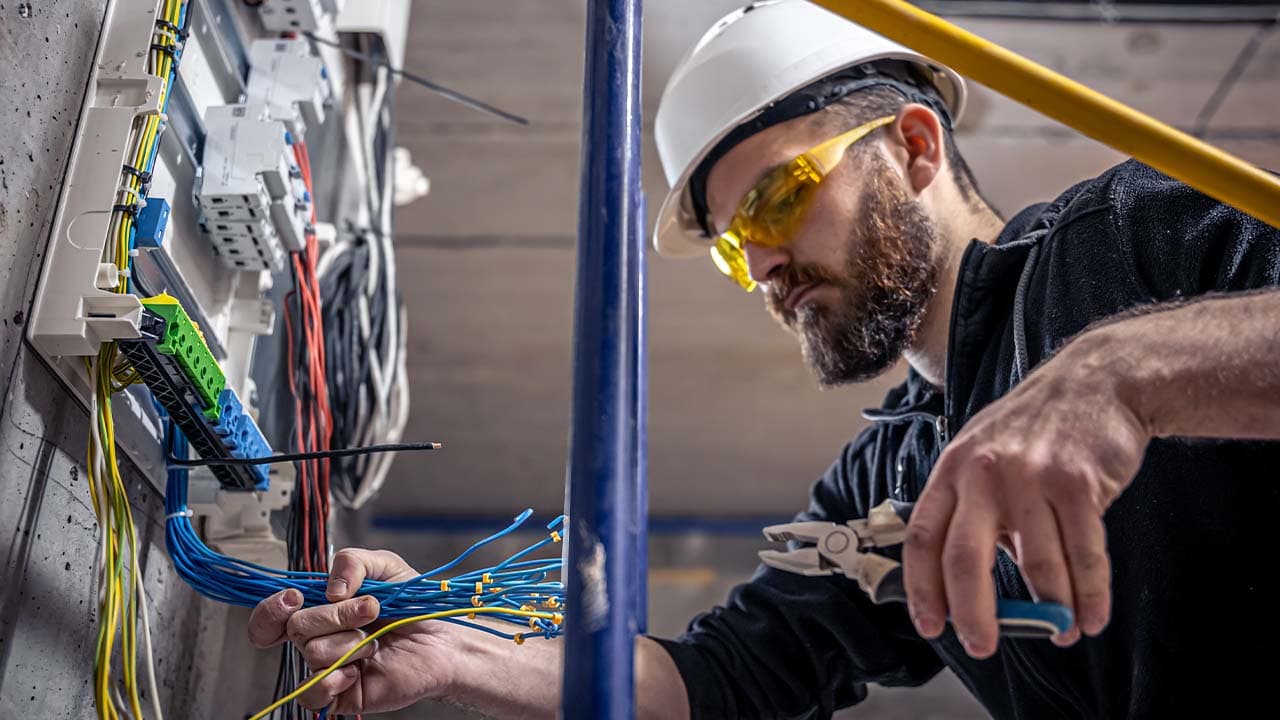
Managing electrical risks at work means finding every place where someone could touch live electricity or where equipment could start a fire, then removing the risk or controlling it. The person conducting the business or undertaking (PCBU) must do this so far as is reasonably practicable, under the primary duty of care in the WHS Act. The steps are the same whether you're an electrician, a builder or a facilities manager: identify the hazards, control them, test and inspect equipment, train your people, and plan for emergencies.
What counts as electrical work
Under the model WHS Regulations, electrical work includes connecting and disconnecting supply wiring to equipment, and installing, testing, repairing, altering or maintaining electrical equipment or installations. If your work involves any of those tasks, treat it as electrical work and manage the risks accordingly. Some tasks, such as replacing a fuse or a light globe, don't need electrical expertise, but the definition and the exceptions vary between states, so check your regulator's guidance.
The hazards to look for
Most electrical incidents come from one of these:
- Exposed live parts. Damaged leads, unguarded equipment, open switchboards, and overhead or underground power lines can all be live.
- Equipment faults. Damaged or poorly maintained equipment can spark or overheat, which leads to shock or fire.
- Wet conditions. Water, rain, wet floors and washdowns bring electricity and people close together.
- Flammable or explosive atmospheres. A spark can ignite vapour or dust in spray booths, fuel stores and similar areas.
- Poor ventilation and cramped spaces. These make it harder to escape and can trap gases.
- Toxic gases. Generators and other fuel-burning equipment used indoors can produce carbon monoxide.
For more detail, see our electricity hazard page.
Duties: who has to do what
The PCBU has the main duty. It has to manage the risks from electrical work so far as is reasonably practicable. Other duty holders have their own roles:
- Workers must take reasonable care of their own health and safety, and not adversely affect anyone else's (section 28). That means using the controls, reporting faults and not working on live equipment they aren't licensed or trained for.
- Designers, manufacturers, importers and suppliers must make sure the equipment they supply is safe.
- Principal contractors coordinate the risks when several trades share a site.
- Everyone with a duty must consult. Workers, contractors and other duty holders should be part of the risk decisions, so the duty to consult workers applies here too.
On a construction site, electrical work on or near energised installations or services is one of the kinds of high-risk construction work. That means a safe work method statement is needed before the work starts. Not every electrical task needs a SWMS, but every task needs controls and a clear procedure.
Electrical safety is also regulated by state and territory electrical safety laws. In Queensland, for example, the Electrical Safety Act 2002 sets out what electrical workers and businesses must do, and licensing is handled separately in each state. The WHS laws by state guide shows where each state's rules differ.
The Safe Work Australia code of practice for managing electrical risks in the workplace gives practical guidance for the steps below.
How to manage electrical risk
Work through the same risk management process you use for any hazard:
- Identify hazards. Walk the site and list the equipment, tasks and environment that could cause harm.
- Assess the risks. Consider how serious the harm could be, how likely it is, and how often people are exposed.
- Control the risks. Work down the hierarchy of controls: eliminate first, then substitute, isolate, use engineering controls, and use administrative controls. Use PPE as the last line of defence.
- Review the controls. Check them after an incident or near miss, when the work changes, and on a regular schedule.
The table below shows what each level of control looks like for electrical work:
| Control level | Electrical example |
|---|---|
| Eliminate | De-energise the circuit so the work is no longer near live parts, or move the work out of the area |
| Substitute | Use extra-low voltage or battery-powered tools in place of mains-powered tools |
| Isolate | Switch off and lock out the supply, then test that it's dead before you touch anything |
| Engineering | Install RCDs, insulation, barriers, enclosures and ventilation |
| Administrative | Use safe work procedures, permits, supervision and training |
| PPE | Wear insulated gloves rated for the voltage, eye protection, safety footwear and arc-rated clothing where needed |
For a deeper look at ranking controls, see our guide to the hierarchy of controls. Isolation is the control that protects you most directly when you work on equipment, so use a lockout/tagout procedure every time you work on equipment that could be energised.
Test and inspect electrical equipment
Visual checks catch obvious damage, but they don't find faults inside a lead or plug. That's why portable equipment needs in-service inspection and testing under AS/NZS 3760, which covers portable electrical equipment and residual current devices (RCDs).
- Who tests it. Use a competent person, such as a licensed electrician or someone trained in the standard's visual inspection and pass-fail testing method.
- How often. Testing frequency depends on the type of equipment, how often it's used, the environment it works in, and its history of faults or damage. Your risk assessment should set the schedule.
- What happens to faulty gear. Take it out of service straight away, tag it, and don't put it back until it's repaired and retested.
- What you record. Keep an electrical equipment register showing each item, when it was last tested, who tested it and the result. A register stops you retesting the same item twice and shows you what's due.
Test RCDs regularly as well, and treat a tripped RCD as a fault to investigate, not a nuisance to reset.
Train your people
Electrical safety depends on people knowing what to do. Training should cover:
- Induction training for everyone on site
- Task-specific training for anyone working on or near electrical equipment
- Supervisor and management training
- Refresher training, especially after a change to the law, the equipment or the work
- First aid and emergency response, including what to do after an electric shock
Plan for emergencies
Electrical emergencies need a plan before they happen. An emergency response plan should set out how to evacuate the area, which equipment to shut down, which equipment is safe to isolate, and how first aid will be given. Make sure every worker knows the plan and where the isolation points are. Our guide to electrical emergency preparedness covers the response steps in more detail.
Documents that help
Most electrical businesses need these documents:
- A SWMS for electrical installation work, or the low-voltage repairs and installations SWMS, for high-risk tasks
- An electricians' safety management plan to set responsibilities and rules
- An electrical safety audit checklist to inspect sites regularly
- The equipment register described above
SafetyDocs gives you expert-written versions of these documents. Job, client and site details fill themselves in, and when a document changes, everyone who signed the old version is asked to sign the new one.
Common questions
Who is responsible for electrical safety at a workplace? The PCBU has the primary duty to manage electrical risks so far as is reasonably practicable. Workers must take reasonable care and follow the controls, and designers and suppliers must make sure the equipment they supply is safe.
Does every electrical job need a SWMS? No. A SWMS is required for high-risk construction work, which includes electrical work on or near energised installations or services on a construction site. Other electrical tasks still need controls and a safe work procedure.
How often should portable electrical equipment be tested? It depends on the equipment, how it's used, the environment and its fault history. Follow AS/NZS 3760 and set the schedule in your risk assessment.
Who can test electrical equipment? A competent person. That's usually a licensed electrician or someone who has been trained in the inspection and testing method in AS/NZS 3760.
This is general information, not legal advice. Check the current law with your WHS regulator.
模板库
用一份现成的 SWMS付诸实践。
浏览为澳大利亚各工种编写的 SWMS 模板。任何模板都可免费预览,几分钟就能按你的工作改好。
适用于这项工作的模板
- 安全作业方法说明(SWMS)EWP, Boom, Cherry Picker and Scissor Lift
- 安全作业方法说明(SWMS)Manual Handling
- 安全作业方法说明(SWMS)Confined Space Work
- 安全作业方法说明(SWMS)Trench Excavation
相关指南

危险
Lockout/tagout: a step-by-step procedure
Lockout/tagout stops machines starting while someone works on them. Follow these steps to isolate energy, verify it and protect workers during maintenance.
危险
Electrical emergency preparedness for contractors and trades
Plan for electrical emergencies on site: spot the common hazards, respond safely to shock and fire, and write an emergency plan your crew can follow.

危险
Environmental risks in industrial operations: 10 key areas
The environmental risks most common in industrial operations, from air and water pollution to chemical spills, and how to manage each one on site.