Cold burns and frostbite
Skin or eye contact with liquefied gas or rapidly evaporating refrigerant that freezes tissue and causes cold burns or frostbite.
Also known as: Frostbite, Cold burns, Cold burn, Rapid evaporation of liquid, Contact with liquefied gas
How to control cold burns and frostbite
- Use workers who hold the correct refrigerant handling licence, and recover refrigerant with proper equipment instead of venting it.
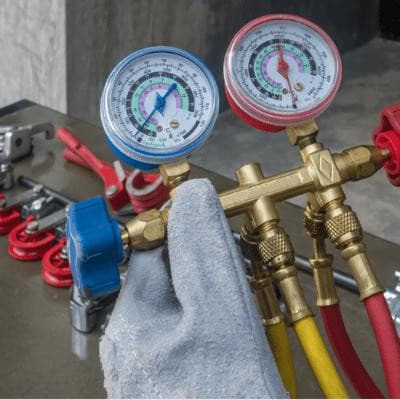
- Check hoses, gauges and fittings before connecting, and close valves before disconnecting to stop liquid escaping.
- Stand clear of valves, hose ends and relief outlets when opening or venting systems that hold liquefied gas.
- Wear insulated gloves, safety glasses and a face shield when handling liquefied gas, cryogenic liquids or refrigerant.
- Treat cold burns by gently warming the area with lukewarm, not hot, water without rubbing, and get medical help.
Typical controls, most effective first. Your SWMS sets the controls for your own job and site.
Templates that cover Cold burns and frostbite
SWMS by trade
Hazards that come up alongside it
Legislation these templates cite
- Code of Practice: Construction work1 template
- Code of Practice: First aid in the workplace1 template
- Code of Practice: How to manage WHS risks1 template
- Code of Practice: Managing risks of hazardous chemicals1 template
- Code of Practice: Work environment and facilities1 template
- OHS Act 2004 (Vic)1 template
- OHS Regulations 2017 (Vic)1 template
- WHS Act 20111 template