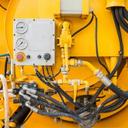
Trailer Mounted Hydro Excavator
- Company doing the work
- [Company]
- Business contact and phone
- —
- Responsible person (for monitoring SWMS and work)
- —
- Responsible person's phone
- —
- Responsible person's signature
- —
- Date signed
- —
- Principal Contractor (PC)
- [Principal contractor]
- PC Address
- —
- PC phone
- [PC phone]
- Date SWMS provided to PC
- —
- Job Site Address
- [Site address]
- Business contact phone
- —
- Part of a construction project
- —
Site management plan
If the work is part of a construction project, this SWMS must align with requirements of the Site Management Plan in place for the Construction Project.
High-risk construction work
This work activity involves the following “High-Risk Construction Work” (HRCW - identified in the Job Task column)
- Mobile PlantMobile plant movement
- AsbestosAsbestos disturbance
- Gas MainsPressurised gas distribution mains or piping
- Hazardous LinesChemical, fuel or refrigerant lines
- Energised ElectricalEnergised electrical installations or services
- Traffic CorridorsWork carried out adjacent to a road, railway or shipping lane, traffic corridor
- Hazardous AtmosphereWork in an area that may have a contaminated or flammable atmosphere
Planning and preparation
Planning/Preparation
Liaise with Principal Contractor to identify on-site safety systems and procedures
Establish supervisory and communication arrangements
Principal contractor to confirm emergency response procedures are in place.
Hold points
Hold points identified and signed off before continuing work. (specify the hold points)
Training/licence
All workers to have a General Construction Induction Card
Relevant workers have relevant certificates of competency, licenses, and training. Specify on the SWMS Sign-off for each worker.
Trained First Aider on site
All workers trained in site-specific emergency and evacuation procedures, SWMS, safe work procedures, and safety data sheets.
Worker duties and responsibilities
Fit condition for work, i.e., no signs of fatigue, alcohol or drugs
Attend all site inductions/briefings
Comply with all site requirements, e.g. PPE, Traffic Management Plans (TMP)
Only carry out work related to the contract
Inspect completed work and report possible safety, environmental and quality matters to the supervisor.
Monitor/review
All people involved in the task must have this SWMS communicated to them before work commences
SWMS to be reviewed and amended if necessary, in consultation with relevant people after any near miss or incident
If additional site hazards identified, review this SWMS and amend control measures to suit
People, including workers, contractors and sub-contractors, affected by the revisions to this SWMS, must be informed ASAP
Give the principal contractor a copy of the revised SWMS
The site supervisor to monitor works against the controls stated in this SWMS
SWMS must be kept on-site and made available for inspection or review
Keep a record of this SWMS until the job is complete or for two years if involved in a notifiable incident
Regardless of any other factor, the person in control of the workplace must review this SWMS at least annually.
Site-specific notes
Legislation and codes of practice
None listed.
Personal protective equipment (PPE)
- Foot Protection
- Hearing Protection
- High Visibility
- Head Protection
- Eye Protection
- Hand Protection
- Protective Clothing
- Sun Protection
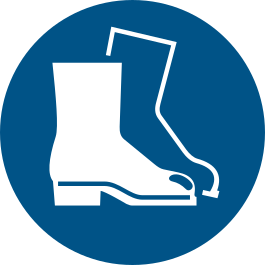







Do not wear rings, watches or jewellery that may become entangled. Long and loose hair must be tied back.
Job steps, hazards and controls
- Work activity
Planning
- Hazard
Lack of excavation plan
Before controls3 HighControlsAssess the intended excavation site:
Location (roadside, residential, waterway etc.)
Route (length/depth)
Soil type (seek geological surveys where required to ensure suitable soils for nozzles – clay/sand/rocks etc.)
Develop an excavation plan:
Developed by suitably competent people
Detail environmental impacts, risk assessments and controls
Check for any manhole/confined space entry requirements (ensure permit system in place).
Contact 'Dial before you Dig' and Local Authorities to obtain utility maps of intended work areas.
Identify underground assets (location and type)
Where possible, arrange with asset owners for power to be isolated to utilities in the work area for the duration of works. If necessary as a result of a risk assessment)
After controls2 ModerateResponsible- Supervisor
- Hazard
Unlicensed truck operator & untrained personnel
Before controls4 AcuteControlsAll operators must be licensed and deemed competent on the make/model and type of truck that will be operated
Note: In the absence of load checking and warning devices, ensure operators are trained to recognise acceptable load distributions
Ensure all relevant workers have undertaken training and/or received instruction in the use of the truck/trailer and control measures. Include:
All operators trained in safe and correct methods of operation before including all operational and safety data furnished by the manufacturer
All personnel trained on the hazards & precautions of high-pressure water & compressed air.
After controls2 ModerateResponsible- Supervisor
IR before controls · RR after controls1 LLow2 MModerate3 HHigh4 AAcute
Overall risk after controls2 MModeratethe highest rating after controls
Thêm 19 bước công việc, từ Coupling/ uncoupling the trailer đến Emergency response
Mỗi bước đều có mối nguy, mức rủi ro và biện pháp kiểm soát, cùng phần ký nhận của đội.