Cleaning industry safety: hazards and how to manage them
The main safety hazards in commercial cleaning, from chemicals and manual handling to slips and confined spaces, and how to control each one.
本文目前只有英文版。
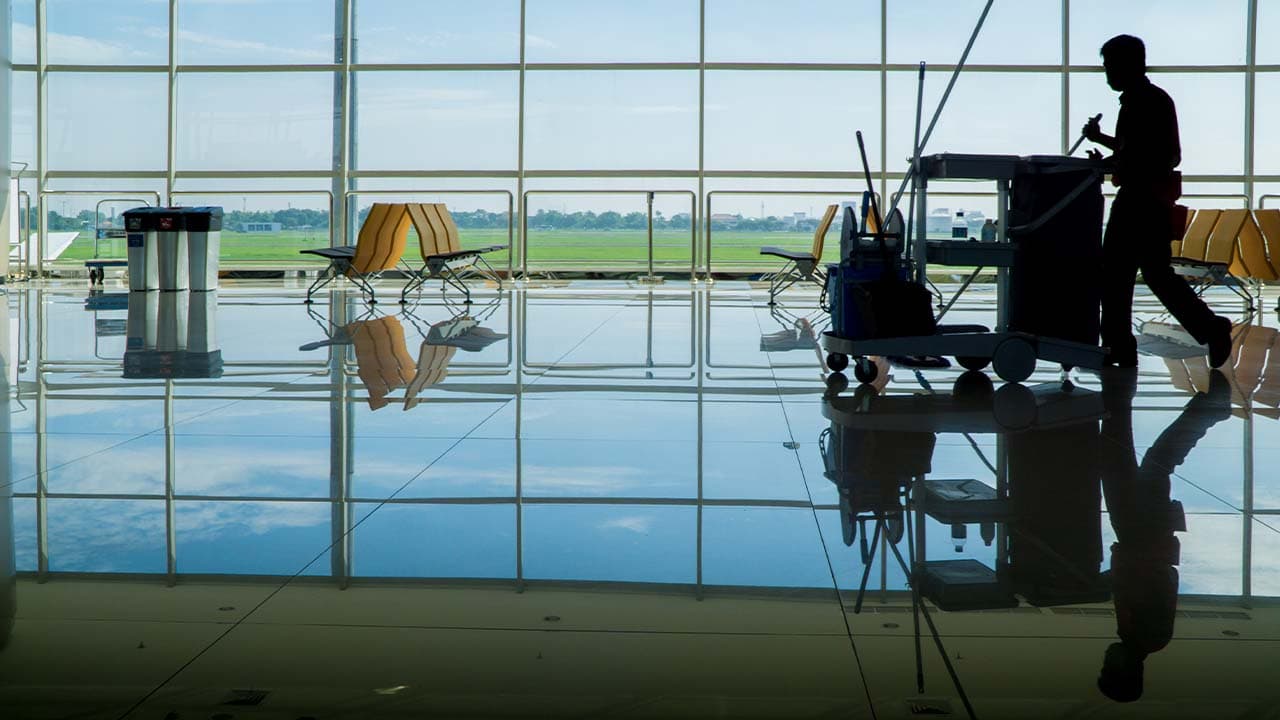
Cleaning work is safe when the business identifies the hazards of each job and controls them. The main risks are hazardous chemicals, manual handling, slips and falls, electrical equipment, noise, confined spaces and the psychological strain of demanding work. Each one needs a written control that a cleaner can follow on site.
This guide covers those hazards, the controls that work for each one, and the documents that tie them together. It applies to commercial, residential and industrial cleaning alike, whether you run a crew of two or a national contract.
What the work involves
Cleaning covers more than wiping benches. Most crews do some mix of:
- Surface cleaning: wiping, scrubbing and mopping floors, walls, glass and fittings.
- Deep cleaning: stripping, scrubbing and carpet extraction in hard-to-reach areas.
- Disinfection: applying chemicals to kill germs on surfaces, often in hospitals, schools and childcare centres.
- Waste handling: collecting, sorting and moving bins, sharps and general waste.
- Specialist jobs: window cleaning at height, pressure washing, mould remediation and post-construction clean-ups.
Each of these has its own hazards, so a single generic procedure rarely covers a whole business. Start by listing the tasks your crew actually does, then work out the risks for each one. The cleaning SWMS range is a starting point for the higher-risk jobs.
The main hazards
1. Hazardous chemicals
Cleaning products, disinfectants and degreasers can cause skin burns, eye damage and breathing problems. Mixing incompatible products can release toxic gas, which is why the label and the SDS come first.
Controls to put in place:
- Keep a register of every chemical on site, with its safety data sheet (SDS) available to the crew. The chemical and SDS register gives you a starting point.
- Train staff to dilute, mix and apply products exactly as the label and SDS say. Never mix products unless the SDS allows it.
- Store chemicals in labelled containers, away from incompatible products and out of reach of the public.
- Match PPE to the product. Gloves, eye protection and, where fumes are strong, respiratory protection should be chosen from the SDS, not from habit.
- Ventilate enclosed spaces before and during use.
The model Code of Practice: managing risks of hazardous chemicals in the workplace gives the detail on these duties.
2. Manual handling
Lifting heavy bins, pushing loaded trolleys, reaching overhead and repeating the same wiping motion for hours are the most common causes of injury in cleaning. Back, shoulder and wrist strains are usually the result of repeated load, not one bad lift.
Controls that help:
- Use the right equipment: adjustable mops and handles, trolleys with good wheels and bin lifters.
- Teach safe lifting and pushing. Keep the load close to the body and avoid twisting.
- Plan the round so heavy items are moved early and fewer times, and so workers rotate between heavy and light tasks.
- Build in short breaks and stretching, especially on long shifts.
The model Code of Practice: hazardous manual tasks sets out how to assess these tasks.
3. Slips, trips and falls
Wet floors, cords across walkways and step ladders on uneven ground are the everyday hazards. A slip on a freshly mopped floor can cause a fracture or a head injury.
- Use wet floor signs while the floor is drying, and clean in sections so the path out stays dry.
- Wear footwear with slip-resistant soles, and change them if the tread is worn.
- Carry loads so you can see your feet, and use the handrail on stairs.
- Use a stable step ladder, never a chair or a bench, and don't work from the top steps.
4. Electrical equipment
Polishers, vacuums, pressure washers and extension leads are used near water and in wet areas. Damaged leads and overloaded power boards cause electric shocks and fires.
- Check every lead and plug before use, and remove any that are damaged.
- Use extension leads rated for the equipment, and keep leads and plugs away from water.
- Plug equipment into correctly earthed outlets, with a residual current device (RCD) where the work is wet.
- Test and tag portable equipment on a regular schedule. AS/NZS 3760 describes how to do it.
5. Noise
Floor polishers, pressure washers and industrial vacuums can be loud enough to damage hearing over a full shift. Noise also adds to fatigue and stress.
Monitor noise where equipment is used most, and supply hearing protection where the risk can't be engineered out. Rotate workers off the noisiest tasks where practical.
6. Confined spaces
Some cleaning jobs happen in tanks, pits, ducts, roof voids or sub-floor spaces. Air in these spaces can have too little oxygen or too many fumes, and cleaning products can make it worse. Ventilation, atmospheric testing and a rescue plan all matter.
If a job involves entering a confined space, treat it as a separate high-risk task. Read our guide to working in a confined space before you plan the work.
7. Mould and biological hazards
Mould clean-ups, bathroom work and clinical cleaning expose workers to moulds, bacteria and blood-borne material. Respiratory irritation and skin infections are the usual results.
Assess the area before you start. Use PPE that suits the contaminant, avoid dry sweeping that spreads spores, and wash hands and exposed skin before eating. For larger jobs, write a procedure that covers containment, disposal and cleaning of equipment.
8. Psychosocial hazards
Tight schedules, high standards and working alone in empty buildings can lead to stress, fatigue and burnout. The model Code of Practice on managing psychosocial hazards at work, published in 2022, treats these as workplace hazards in the same way as chemicals or machinery.
Plan realistic schedules and time for each job. Check in with workers who work alone. Make sure workers know how to report bullying, abuse from members of the public and unsafe demands.
Managing the hazards
Good cleaning safety follows a simple cycle: identify, assess, control, check and review.
- Walk the sites. Note the floors, equipment, chemicals and access points at each location.
- Assess each task. Write down what could go wrong and how badly it could hurt someone.
- Control the risk. Start with the top of the hierarchy of controls: remove the hazard, change the method or equipment, then rely on procedures and PPE.
- Train and supervise. Make sure each worker can show the method, not just sign that they've read it.
- Review. Check controls after an incident, when the site or product changes, and when a worker raises a problem.
If your workers see a hazard that isn't controlled, they should be able to report it straight away. Our guide on how to report a hazard in the workplace explains a simple process.
Documents every cleaning business needs
Written procedures make safety repeatable. For most cleaning businesses, the core set is:
- SWMS for higher-risk tasks such as working at height or using pressure equipment.
- SOPs for routine jobs, such as cleaning public restrooms or manual handling. Browse the cleaning SOPs.
- A workplace hygiene plan that sets out how the premises and equipment are kept clean and safe. The workplace hygiene plan is a useful starting point.
- A register of chemicals and SDS, kept up to date.
- Incident and hazard records that show what happened and what was changed.
Keep these current. An old procedure that no one follows is worse than none, because it shows the business knew the control existed.
| Hazard | Typical control | Document to check |
|---|---|---|
| Chemicals | SDS on hand, correct dilution, labelled storage, matched PPE | Chemical and SDS register |
| Manual handling | Right equipment, safe pushing and lifting, rotated tasks | Manual handling SOP |
| Slips and falls | Wet floor signs, slip-resistant footwear, stable ladders | Cleaning SOPs for the site |
| Electrical | Tested leads, RCD protection, correct extension leads | Equipment testing record |
| Noise | Measured exposure, hearing protection, task rotation | Noise assessment |
| Confined spaces | Atmospheric test, ventilation, rescue plan | Confined space SWMS |
Licences and training
Most general cleaning doesn't need a licence, and there's no national licence for cleaning businesses. Some tasks do. Removing asbestos, for example, needs a licence, and our guide to managing safe asbestos removal explains when. Check what applies to each job before you take it on.
Training is a practical control, not a formality. Nationally recognised courses, including cleaning operations qualifications and the Certificate IV in Work Health and Safety, teach workers how to use chemicals and equipment safely. Keep a record of what each worker has been trained in and when it was refreshed.
Common questions
What are the biggest safety risks in cleaning? Hazardous chemicals and manual handling cause the most injuries. Slips and falls, electrical equipment and confined spaces are also common, and each needs its own control.
Do cleaners need a safety data sheet for every product? Yes, the business must have an SDS for each hazardous chemical it uses, and workers must be able to read it. Keep the SDS with the register and check it when a product changes.
Do cleaning businesses need a SWMS? A SWMS is only legally required for high-risk construction work. Most cleaning jobs aren't construction work, but some post-construction clean-ups may be, so check the job against the list. Other higher-risk cleaning tasks still need a documented safe work procedure.
How often should cleaning procedures be reviewed? Review them after any incident, when a product or piece of equipment changes, when a site changes, and at least once a year.
This is general information, not legal advice. Check the current law with your WHS regulator.
模板库
用一份现成的 SWMS付诸实践。
浏览为澳大利亚各工种编写的 SWMS 模板。任何模板都可免费预览,几分钟就能按你的工作改好。
适用于这项工作的模板
- 安全作业方法说明(SWMS)Manual Handling
- 标准作业程序(SOP)Manual Handling
- 安全作业方法说明(SWMS)General Cleaning
- 安全作业方法说明(SWMS)High Pressure Water Cleaner
相关指南
安全管理
How we build SafetyDocs, and how we look after you
How we design SafetyDocs: simple, seamless tools for the whole crew, built with the people who use them. Tell us what you'd like next.
安全管理
Policy vs procedure: the difference, with WHS examples
A policy says what you'll do and why; a procedure says how, step by step. See the difference between policy and procedure, with WHS examples of each.
安全管理
Safe operating procedure vs standard operating procedure
Safe operating procedure vs standard operating procedure: what each means, when you need which, how they differ from SWMS and JSAs, and what a good SOP holds.