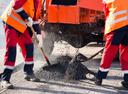
Hot Asphalt Truck
- Company doing the work
- [Company]
- Business contact and phone
- —
- Responsible person (for monitoring SWMS and work)
- —
- Responsible person's phone
- —
- Responsible person's signature
- —
- Date signed
- —
- Principal Contractor (PC)
- —
- PC Address
- —
- PC phone
- —
- Date SWMS provided to PC
- —
- Job Site Address
- —
- Part of a construction project
- —
Site management plan
If the work is part of a construction project, this SWMS must align with requirements of the Site Management Plan in place for the Construction Project.
High-Risk construction work
This work activity involves the following “High-Risk Construction Work” (HRCW - identified in the Job Task column)
- Mobile PlantMobile plant movement
- Traffic CorridorsWork carried out adjacent to a road, railway or shipping lane, traffic corridor
- Hazardous AtmosphereWork in an area that may have a contaminated or flammable atmosphere
Planning and preparation
Planning/Preparation
Liaise with Principal Contractor to identify on-site safety systems and procedures
Establish supervisory and communication arrangements
Principal contractor to confirm emergency response procedures are in place.
Hold points
Hold points identified and signed off before continuing work. (specify the hold points)
Training/Licence
All workers to have a General Construction Induction Card
Relevant workers have relevant certificates of competency, licenses, and training. Specify on the SWMS Sign-off for each worker.
Trained First Aider on site
All workers trained in site-specific emergency and evacuation procedures, SWMS, safe work procedures, and safety data sheets.
Worker duties and responsibilities
Fit condition for work, i.e. no signs of fatigue, alcohol or drugs
Attend all site inductions/briefings
Comply with all site requirements, e.g. PPE, Traffic Management Plans (TMP)
Only carry out work related to the contract
Inspect completed work and report possible safety, environmental and quality matters to the supervisor.
Monitor/Review
All people involved in the task must have this SWMS communicated to them before work commences
SWMS to be reviewed and amended if necessary, in consultation with relevant people after any near miss or incident
If additional site hazards identified, review this SWMS and amend control measures to suit
People, including workers, contractors and sub-contractors, affected by the revisions to this SWMS, must be informed ASAP
Give the principal contractor a copy of the revised SWMS
The site supervisor to monitor works against the controls stated in this SWMS
SWMS must be kept on-site and made available for inspection or review
Keep a record of this SWMS until the job is complete or for two years if involved in a notifiable incident
Regardless of any other factor, the person in control of the workplace must review this SWMS at least annually.
Site-Specific notes
Legislation and codes of practice
None listed.
Personal protective equipment (PPE)
- Foot Protection
- Hearing Protection
- High Visibility
- Seat Belt

Job steps, hazards and controls
- Work activity
Travel to/from sites
- Hazard
Vehicle failure
Before controls3 HighControlsConduct Pre-start inspection and operate the vehicle following manufacturers' instructions. Do not use if any fault/damage/missing parts. Report immediately and follow tag-out/lock-out procedures.
After controls2 ModerateResponsible- Supervisorsto check all controls in place and followed
- Operatorto follow controls and make supervisor aware of any issues
- Hazard
Falls
Before controls3 HighControlsFace the truck whenever you mount and dismount
Use the provided steps/handholds when entering or exiting the cabin
Maintain a three-point contact with the steps and handholds (2 feet & 1 hand/1 foot & 2 hands)
Never mount or dismount a moving truck
Do not jump off the truck.
After controls2 ModerateResponsible- Supervisorsto check all controls in place and followed
- Operatorto follow controls and make supervisor aware of any issues
- Hazard
Collision; Crush injuries; Entrapment; Fatality
Before controls4 AcuteControlsEnsure the vehicle registered with the appropriate state authority
The truck is in roadworthy condition
Over-dimension vehicles require an over-dimension permit & must comply with permit conditions
If setting up roadside – comply with local laws and permits
Operators' driver's licence is current
Adjust the seat to achieve full pedal contact when operators' back is against the back of the seat
Wear seatbelt
Ensure all body parts are always kept within the cabin when operating the truck
Start-up as per manufacturer's instructions and never leave operator seat with the engine running
Ensure logbook of service and maintenance history is up to date
DO NOT drive under the influence of drugs or alcohol
DO NOT adjust radio channels or volume while driving
DO NOT use electronic devices while driving:
If you must use a device, e.g. a mobile phone or GPS pull over and park in a safe area. Do not stop where you could be a hazard to other vehicles, pedestrians, or yourself
Ensure travel path (on both road and on-site):
Allows for the height of the vehicle
Is clear of low-lying tree limbs
Is suitable for weight/size of the vehicle, limited gradients and slopes
Obey speed limits and be aware of increased braking/stopping distance when carrying loads
Ensure vehicles equipped with emergency equipment, including:
Spare tyre and procedures for changing tyres
Traffic management cones
Flashing lights, warning signs, high visibility clothing
Communication equipment
First Aid kits, and emergency contact information.
Fire extinguisher.
After controls2 ModerateResponsible- Supervisorsto check all controls in place and followed
- Operatorto follow controls and make supervisor aware of any issues
IR before controls · RR after controls1 LLow2 MModerate3 HHigh4 AAcute
Overall risk after controls2 MModeratethe highest rating after controls
10 more job steps, from Loading asphalt to Emergency response
Each with its hazards, risk ratings and controls, plus your crew's sign-on.