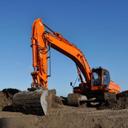
Bulk Excavations
- Company doing the work
- [Company]
- Business contact and phone
- —
- Responsible person (for monitoring SWMS and work)
- —
- Responsible person's phone
- —
- Responsible person's signature
- —
- Date signed
- —
- Principal Contractor (PC)
- —
- PC Address
- —
- PC phone
- —
- Date SWMS provided to PC
- —
- Job Site Address
- —
- Part of a construction project
- —
Site management plan
If the work is part of a construction project, this SWMS must align with requirements of the Site Management Plan in place for the Construction Project.
High-risk construction work
This work activity involves the following “High-Risk Construction Work” (HRCW – identified in the Job Task column)
- Mobile PlantMobile plant movement
- Gas MainsWork on or near pressurised gas distribution mains or piping
- Hazardous LinesWork on or near chemical, fuel or refrigerant lines
- Energised ElectricalWork on or near energised electrical installations or services
- FallsInvolves a risk of a person falling from 2m or more, including work on telecommunications towers
- Shafts & TrenchesWorking at depths greater than 1.5 metres, including tunnels or mines
- Hazardous AtmosphereWork in an area that may have a contaminated or flammable atmosphere
- Traffic CorridorsWork carried out adjacent to a road, railway or shipping lane, traffic corridor
Working with a risk of a fall over 2 metres
The fall from height hierarchy of control level considered when establishing controls:
- L1Work on the ground or solid construction, not chosen
- L2Use a passive fall restraint system, e.g. guard rails, scaffolding, EWP, not chosen
- L3Use a work positioning system, e.g. travel restraint, rope access, not chosen
- L4Use a fall arrest system, e.g. safety harness, catch platforms, not chosen
- L5Implement administrative controls, e.g. signage or instruction, not chosen
No level has been chosen yet.
Planning and preparation
Planning/preparation
Liaise with Principal Contractor to identify on-site safety systems and procedures
Establish supervisory and communication arrangements
Principal contractor to confirm emergency response procedures are in place.
Hold points
Hold points identified and signed off before continuing work. (specify the hold points)
Training/licence
All workers to have a General Construction Induction Card
Relevant workers have relevant certificates of competency, licenses, and training. Specify on the SWMS Sign-off for each worker.
Trained First Aider on site
All workers trained in site-specific emergency and evacuation procedures, SWMS, safe work procedures, and safety data sheets.
Worker duties and responsibilities
Fit condition for work, i.e., no signs of fatigue, alcohol or drugs
Attend all site inductions/briefings
Comply with all site requirements, e.g. PPE, Traffic Management Plans (TMP)
Only carry out work related to the contract
Inspect completed work and report possible safety, environmental and quality matters to the supervisor.
Monitor/review
All people involved in the task must have this SWMS communicated to them before work commences
SWMS to be reviewed and amended if necessary, in consultation with relevant people after any near miss or incident
If additional site hazards identified, review this SWMS and amend control measures to suit
People, including workers, contractors and sub-contractors, affected by the revisions to this SWMS, must be informed ASAP
Give the principal contractor a copy of the revised SWMS
The site supervisor to monitor works against the controls stated in this SWMS
SWMS must be kept on-site and made available for inspection or review
Keep a record of this SWMS until the job is complete or for two years if involved in a notifiable incident
Regardless of any other factor, the person in control of the workplace must review this SWMS at least annually.
Site-specific notes
Legislation and codes of practice
None listed.
Personal protective equipment
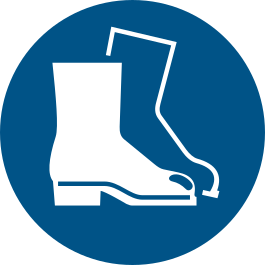
- Foot Protection
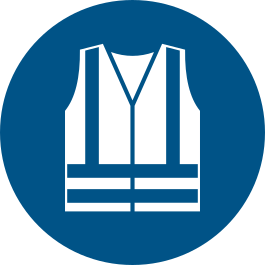
- High Visibility
- Head Protection
- Hand Protection
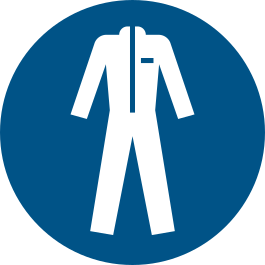
- Protective Clothing
- Sun Protection
- Seat Belt



Job steps, hazards and controls
- Work activity
Planning
- Hazard
Property damage
Before controls3 HighControlsConsider:
Potential impacts on an adjoining property, particularly concerning drainage or collapse
Instability to adjoining or nearby structures
Any excavation below the level of the footing of any structure, including retaining walls that could affect the stability of the structure, must be assessed by a competent person and secured by a suitable ground support system, which has been designed by a competent person. Suitable supports to brace the structure may also be required and will be identified by a competent person
Proprietary documents (detailed drawings / specifications, details for use / storage / precautions, criteria for rejection)
Element documents
Proposed sequence of work and SWMS
Stabilisation methods (temporary and permanent)
Signed copies of any –
Changes made to specifications and/or signed instructions, advice or diagrams made or issued by an engineer
Notification to the relevant authority for works
Exemptions from the requirements of regulation granted by any authority
Inspection reports if required
Any report, licence or authority required for carrying out construction work
Planning for the work should include the primary contractor, geotechnical consultant (or appropriate Engineer as appropriate)
Assess intended site limitations. Check:
Layout is suitable
Overhead obstructions (including power lines)
Sufficient delivery access
Sufficient working room.
After controls2 ModerateResponsible- Supervisor
- Hazard
Working alone; Emergency
Before controls4 AcuteControlsWorking alone:
Ensure a second person knows your location and expected time of return
Use mobile phone, telephone, or radio to periodically check-in
Communication equipment within easy reach at all times
Take extra care to work safely and methodically
Have first aid kit readily available and stocked appropriately
Where the risk assessment has identified particularly high-risk tasks, utilise a second person (buddy) to assist or backup
Do not expose both people to the hazard simultaneously. The second person should be within sight but safely removed from the immediate area
The ‘buddy’ must be trained in the specific activities the worker he/she is observing for is undertaking, be properly equipped with emergency equipment, and be capable of undertaking pre-planned rescue or emergency operations where needed. If it is safe to do so.
After controls2 ModerateResponsible- Supervisor
- Hazard
Injury or death from trench collapse
Before controls4 AcuteControlsImplement a site-specific Trench Collapse Emergency Response Plan
Emergency plan to consider unexpected incidents, such as ground slip, flooding, gas leaks, and workers' rescue from an excavation.
After controls2 ModerateResponsible- Supervisor
- Hazard
Contact with underground assets
Before controls4 AcuteControlsEnsure underground services identified and marked accurately for depth and position:
Contact Dial Before You Dig
Use an accredited cable locator contractor to test the area
Contact relevant authorities/companies for ‘as constructed’ plans if necessary
Hand excavate using a shovel to locate services and mark out before any trenching or battering works
Use “Potholing” techniques as required:
Use extreme care when working near gas mains
When using hand prodders to locate pipes, do not use hammers or other implements
Mark all exposed services with flags or devices that can be readily seen
Ensure all marked services continue to be visible for the duration of the work.
After controls2 ModerateResponsible- Supervisor
- Hazard
Contact with electricity
Before controls4 AcuteControlsEnsure work is not conducted in close proximity to electrical power lines. Check for:
Overhead power lines (including high and low voltage distribution conductors)
Single wire earth return (SWER)
Service cables to premises
Communications cables
Electrical transformers (mounted lower than cables)
Identify the maximum range of equipment and how close equipment or load can come to an asset (known as a design envelope). The following dimensions are taken from the closest point of an extended component of the machine, e.g. extended long reach boom
In general, for up to and including 132,000 volts:
3m above, either side and below power lines is No Go Zone
Between 3-6.4m of power lines, a Spotter is required
Further than 6.4m of power lines is an open area
No work to be conducted within a 10m radius of the SWER transformer.
No work to be conducted within Minimum Clearance Zones without written permission from the power supplier.
Approach distances will vary based on the voltage level of the live electrical apparatus. Always contact your local power asset owner for information before commencing crane operations if unsure.
After controls2 ModerateResponsible- Supervisor
- Hazard
Asphyxiation
Before controls4 AcuteControlsDetermine if the excavation is a confined space; if so, ensure a separate, dedicated SWMS for working in a confined space and that workers/employees have relevant training.
Note: A confined space is defined as an enclosed or partially enclosed space that is likely to be a risk to health and safety when a person’s head or upper body is within the boundary of the confined space because of:
An atmosphere that does not have a safe oxygen level, or
Contaminants, including airborne gases, vapours and dust that may cause injury from fire or explosion, or
Harmful concentrations of airborne contaminants.
After controls2 ModerateResponsible- Supervisor
- Hazard
Night works
Before controls3 HighControlsAdditional Spotters may be needed to be available to ensure vehicles/plant/equipment/materials and workers do not breach exclusion zones.
Plant, equipment, vehicles and people will cast shadows, and allowance must be made to install and/or move portable lighting to reduce dark zones as required.
Luminous (fluoro) triangles/bollards to be positioned to assist with traffic management and worker zones wherever possible. For example, mark out the load/unload area's perimeter to help guide drivers and warn workers on the ground of moving vehicles.
After controls2 ModerateResponsible- Supervisor
IR before controls · RR after controls1 LLow2 MModerate3 HHigh4 AAcute
Overall risk after controls2 MModeratethe highest rating after controls
12 more job steps, from Training to Emergency response
Each with its hazards, risk ratings and controls, plus your crew's sign-on.